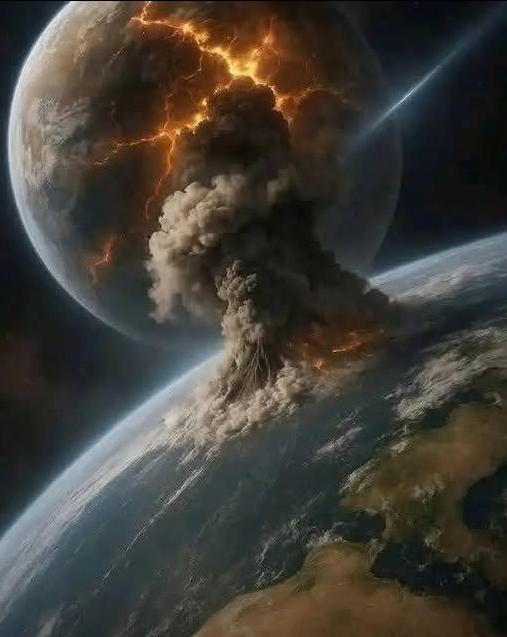
When a headline begins with “BREAKING NEWS confirms that this May 29th the Earth will begin to…,” it immediately captures attention. Such a statement sounds dramatic, even apocalyptic, and spreads fast online. But behind every sensational claim like this, it’s important to separate emotion from evidence.
Over the years, dates like “May 29th” have often been used in viral rumors about supposed global disasters — from doomsday predictions to claims about planetary alignments, mysterious cosmic events, or massive natural disasters. These stories spread quickly because they play on human fear and curiosity. But history has shown again and again that most of these claims turn out to be misleading or entirely false.
Why These “End-of-the-World” Claims Appear So Often
Throughout history, specific dates have been used to predict major world events. Some say the Earth will stop spinning, others claim a meteor will strike, or that we’ll experience some “planetary shift.” These claims are not new — they’ve been repeated for decades in different forms. What makes them so believable to some people is the authority implied by words like “breaking,” “confirmed,” or “scientists say.”
But often, these posts come from unreliable sources with no scientific basis. They may mix real astronomical events — like eclipses, meteor showers, or planetary alignments — with false or exaggerated interpretations. For example, a rare alignment of planets might be presented as a “catastrophic shift” in Earth’s rotation, when in reality, such alignments are harmless and well understood by scientists.
What Would It Mean if “the Earth Will Begin to…”
When people see statements like “the Earth will begin to…” they often imagine scenarios like:
-
Stopping its rotation
-
Tilting its axis
-
Experiencing catastrophic earthquakes or tsunamis
-
Entering a period of darkness
-
Being hit by a massive object
While these sound terrifying, they don’t hold up scientifically. For example, if the Earth were to suddenly stop rotating, it would cause unimaginable destruction — but there is no force or event currently known or predicted that could make that happen on May 29th. Such a phenomenon would require something beyond our current understanding of physics, and if there were even a tiny chance of it, every major space agency and scientific institution would already be alerting the public.
What NASA and Real Scientists Actually Say
Organizations like NASA, the European Space Agency, and major observatories around the world constantly monitor the Earth and space for potential threats. Whether it’s asteroids, solar storms, or shifts in Earth’s magnetic field, these agencies publish data publicly.
If there were any real event scheduled or expected to happen on May 29th that could change the planet’s behavior, it would be global news covered by credible outlets, not hidden in a vague “breaking” post. So far, there is no scientific evidence or official warning of any such event occurring on that date.
Why People Believe These Stories
It’s not foolish to feel unsettled by big claims — they’re designed to make people react emotionally. These kinds of messages often go viral because:
-
They use fear-based language to get attention.
-
They appear urgent, using dates to make the threat feel real and immediate.
-
They sometimes mix in a little bit of truth — like mentioning an eclipse or a comet — to make the false claim seem believable.
-
People naturally want to warn others, so they share it quickly.
In an age where information travels fast, rumors can reach millions before the facts do.
Real Events That Could Happen Around That Time
It’s worth noting that real astronomical events do happen around late May in many years. For example:
-
Meteor showers may be visible in some parts of the world.
-
Planets sometimes align in ways that look beautiful in the night sky.
-
Solar activity may increase — solar flares or geomagnetic storms are real phenomena, but they’re monitored closely and rarely pose a serious threat to daily life.
These natural events can spark fascination but are often harmless. Sometimes, misinformation twists these occurrences into something terrifying to grab attention.
The Role of the Internet in Spreading Panic
The speed at which misinformation spreads today is unprecedented. A single post with a dramatic headline can be copied, edited, and shared thousands of times in just hours. By the time fact-checkers or scientists respond, the rumor may have already been seen by millions. That’s why it’s important to ask a few key questions when you see alarming claims like this:
-
Who is reporting this information?
-
Are credible news outlets or scientific organizations confirming it?
-
Is there a specific source with verifiable data?
-
Does the language sound sensational or factual?
In almost every case of predicted “global disaster dates,” the story unravels upon closer inspection.
Historical Examples of False Predictions
This kind of rumor isn’t unique to May 29th. Here are some famous examples:
-
2012 phenomenon — Rumors spread worldwide that the world would end in December 2012 based on misinterpretations of the Mayan calendar. Nothing happened.
-
2017 “Planet X” prediction — Some claimed a hidden planet would collide with Earth. NASA debunked this quickly.
-
Various eclipse-related rumors — Every major eclipse has brought a wave of “Earth shift” or “darkness” predictions that never came true.
These examples show a clear pattern: the claims get louder as the date approaches, then fade quietly once nothing happens.
How to Protect Yourself From Panic
Instead of letting rumors cause unnecessary fear, here’s what you can do:
-
Check credible sources like NASA, major news networks, or national meteorological agencies.
-
Avoid sharing alarming posts without verifying them.
-
Recognize emotional language — phrases like “BREAKING,” “you won’t believe,” or “the government is hiding this” are red flags.
-
Remember that true emergency alerts are shared through official channels, not vague social media claims.
The Real World Keeps Spinning
The Earth has been orbiting the sun for billions of years. It doesn’t suddenly “begin to” do something new just because a viral post claims so. Scientists can predict eclipses, meteor paths, and even distant asteroid orbits decades in advance. Any real threat would be well documented, explained, and addressed through proper communication channels.
So if you see a post that claims something monumental will happen on May 29th, take a deep breath. Look for actual science. More than likely, May 29th will come and go like any other day — the planet will keep spinning, the sun will keep shining, and life will go on.
Final Thought
These kinds of “doomsday” or “Earth shift” claims are not just modern myths — they’re reminders of how powerful stories can be. Fear spreads fast, but facts last longer. So instead of letting such headlines create panic, approach them with curiosity, critical thinking, and calm.
If anything truly significant were going to happen to Earth on May 29th, you wouldn’t have to go searching for the information — the world’s top scientists, governments, and news outlets would be talking about it openly. And since they aren’t, that’s the clearest sign that these rumors are just that: rumors.