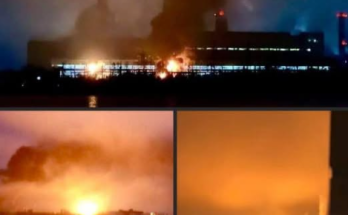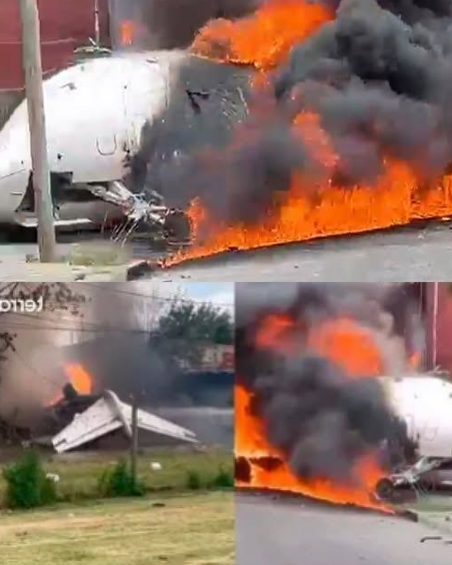
“RIGHT NOW, PLANE WITH MORE THAN 244 ONBOARD JUST CRASH…” — What the Viral Headline Really Tells Us
A dramatic headline claiming that a plane carrying more than 244 people has “just crashed” has circulated repeatedly across websites and social media, prompting alarm among readers. The wording is designed to create a sense of immediate danger, but there is an important distinction between a viral headline and a verified breaking-news report.
As of August 19, 2026, I could not find reliable confirmation from major news organizations or aviation authorities of a new crash matching the exact claim that a passenger aircraft with more than 244 people onboard has just crashed. Searches instead turn up numerous websites recycling essentially the same headline, sometimes with different publication dates and without identifying the airline, flight number, location, or official authority confirming the event.
That does not mean aviation accidents never happen. They do, and when a major commercial aircraft crashes, the consequences can be devastating. But a responsible news report needs to establish what actually happened before presenting a tragedy as fact.
Why This Headline Is So Powerful
Few phrases generate an emotional reaction as quickly as “plane crash.” Adding “more than 244 onboard” makes the headline even more alarming because readers immediately imagine hundreds of passengers and families waiting for news.
The phrase “RIGHT NOW” adds another layer of urgency. It suggests that the event is happening at this exact moment and that readers must click immediately to discover what happened.
The words “See more” are also common in social-media-style clickbait. They encourage readers to open an article, interact with a post, or continue scrolling through advertising-heavy pages.
Several websites have published versions of this same headline during 2026. One February report explicitly warned that claims about a plane carrying more than 244 people were spreading without reliable confirmation. Another July article repeated the headline while providing no verifiable flight identification.
This repetition is significant. When nearly identical wording appears on unrelated websites over several months, it can create the impression that multiple independent news organizations are reporting the same event when they may simply be copying or republishing the same unverified story.
What a Genuine Major Crash Report Would Usually Include
A real commercial aviation disaster involving more than 240 people would normally generate substantial information.
A credible initial report would be expected to identify at least some of the following:
- The airline operating the aircraft
- The flight number
- The aircraft type
- The departure airport
- The destination
- The location of the crash
- The approximate time of the accident
- Statements from emergency authorities
- Information about passengers and crew
- Rescue or recovery operations
Authorities would also begin establishing a secure crash site and coordinating emergency services.
Because commercial aviation is highly regulated, major accidents attract attention from national aviation regulators, airport authorities, emergency services, investigators, airlines, and international organizations. Information can initially be incomplete, but there are usually identifiable official sources as an investigation develops.
The viral headline under examination does not provide these basic details. That absence should immediately make readers cautious.
The Danger of Recycling Old Aviation Disasters
One of the biggest problems with viral breaking-news content is the recycling of genuine tragedies.
A real plane crash may occur months or years earlier, but photographs and videos from the incident can continue circulating. A new headline may remove the original date and location, making an old event appear to have happened “right now.”
This is particularly dangerous with aviation disasters because photographs of wreckage, emergency crews, smoke, or damaged aircraft can look convincing even when they have nothing to do with the current claim.
Some versions of the headline appear to borrow themes associated with the June 12, 2025 Air India Flight AI171 disaster in Ahmedabad, which involved a Boeing 787-8 carrying more than 240 people. The aircraft crashed shortly after takeoff from Ahmedabad while operating a flight to London Gatwick.
That tragedy was real, and it caused enormous loss of life. But using details or imagery associated with an earlier disaster to make a new event appear current is misleading.
Why Verification Matters
During a genuine aviation emergency, the first reports can be confusing.
Witnesses may describe what they saw. Social-media users may post photographs. Someone may hear emergency sirens and immediately assume a commercial aircraft has crashed. News organizations may publish preliminary reports before authorities have confirmed the full details.
That is why responsible reporting uses careful language.
Instead of immediately declaring that hundreds of people have died, journalists distinguish between what is confirmed, what is suspected, and what remains unknown.
This is especially important when human lives are involved.
An inaccurate plane-crash report can cause extraordinary distress. Someone who sees a headline about a major crash may immediately worry about a family member, friend, coworker, or loved one who is traveling.
Even if the story is eventually proven false, the emotional damage has already been done.
The Human Cost of Sensational Reporting
The phrase “more than 244 onboard” represents real human beings—not simply a number.
Every passenger would have a family, friends, plans, responsibilities, and a reason for traveling.
That is why aviation disasters are among the most emotionally powerful stories in journalism. They involve sudden loss and uncertainty, often affecting people from many countries.
When an unverified headline turns such a tragedy into a tool for attracting clicks, the human dimension can become secondary to engagement.
Responsible reporting should do the opposite.
It should slow down.
It should verify.
It should identify the source.
And it should avoid declaring deaths or casualties until authorities have established the facts.
What About the Claim That More Than 244 People Have Died?
This is where readers should be particularly careful.
Some websites carrying the viral headline have gone much further than simply claiming a crash. They have suggested enormous death tolls, described rescue operations, and presented dramatic eyewitness-style narratives without establishing reliable sourcing.
Such details may sound convincing because they resemble the structure of legitimate breaking-news coverage.
But a story can contain realistic-sounding descriptions and still be unverified.
Details such as “thick smoke,” “emergency crews rushed to the scene,” or “families waited anxiously” are generic descriptions that could theoretically apply to almost any major aviation accident. They do not establish that the specific event actually occurred.
The most important question remains: Who officially confirmed it?
How Readers Can Check a Viral Plane-Crash Claim
When encountering a headline like this, readers can take several simple steps.
First, search the exact headline. If the same wording appears on dozens of obscure websites but not on established news organizations, that is a warning sign.
Second, look for an airline name and flight number. A genuine report involving a large commercial aircraft should normally identify the flight once authorities have enough information.
Third, look for official statements from aviation authorities, airports, emergency services, or government agencies.
Fourth, check the date. A photograph or article might be weeks, months, or even years old.
Finally, avoid sharing the story until its central claim is confirmed.
A Tragic Reminder From Real Aviation History
The fact that this particular viral headline is unverified should not diminish the seriousness of genuine aviation disasters.
The aviation industry has experienced tragedies involving hundreds of passengers, and each has led investigators to examine aircraft design, pilot procedures, maintenance, airport operations, weather, air traffic control, and other factors.
Investigations are not simply about assigning blame. Their most important purpose is learning what happened and preventing another tragedy.
That process can take months or even years.
Investigators examine flight-data recorders, cockpit communications, maintenance records, weather conditions, radar information, aircraft components, airport procedures, and countless other pieces of evidence.
The goal is to turn a tragedy into lessons that can improve aviation safety.
The Bottom Line
The headline “RIGHT NOW, PLANE WITH MORE THAN 244 ONBOARD JUST CRASH…” is alarming, but the headline itself should not be treated as proof that a new disaster has occurred.
As of August 19, 2026, the search results available to me do not establish a newly confirmed crash matching that exact description. Instead, multiple websites have repeatedly published versions of the same sensational headline, often without providing enough information to independently verify the alleged incident.
The responsible approach is therefore to treat the claim as unverified, rather than repeating it as confirmed breaking news.
For families and travelers, this distinction matters enormously. A real aviation emergency deserves immediate attention, accurate information, compassion, and transparency. A fabricated or recycled story deserves scrutiny.
In the age of instant information, speed is valuable—but accuracy is more valuable.
A dramatic headline can take only seconds to create. Establishing the truth can take considerably longer.
And when a story concerns hundreds of human lives, taking that extra time is not just good journalism. It is a matter of basic responsibility.