Farewell to a Legend: The Enduring Legacy of Hulkamania
For generations of wrestling fans, the word Hulkamania has meant far more than a nickname. It represented an era, an attitude, and a larger-than-life form of entertainment that helped transform professional wrestling into a global phenomenon.
When fans hear the familiar phrase “Hulkamania,” they remember packed arenas, colorful signs, roaring crowds, championship celebrations, and a larger-than-life character who encouraged people to believe in themselves. The legacy associated with Hulkamania is one of the most recognizable chapters in sports-entertainment history.
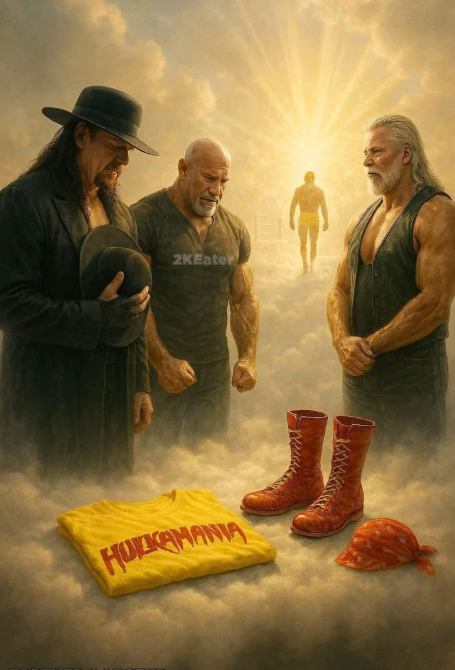
The image of the yellow shirt, red boots, bandana, muscular physique, and unmistakable wrestling persona became part of popular culture. Children imitated the poses. Fans wore the merchandise. Arenas erupted when the familiar music began. For many people who grew up during wrestling’s boom years, these memories remain deeply connected to childhood.
But Hulkamania was never simply about winning matches.
It was about creating a connection.
The character at the center of Hulkamania understood something important about entertainment: fans wanted to feel involved. They wanted heroes to cheer for, villains to boo, and stories that made them believe for a few hours that anything was possible.
That connection helped make Hulkamania one of the defining forces of professional wrestling.
During wrestling’s enormous expansion in the 1980s, the Hulkamania phenomenon became synonymous with spectacular arenas and mainstream attention. Wrestling was no longer confined to small venues or a niche audience. It became a major entertainment business, attracting millions of viewers and introducing professional wrestling to people who had never followed it before.
The character’s message was simple enough for anyone to understand: work hard, believe in yourself, and don’t give up.
That message became particularly powerful because professional wrestling is ultimately built around storytelling. Heroes experience setbacks. Villains appear unstoppable. Championships are won and lost. Friendships are tested. Rivals return. Careers change.
And through it all, the audience becomes emotionally invested.
Hulkamania gave wrestling one of its most recognizable heroic figures. The bright colors, dramatic entrances, exaggerated personality, and powerful speeches created a character who was almost impossible to ignore.
Whether someone was a lifelong wrestling fan or simply remembered wrestling from television, chances are they knew the imagery.
The yellow-and-red color scheme became iconic.
The muscular pose became iconic.
The boots became iconic.
And the phrase “Hulkamania” became part of the vocabulary of American pop culture.
Yet every legendary era eventually changes.
Professional wrestling continued to evolve. New stars emerged, new styles became popular, and audiences changed. The wrestling business moved into different generations, with new personalities becoming the faces of major promotions.
But the influence of Hulkamania remained.
Many wrestlers who followed were influenced by the era’s emphasis on larger-than-life characters. The idea that a professional wrestler could become a mainstream celebrity became increasingly accepted.
The wrestling boom demonstrated that a performer could become more than an athlete. A wrestling personality could become an entertainer, spokesperson, actor, and cultural figure.
That was one of the most important contributions of the Hulkamania era.
For fans looking back today, however, nostalgia can be just as powerful as history.
People remember where they were when they watched major matches. They remember sitting beside parents or siblings. They remember collecting action figures, wearing wrestling shirts, or arguing with friends about which superstar was the greatest.
For some fans, wrestling was a family tradition.
Parents introduced their children to the performers they had watched growing up, and those children eventually introduced wrestling to another generation.
That is how a cultural legacy survives.
It is passed from one generation to another through stories and memories.
A farewell to Hulkamania, therefore, is not necessarily a farewell to those memories.
It is a reminder that eras come and go, but their influence can remain.
There is also an important distinction between a wrestling character and the real person behind that character. Professional wrestling is scripted entertainment, but the physical demands, travel, injuries, pressure, and years of performance are very real.
Behind the colorful costumes and dramatic speeches are performers who dedicated enormous portions of their lives to entertaining audiences.
That dedication deserves recognition.
The Hulkamania era required extraordinary commitment. Performers traveled constantly, worked demanding schedules, performed in physically difficult conditions, and maintained larger-than-life personalities night after night.
Fans saw the finished product.
They didn’t always see the work behind it.
That is why the legacy of this era should be remembered not only through championships and famous matches, but also through the enormous effort required to create the spectacle.
For millions of fans, Hulkamania represented optimism.
The message was that obstacles could be overcome.
You could be knocked down and still stand up.
You could lose and return stronger.
You could face someone who seemed impossible to defeat and still believe that victory was possible.
Those ideas are simple, but they are powerful.
They also explain why the character remained meaningful to so many people long after they stopped watching wrestling regularly.
Life itself contains setbacks. People lose jobs, relationships end, dreams change, and unexpected challenges appear. The idea of refusing to surrender can therefore resonate far beyond a wrestling ring.
That may ultimately be the most important part of the Hulkamania legacy.
It gave people a phrase and a character through which they could express determination.
Of course, nostalgia should not erase the complicated realities of any celebrity’s career. Public figures experience successes and controversies, and fans can appreciate an era while recognizing that history is more complicated than a highlight reel.
Remembering a legend does not require pretending that every moment was perfect.
It means recognizing the cultural impact while allowing history to remain honest.
And the cultural impact of Hulkamania is undeniable.
The imagery remains instantly recognizable. The merchandise remains collectible. Classic matches continue to be discussed. Younger wrestling fans continue to discover footage from the era through streaming services and online videos.
The world of wrestling has changed dramatically since Hulkamania first exploded into mainstream consciousness.
Production has become more sophisticated. Wrestling styles have evolved. Social media has transformed the relationship between performers and fans. Today’s stars can communicate directly with audiences around the world.
Yet the fundamental idea remains familiar: professional wrestling succeeds when performers create unforgettable characters and emotional stories.
Hulkamania understood that formula exceptionally well.
It created moments that people remembered.
And in entertainment, being remembered is one of the greatest achievements possible.
So when fans say farewell to Hulkamania, they are saying farewell to more than a wrestling era.
They are saying farewell to a piece of their childhood.
They are remembering the excitement of watching television and waiting for the next match. They are remembering arena crowds shaking with noise. They are remembering colorful merchandise, unforgettable entrances, championship celebrations, and the feeling that anything could happen.
For longtime fans, those memories will never disappear.
The arenas may look different.
The performers may change.
The industry may continue moving forward.
But the legacy remains.
Hulkamania helped prove that professional wrestling could become a worldwide entertainment phenomenon. It demonstrated the power of a memorable character and showed how deeply a performer could connect with an audience.
And perhaps that is why the word still carries so much emotional weight.
Hulkamania was never just a moment. It became a memory shared by generations.
The yellow shirts, red boots, bandanas, championship belts, and roaring crowds are symbols of an unforgettable chapter in wrestling history.
Time moves on, but legends leave something behind.
They leave stories.
They leave memories.
They leave inspiration.
And they leave behind fans who will always remember where they were when they first experienced the magic.
That is the true farewell to Hulkamania—not an ending, but a celebration of an era that changed professional wrestling forever.
The matches may be over.
The crowds have gone home.
The lights eventually fade.
But the memories remain.