Farewell to a Legend: Remembering Kobe Bryant and the Legacy He Left Behind
Kobe Bryant was more than a basketball superstar. He became a symbol of determination, discipline, ambition, and the relentless pursuit of excellence. When the world lost him on January 26, 2020, the shock was felt far beyond the basketball court. Fans, athletes, entertainers, coaches, and ordinary people around the world mourned a man whose influence had grown far beyond the game he loved.
For millions of basketball fans, Kobe was the player who made the impossible seem possible. He was the athlete who could turn a difficult game into a personal challenge, who welcomed pressure rather than feared it, and who approached every possession as an opportunity to become better. His famous work ethic became part of his identity, eventually inspiring the phrase “Mamba Mentality,” a philosophy centered on commitment, resilience, preparation, and continuous improvement.
Kobe entered the NBA directly from high school in 1996. He was only 18 years old when he began his professional career with the Los Angeles Lakers, and expectations were enormous. Few could have predicted how extraordinary his journey would become.
Over the next two decades, Kobe transformed himself from a talented young player into one of the greatest basketball players in history.
He spent his entire 20-year NBA career with the Los Angeles Lakers. During that time, he won five NBA championships, earned numerous All-Star selections, and became one of the league’s most recognizable figures. He also won the NBA Most Valuable Player award in 2008 and collected two Olympic gold medals with Team USA.
But statistics alone cannot explain Kobe Bryant’s impact.
What made him special was the way he approached his craft.
Kobe was known for arriving early, practicing relentlessly, studying opponents, and demanding an extraordinary level of preparation from himself. He understood that natural talent could only take an athlete so far. To remain at the top, he believed, required sacrifice.
That mentality became especially visible during difficult moments.
Kobe suffered injuries throughout his career, faced criticism, experienced disappointing playoff losses, and endured periods when questions surrounded his future. Yet he repeatedly returned to the court. His ability to respond to setbacks became one of the defining characteristics of his career.
One of the most memorable moments came in January 2006, when Kobe scored 81 points against the Toronto Raptors. It was the second-highest single-game scoring performance in NBA history, behind only Wilt Chamberlain’s 100-point game.
That night became legendary, but Kobe’s career was about much more than one spectacular performance.
His five championships demonstrated his ability to contribute to winning at the highest level. During the Lakers’ championship years, he played alongside legendary teammates, including Shaquille O’Neal and later Pau Gasol. The relationships and rivalries from those eras became important chapters in NBA history.
Kobe’s relationship with basketball also changed as he grew older. Early in his career, he was often defined by explosive athleticism and scoring ability. Later, he became a more thoughtful leader and mentor.
After retiring from the NBA in 2016, Kobe entered a new chapter.
Many retired athletes struggle to find an identity away from sports. Kobe appeared determined to do the opposite. He embraced storytelling, filmmaking, writing, and business. His animated short film, Dear Basketball, won an Academy Award in 2018.
That achievement demonstrated that his competitive spirit had not disappeared when he left the basketball court.
Instead, it had simply moved somewhere else.
Kobe also devoted significant attention to his family and to mentoring young athletes. He spoke publicly about the importance of helping the next generation develop not only their physical skills but also their confidence, creativity, and understanding of the game.
His daughter Gianna was especially important in this next chapter of his life. Kobe frequently spoke with pride about her passion for basketball and her ambitions. Together, they became familiar faces at basketball games and tournaments.
Then came January 26, 2020.
Kobe Bryant and his daughter Gianna were among nine people who died in a helicopter crash in Calabasas, California. The tragedy devastated their families and stunned people around the world.
The news was difficult for many fans to comprehend. Kobe had been a constant presence in professional basketball for two decades. Even after retirement, his name remained everywhere—in documentaries, interviews, highlights, business projects, and conversations about the greatest players of all time.
Suddenly, he was gone.
The grief extended far beyond Los Angeles.
Tributes appeared across the sports world. NBA players wore his number, teams observed moments of silence, and fans gathered outside the Staples Center, now Crypto.com Arena, to remember him. Athletes from other sports also shared stories about how Kobe had influenced them.
For many, his greatest legacy was not a particular championship or statistic.
It was his mindset.
“Mamba Mentality” became a phrase used by athletes, entrepreneurs, students, artists, and people facing personal challenges. It represented the idea that excellence is not achieved through motivation alone. It requires discipline, preparation, persistence, and a willingness to keep learning.
Kobe’s story also reminds us that public success does not make someone immune to hardship. His life contained triumphs as well as controversies, difficult moments, and personal challenges. Remembering a person honestly means recognizing the complexity of a human life while also acknowledging the accomplishments and influence that defined it.
His impact on basketball remains enormous.
Young players continue to imitate his footwork, shooting techniques, fadeaway jumper, and competitive intensity. Coaches continue to discuss his preparation. Fans continue to watch his greatest performances. And every generation of basketball players seems to discover Kobe in a different way.
Some remember him as the teenager who entered the NBA with enormous expectations.
Others remember the champion who helped bring five titles to Los Angeles.
Some remember the 81-point masterpiece.
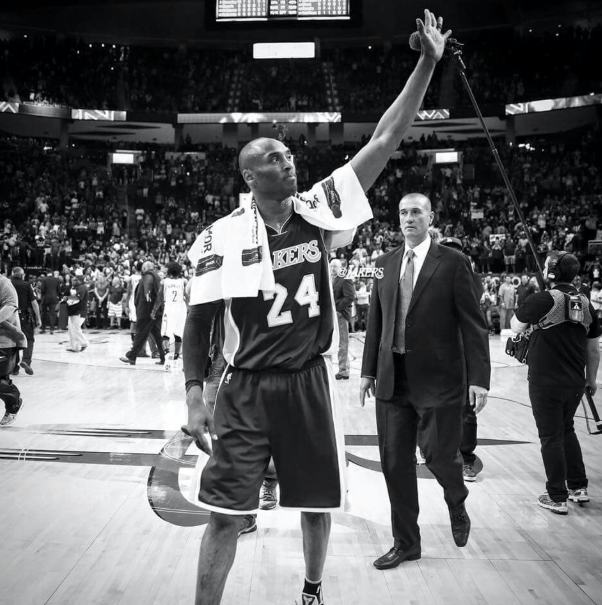
Others remember the final game of his career, when he scored 60 points against the Utah Jazz and walked away from the court in storybook fashion.
But perhaps the most enduring image is Kobe as a person who refused to stop learning.
His career demonstrated that greatness is not simply about being gifted. It is about what someone does with that gift.
Kobe Bryant’s life was tragically short, but his influence continues.
Every time an athlete stays late to practice, every time someone chooses persistence after failure, and every time a young person decides that a setback will not define them, a small part of that philosophy lives on.
The world said goodbye to Kobe Bryant in 2020, but his legacy did not disappear.
Championship banners remain in Los Angeles. His records remain in NBA history. His films and creative work remain. His words continue to circulate. His approach to discipline continues to inspire.
Most importantly, the memories remain with the people who watched him play and the people whose lives he touched.
Kobe Bryant was a basketball legend, but his story ultimately became larger than basketball.
He showed generations of fans what intense dedication could look like. He demonstrated that failure could be confronted rather than avoided. He reminded people that improvement is a lifelong process.
Farewell, Kobe.
The game moved forward without you, but it never truly became the same.
Your career ended on the basketball court, but your influence continues far beyond it.
The numbers will remain in record books. The championships will remain in history. The highlights will continue to be replayed.
And the Mamba Mentality will continue to inspire people who refuse to give up.
That is the lasting legacy of Kobe Bryant: not simply that he was one of basketball’s greatest players, but that he inspired people to demand more from themselves.
A legend may leave the court, but a true legacy never leaves the hearts of those who were inspired by it.