Ongoing Tensions in the South China Sea: China’s Assertiveness Meets U.S. Naval Presence
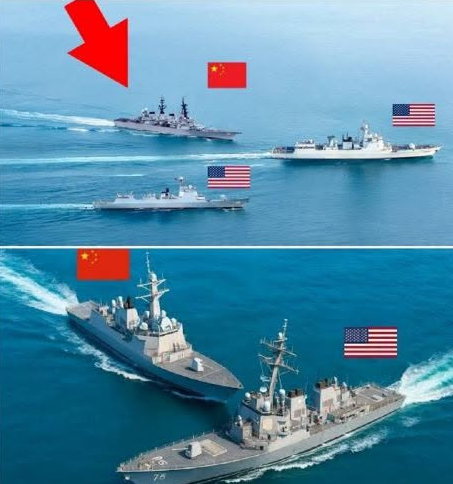
As of mid-July 2026, the South China Sea remains one of the world’s most volatile flashpoints. Headlines like “THIS MORNING: China Challenged the US Navy” often capture the steady drumbeat of patrols, shadowing operations, diplomatic protests, and near-misses rather than a single dramatic confrontation on any given day. While no major new incident appears to have broken in the last 24-48 hours based on available reporting, the region is in a heightened state of friction amid the 10th anniversary of the 2016 Hague arbitral ruling against China’s expansive “nine-dash line” claims.
China continues to reject the tribunal’s decision, which favored the Philippines and invalidated historic rights claims overlapping with exclusive economic zones (EEZs) of several Southeast Asian nations. Beijing maintains that its sovereignty over features like the Paracels, Spratlys, and Scarborough Shoal is indisputable and accuses the United States and allies of militarizing the region through freedom of navigation operations (FONOPs), joint exercises, and alliances.
Recent Context and Patterns of Engagement
In recent months, Chinese forces have routinely monitored and responded to U.S. and allied naval activity. Examples include:
- Chinese warships and coast guard vessels shadowing U.S.-Philippine drills.
- Electronic warfare incidents, such as actions against a Dutch frigate near the Paracels.
- Protests over U.S. destroyer transits near disputed features.
These interactions follow a familiar script: the U.S. Navy conducts operations it describes as upholding international law and freedom of navigation; China frames them as provocations and deploys ships, aircraft, or coast guard assets to “track, monitor, warn, and expel” intruders from what it considers its waters.
The U.S. maintains it does not take sides on sovereignty but opposes any unilateral attempts to change the status quo through force or coercion. Washington’s presence, including carrier strike groups like the USS Abraham Lincoln’s earlier transit, signals commitment to allies like the Philippines (under their Mutual Defense Treaty) and to keeping sea lanes open — through which roughly one-third of global shipping passes.
On the diplomatic front, a joint statement by the U.S., Japan, Philippines, and others on the anniversary of the Hague ruling reaffirmed that China’s broad maritime claims have “no basis” in international law. China responded by urging Europe and others to stay out of the issue to avoid harming bilateral ties.
China’s Strategy: “Gray Zone” Tactics and Island Building
Beijing’s approach relies heavily on gray-zone operations — actions below the threshold of armed conflict. The Chinese Coast Guard (CCG) and maritime militia play prominent roles, using water cannons, ramming, blocking maneuvers, and floating barriers. Recent activity includes development at Antelope Reef in the Paracels, with dredging suggesting potential runway construction.
China has built and militarized artificial islands in the Spratlys, equipping them with airstrips, radars, and missile systems. This creates a network of outposts that extend its operational reach far from the mainland. Incidents near Scarborough Shoal (Huangyan Island) have been particularly tense, with reports of temporary structures, barriers, and naval standoffs.
These moves aim to normalize Chinese administration and deter other claimants (Philippines, Vietnam, Malaysia, Brunei, Taiwan) from exercising their rights. Fishing fleets, often coordinated with militia, assert physical presence while coast guard vessels provide backing.
U.S. Response: Deterrence Through Presence and Partnerships
The U.S. counters with regular FONOPs, overflights, and strengthened alliances. Joint exercises like those with the Philippines, Japan, Australia, and others demonstrate interoperability. The U.S. Coast Guard has also increased involvement, adding another layer to maritime domain awareness.
Technological edges matter: U.S. forces emphasize freedom of navigation under UNCLOS, while investing in long-range strike capabilities, submarines, and distributed operations to operate effectively in contested environments. Recent aircraft crashes in the South China Sea (unrelated operational incidents in late 2025) highlighted risks even in routine activities.
Allies are key. The Philippines has granted expanded U.S. access to bases and conducts more frequent joint patrols. Japan and Australia contribute through capacity-building and multilateral statements. However, many Southeast Asian nations prefer hedging — engaging economically with China while seeking security ties with the U.S. — rather than outright alignment.
Risks and Broader Implications
The primary danger is miscalculation. A collision, ramming incident, or escalation involving live fire could spiral quickly, especially near Second Thomas Shoal or Scarborough. Both sides have protocols to manage crises, but nationalism, domestic politics, and the fog of contested waters complicate de-escalation.
Economically, disruption would be catastrophic. The South China Sea is rich in fisheries and potential oil/gas resources. Geopolitically, control influences Indo-Pacific power balances, with implications for Taiwan contingencies — some analysts see SCS assertiveness as a testing ground or precursor.
China’s military modernization, including its growing navy (now the world’s largest by hull count), advanced missiles, and island bases, narrows the qualitative gap with the U.S. Yet the U.S. retains advantages in experience, alliances, submarines, and power projection.
Paths Forward
Diplomatic off-ramps exist but are narrow. Beijing proposes bilateral talks and rejects third-party arbitration. Some voices suggest using mechanisms like the International Organisation for Mediation. ASEAN centrality is often invoked but challenged by internal divisions.
For the U.S., sustaining credible presence without overstretch is vital. Under any administration, core interests — free navigation, ally defense commitments, and preventing hegemony — remain consistent.
In summary, while today’s headline may amplify routine activity into a breaking event, the underlying reality is persistent strategic competition. China is reshaping facts on the water through persistent presence and infrastructure. The U.S. and partners respond with law-based operations and partnerships. Neither side seeks outright war, but the lack of mutual trust and differing interpretations of international rules ensure the South China Sea will test resolve for years to come.
This dynamic reflects broader U.S.-China rivalry: a contest of wills, capabilities, and narratives over the future of the Indo-Pacific. Stability depends on clear communication, demonstrated resolve, and avoidance of accidental triggers. As satellite imagery, coast guard videos, and diplomatic exchanges continue daily, the region stays on edge — a powder keg watched closely by the world.