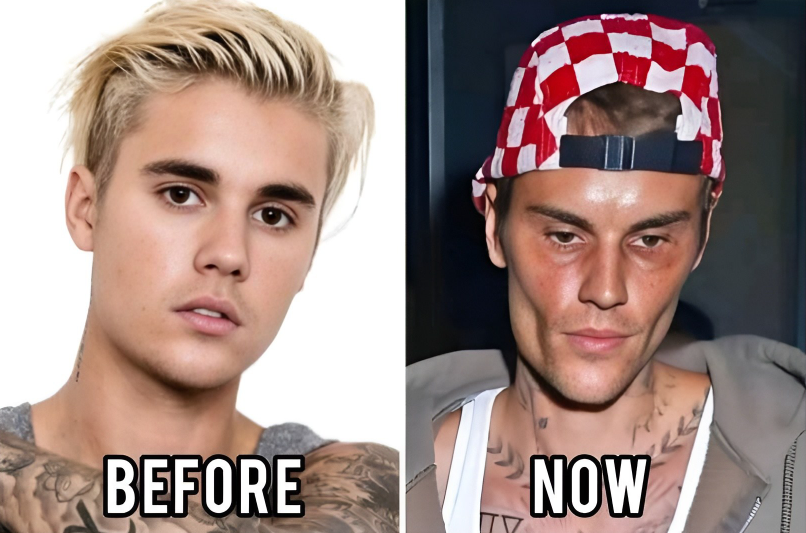
Justin Bieber admits that he tested positive for Ramsay Hunt Syndrome – and it changed everything.
In June 2022, the pop superstar took to Instagram with a video that shocked the world. One side of his face was visibly paralyzed. Justin Bieber, then 28, spoke slowly and with visible effort: he had been diagnosed with Ramsay Hunt syndrome, a rare neurological condition caused by the varicella-zoster virus (the same virus behind chickenpox and shingles). The “positive” test wasn’t for drugs or a scandal—it was for this debilitating disorder that temporarily robbed him of his smile, his ability to close one eye, and, for a time, his confidence on stage. What followed was a deeply personal battle with health, fame, faith, and resilience that continues to shape his life years later.
The Diagnosis That Stopped the World Tour
Bieber was in the middle of his Justice World Tour when symptoms hit hard. The virus had reactivated in his facial nerves, causing inflammation and paralysis. Ramsay Hunt syndrome is more than just a rash and weakness—it brings intense ear pain, hearing loss, dizziness, and the dramatic facial droop that fans immediately noticed. Bieber didn’t hide it. He posted the raw video, explaining the condition and asking fans for prayers. The tour was postponed. Speculation exploded across social media. Some worried it was permanent. Others turned it into conspiracy fodder. But Bieber faced it head-on.
“I’ve been diagnosed with Ramsay Hunt syndrome,” he said in the video. The vulnerability was striking for a man who had spent over a decade under intense public scrutiny—from teenage heartthrob to tabloid target.
Bieber’s Long Health Journey
This wasn’t Bieber’s first major health scare. In 2020, he revealed he had been diagnosed with Lyme disease, a tick-borne illness that left him fatigued, anxious, and struggling with physical symptoms many dismissed as “just being dramatic.” The combination of chronic conditions, the pressures of superstardom, early fame, and past substance issues painted a picture of a young man fighting invisible battles while the world demanded new music and perfect performances.
By his late 20s, Bieber had already survived the darkest chapters: public meltdowns, legal troubles, toxic relationships in the industry, and the mental toll of being a global brand before he could legally drink. Marriage to Hailey Bieber (née Baldwin) in 2018 became an anchor. Their relationship, though heavily scrutinized, provided stability. The couple has spoken openly about faith, therapy, and prioritizing mental health.
Ramsay Hunt added a new layer. Recovery involved steroids, antiviral medications, physical therapy for his face, and time—lots of it. Fans watched as he slowly regained movement. By late 2022 and into 2023, he was back performing, though he admitted some lingering effects and the emotional weight of the ordeal.
Life After the Diagnosis: Fatherhood, Music, and Maturity
Fast forward to 2025-2026. Justin and Hailey welcomed their first child, son Jack Blues Bieber, in 2024. Fatherhood has visibly shifted his priorities. Recent photos show a more settled Bieber—still stylish, still making music, but clearly focused on family. He has addressed ongoing health speculation firmly, with representatives calling out harmful rumors about drug use or decline. Instead, insiders say he’s been making new music, enjoying private life, and continuing to manage the long-term effects of his conditions.
The Ramsay Hunt experience taught him patience. “Your body can betray you even when you’re young and seemingly invincible,” he reflected in later interviews. The condition forced him to slow down in an industry that rewards constant output. It deepened his reliance on prayer, therapy, and his support system. Hailey has been vocal about her own health struggles (including a mini-stroke in 2022), making the couple symbols of young people navigating serious wellness issues in the spotlight.
The Medical Reality of Ramsay Hunt Syndrome
Ramsay Hunt syndrome occurs when the shingles virus affects the facial nerve near the ear. Symptoms can include:
- Facial paralysis on one side
- Painful shingles rash in or around the ear
- Hearing loss or tinnitus
- Vertigo and balance issues
- Difficulty eating, drinking, or speaking clearly
Early treatment with antivirals and corticosteroids improves outcomes, but full recovery can take weeks to months. Some patients experience long-term complications like synkinesis (abnormal nerve regrowth causing involuntary movements) or persistent weakness. Bieber was fortunate to recover most function, but he has been candid that the scare made him confront mortality and priorities.
Medical experts praised his openness, noting it raised awareness for a condition many had never heard of. Facial paralysis can be isolating and psychologically devastating; Bieber’s platform helped destigmatize it.
Public Reaction and Lessons Learned
The internet, predictably, was a mix of support and cruelty. Memes circulated. Conspiracy theorists claimed everything from vaccines to Illuminati plots. But millions of fans flooded social media with well-wishes. Fellow artists like Ariana Grande and Shawn Mendes sent love. It humanized Bieber at a time when many still viewed him through the lens of his chaotic early 20s.
The ordeal reinforced themes in his music: redemption, growth, faith. Albums like Changes and Justice already explored vulnerability; post-diagnosis work reflects even deeper maturity. He has spoken about breaking generational cycles, being present for his son, and protecting his peace.
Where Justin Stands Today
As of 2026, Justin Bieber appears focused on the long game. New music drops (including rumored projects titled Swag), selective performances, heavy involvement in family life, and continued advocacy for mental and physical health. He no longer chases the relentless pace of peak Bieber-mania. Instead, he’s building something sustainable.
His admission of the Ramsay Hunt diagnosis wasn’t just medical transparency—it was a turning point. It forced the world to see him as a human being navigating real pain rather than a perpetual tabloid character. In doing so, Bieber modeled something powerful: strength isn’t pretending to be unbreakable. It’s showing up, speaking truth, and continuing forward even when half your face won’t cooperate.
For fans, it’s a reminder that even the biggest stars deal with health mysteries, viral reactivations, and the quiet work of recovery. For anyone facing chronic illness, Bieber’s journey offers hope—visible setbacks don’t define the final chapter.
Justin Bieber tested positive for a rare syndrome that tried to silence him. Instead, it amplified his voice on vulnerability, faith, and resilience. The boy who once screamed for attention from stadiums has grown into a man who values stillness, family, and authenticity. And in that evolution, he may have created his most enduring legacy yet.