Los Angeles Erupts: Riots and Mass Protests Shake Trump’s Grip on Power
Los Angeles has always been a city of symbols. From Hollywood to Watts, from City Hall to Sunset Boulevard, it reflects the hopes, frustrations, and contradictions of America itself. Now, once again, the City of Angels finds itself at the center of national turmoil. Massive protests have flooded the streets, clashes with police have intensified, and a wave of unrest is rippling across the country — all fueled by a political moment that feels bigger than any single election or individual leader.
The trigger, according to organizers and activists, is not just one policy or one speech, but a growing sense of anger, fear, and exhaustion. Many protesters say they feel democracy itself is under strain. For them, this is not simply about Donald Trump — it’s about power, accountability, and who gets to define the future of the United States.
A City on Edge
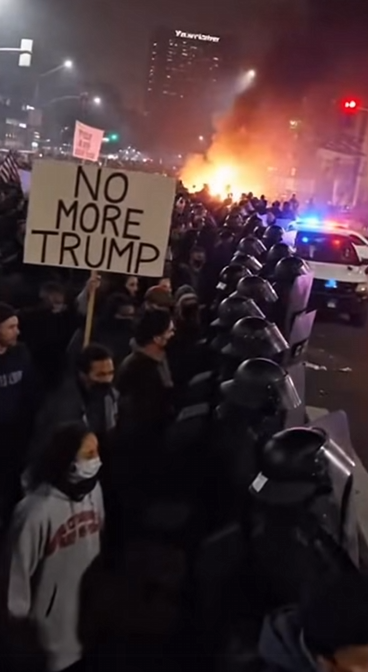
It began with demonstrations in downtown Los Angeles. At first, they were peaceful: people holding signs, chanting slogans, and demanding change. Families, students, workers, and retirees filled the streets. But as night fell, the mood shifted. Tensions rose. Police lines formed. Flash-bangs echoed. Smoke drifted through intersections that are normally clogged with traffic and tourists.
By morning, the images were everywhere: burning trash bins, shattered storefronts, helicopters circling overhead, and crowds facing off against armored officers. Some called it chaos. Others called it resistance.
To many in L.A., the protests represent a breaking point. Years of political division, economic pressure, rising living costs, and cultural conflict have collided. Trump’s presence — whether in office, campaigning, or dominating headlines — remains a lightning rod.
“He represents something bigger than one man,” said one protester near Pershing Square. “He represents a system that doesn’t listen to us.”
Trump and the Politics of Power
Donald Trump has always thrived on confrontation. Supporters see him as a fighter who challenges elites. Critics see him as a destabilizing force who weakens institutions and fuels division. In moments like this, both sides feel validated.
From Trump’s perspective, unrest is often framed as lawlessness that must be crushed. His language has historically emphasized “order,” “strength,” and “control.” When cities burn, he portrays himself as the only leader willing to restore stability.
But critics argue that this very approach makes things worse. They say it deepens resentment, radicalizes opposition, and pushes people into the streets.
“The more he talks about cracking down, the more people feel unheard,” said a political analyst in California. “And when people feel unheard long enough, they stop asking politely.”
Protests or Riots?
The word choice matters. To some, these are riots — destructive acts that hurt small businesses and ordinary families. To others, they are protests — raw, messy expressions of rage against a political system they believe is broken.
In Los Angeles, both realities are visible. Many demonstrators remain peaceful. They march, sing, and hold vigils. But alongside them are smaller groups who smash windows, set fires, and confront police. That mixture makes it hard for the public to know what story to believe.
One shop owner near Broadway said, “I support people speaking out. But burning my store doesn’t fix anything.”
Meanwhile, a college student at the same corner replied, “Nothing changes unless people get uncomfortable.”
The National Shockwave
What happens in L.A. rarely stays in L.A. Within hours, similar protests flared in San Francisco, Portland, Chicago, and New York. Social media amplified every moment — the clashes, the speeches, the arrests. Hashtags trended. Videos went viral. Narratives hardened.
Supporters of Trump blamed “radical left mobs.” Opponents accused Trump of provoking the unrest by stoking fear and resentment.
This isn’t just about streets and sirens anymore. It’s about identity. Who counts as “American”? Who gets protection? Who gets power?
The unrest is shaking more than storefronts — it’s shaking confidence in the political system itself.
A Crisis of Trust
At the heart of the chaos is a crisis of trust. Trust in elections. Trust in leaders. Trust in institutions. When people stop believing that the system works for them, they stop working within the system.
Los Angeles has seen this before — in 1965, in 1992, in waves of protest over war, race, and inequality. Each time, the city became a mirror of America’s unresolved tensions.
Now, once again, those tensions are boiling over.
For many protesters, Trump symbolizes a version of America they reject — one they see as hostile to immigrants, dismissive of minorities, and indifferent to the poor. For his supporters, Trump symbolizes resistance against what they see as cultural decay and political correctness.
Both sides feel under attack. Both sides feel justified. That’s what makes moments like this so dangerous.
What Comes Next?
History shows that unrest can lead to two outcomes: reform or repression. Sometimes both.
If leaders listen, change can happen. If they double down, conflict escalates.
Los Angeles stands at a crossroads. So does the nation.
Will these protests fade into another chapter of unrest? Or will they become the spark for something bigger — a redefinition of how power works in America?
No one knows yet.
But one thing is clear: the streets of L.A. are speaking. Loudly.
And whether Donald Trump’s grip on power weakens or hardens because of it will depend not just on him — but on how the country chooses to respond.