The Photo That Makes Your Brain Do a Double Take
You scroll. You pause. You scroll back.
Wait… what did I just see?
That moment—when your eyes register something but your brain doesn’t immediately understand it—is the magic of a double-take photo. These images hijack your perception. They freeze a fraction of a second where timing, angle, and coincidence collide in a way that feels impossible. And for a brief moment, your brain has to work overtime to make sense of reality.
Let’s explore why some photos make your brain do a double take, how they work, and why we love them so much.
🧠 When Your Brain Gets Confused
Your brain is a prediction machine. It constantly guesses what it’s about to see next based on patterns. Most of the time, it’s right. But when a photo breaks those patterns, your brain stutters.
A double-take photo usually does one (or more) of these things:
• Breaks expectations of size
• Flattens depth in a confusing way
• Merges two separate objects into one
• Freezes a moment right before or after action
Your eyes see the image instantly. Your brain tries to interpret it—and fails the first time.
So you look again.
👀 The Illusion of Impossible Bodies
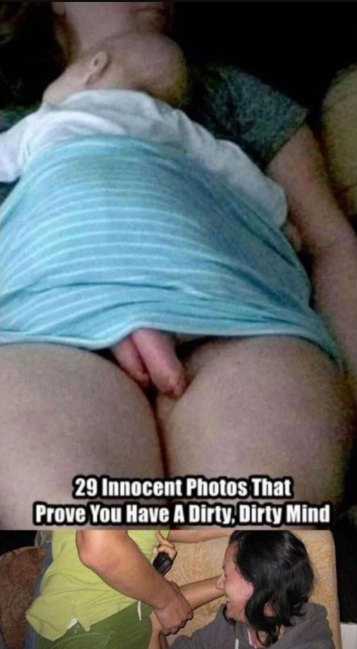
One classic double-take category: the “impossible person.”
You’ll see:
• A man with no head
• A woman with three legs
• A child with an adult torso
• A dog with a human body
At first glance, it feels wrong. Unnatural. Your brain tries to assemble the parts into one being, but the pieces don’t fit.
Then you realize:
• Two people lined up perfectly
• One body is hidden behind another
• A shadow or object is blocking the real form
The illusion collapses. And suddenly, the photo makes sense.
But your brain had to rebuild reality first.
📏 Size That Makes No Sense
Another type of double-take photo plays with scale.
You might see:
• A tiny car that looks like a toy
• A massive dog that seems bigger than a house
• A person who appears taller than a building
The trick is perspective. A small object close to the camera looks huge. A big object far away looks tiny.
Your brain is used to seeing the world in 3D. But a photo flattens everything into 2D. When depth disappears, size lies.
So your brain says:
“That can’t be right.”
And you look again.
🕒 Frozen Before Impact
Some photos don’t confuse you—they suspend you.
They capture:
• A glass mid-air before it shatters
• A wave about to crash
• A ball inches from someone’s face
• A runner mid-fall
Your brain expects motion. It wants to see what happens next. But the photo refuses to continue.
So your mind fills in the future.
And you feel the moment.
That tension makes your brain do a double take—not because it’s confused, but because it’s anticipating.
🎯 Perfect Alignment
Alignment is visual sorcery.
You’ll see:
• A streetlight growing out of someone’s head
• The sun sitting perfectly on a fingertip
• A sign slicing a person in half
• A bird’s wings becoming someone’s arms
These photos trick your brain because it assumes objects that line up belong together.
But they don’t.
They just happened to share the same line of sight at the exact second the camera clicked.
Your brain merges them into one image—and then realizes it made a mistake.
So it looks again.
🧩 Your Brain Solves the Puzzle
What makes these photos addictive is the mental process:
-
Your eyes see something strange
-
Your brain guesses wrong
-
You pause
-
You re-analyze
-
You get the “Ohhh!” moment
That “aha” feeling is rewarding. It’s the same pleasure you get from solving a riddle or spotting something hidden.
Your brain loves being challenged—especially when the answer is right there in front of you.
📱 Why These Photos Go Viral
Double-take photos spread because they:
✔ Are instantly intriguing
✔ Require no explanation at first
✔ Invite the viewer to participate
✔ Reward curiosity
You don’t just see them—you experience them.
They make you stop scrolling.
They make you think.
They make you look again.
🧬 The Psychology Behind It
Your brain uses shortcuts called heuristics—mental rules that help you process the world quickly.
Double-take photos break those shortcuts.
They force your brain to slow down.
And in a world built for speed, that pause feels surprisingly good.
Final Thought
A photo that makes your brain do a double take is more than a picture. It’s a tiny moment of mystery. A visual joke. A puzzle your mind didn’t expect to solve today.
It reminds us that:
Reality isn’t always what it looks like at first glance.
Sometimes, you just need to look again.