Parents’ Love Drives Them to Remove Daughter’s Birthmark
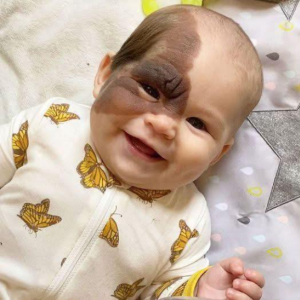
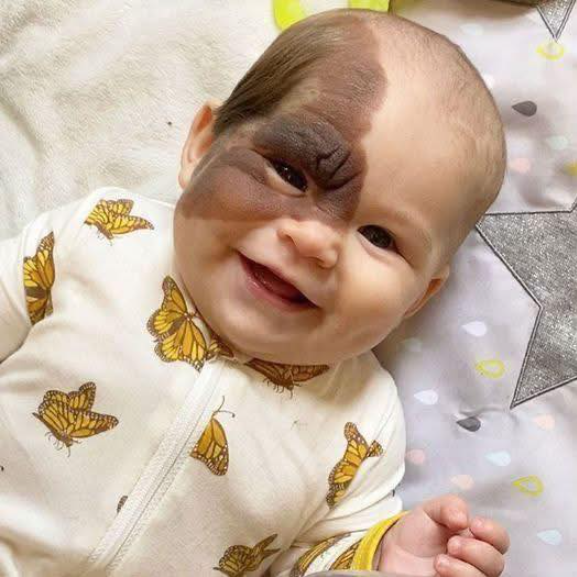
From the moment their daughter was born, Anna and David knew she was perfect. Her tiny fingers curled instinctively around her father’s thumb, and her first cries filled the hospital room with relief and joy. But as nurses gently cleaned the newborn, a dark, irregular birthmark stretching across the left side of her face became visible. It covered part of her cheek and extended toward her eye. The doctors called it a congenital nevus—a condition that, while medically harmless in most cases, would likely draw attention throughout her life.
To Anna and David, the mark did not change how they saw their child. She was beautiful, whole, and deeply loved. Yet even in those early hours, they felt a quiet fear settle in their hearts. They knew how cruel the world could be, especially to those who looked different.
As the months passed, their daughter—whom they named Lily—grew into a cheerful baby with bright eyes and an infectious laugh. Strangers often stopped to admire her, but their compliments were frequently followed by awkward glances or intrusive questions. Some asked what had “happened” to her face. Others stared too long, as if trying to figure out whether the mark would fade with time.
Anna tried to ignore the comments, reminding herself that Lily was still too young to understand. But each question lingered, planting seeds of worry about the future. What would happen when Lily started school? Would children be kind, or would they point, whisper, or tease? David shared the same fears, remembering how even small differences could become targets in childhood.
When Lily was two years old, the couple consulted a pediatric dermatologist to better understand the birthmark. The doctor explained that while the nevus was not dangerous, it could grow as Lily grew. In some rare cases, such birthmarks carry a small risk of medical complications later in life. Surgical removal was an option, though it would require multiple procedures and careful consideration due to Lily’s young age.
The decision weighed heavily on the parents. They struggled with difficult questions. Were they considering surgery for Lily’s well-being—or for their own fears? Would removing the birthmark send the message that something about her was “wrong”? Or would leaving it expose her to emotional pain they could prevent?
For months, Anna and David debated, researched, and sought second opinions. They spoke with doctors, psychologists, and even adults who had grown up with visible birthmarks. Some shared stories of resilience and self-acceptance. Others spoke openly about years of bullying, isolation, and wishing their parents had intervened earlier.
One conversation stood out. A child psychologist explained that while confidence and parental support are crucial, repeated negative social experiences can deeply affect a child’s self-esteem. “There is no perfect choice,” she said gently. “Only the choice you believe best protects your child’s physical and emotional health.”
Ultimately, the decision came down to love—not fear. Anna and David wanted Lily to grow up with as few obstacles as possible, free to define herself without her appearance becoming the first thing others noticed. They chose to proceed with the surgery, promising themselves they would always teach Lily that she was worthy and beautiful, with or without the mark.
The first procedure took place shortly after Lily’s third birthday. The hospital room was filled with stuffed animals and soft blankets to comfort her. As the surgeons worked, Anna and David waited anxiously, holding hands and replaying every doubt in their minds. When the doctor finally emerged with reassuring news, Anna wept with relief.
Recovery was slow and challenging. Lily experienced discomfort and confusion, not fully understanding why her face hurt or why bandages covered her cheek. Her parents stayed by her side, offering constant comfort, songs, and bedtime stories. They celebrated small milestones—when the swelling reduced, when the stitches healed, when Lily smiled again without pain.
Over the next few years, Lily underwent additional procedures to minimize scarring and ensure proper healing. With each surgery, the birthmark faded further, becoming less noticeable. By the time she entered kindergarten, only a faint trace remained.
Today, Lily is a confident, energetic child who loves drawing, climbing trees, and telling stories. She knows about her birthmark and the surgeries, explained to her in simple, honest terms. Her parents never hid the truth. They told her that she was born unique, and that their choices were made out of love and care—not shame.
Still, Anna and David remain aware that their decision may be questioned by others. Some believe visible differences should always be embraced rather than altered. Others argue that medical intervention can prevent unnecessary suffering. The couple respects both perspectives but stands by their choice.
“We didn’t want the world to decide who she is before she had the chance,” David says. “If she grows up and wishes we had done differently, we’ll listen. But every step we took was to protect her.”
Anna adds, “What matters most is that Lily knows she is loved beyond her appearance. That has always been true.”
Their story highlights a deeply personal dilemma faced by many parents—how to balance acceptance with protection, and love with difficult choices. There is no universal answer, only the quiet determination of parents doing what they believe is best for their child.
In the end, Lily’s story is not about a birthmark or its removal. It is about parents who looked at their daughter and saw a future full of possibility—and chose, with heavy hearts and hopeful hands, to help her face the world with confidence