1. Background: Trump & U.S.–Mexico Tensions
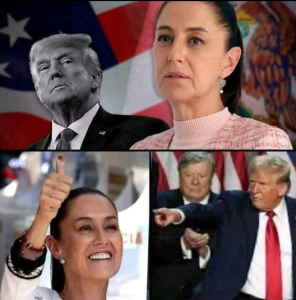
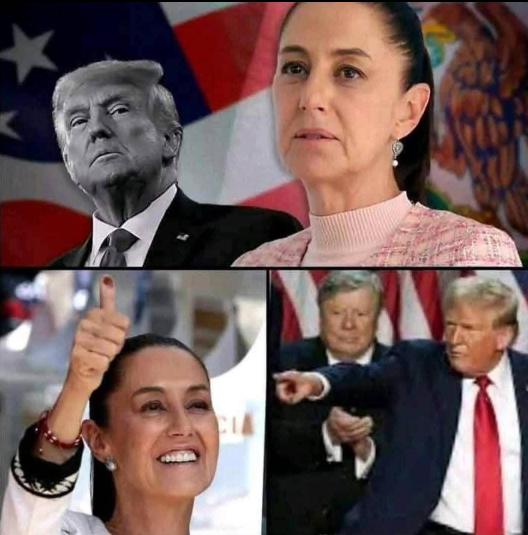
Since Donald Trump returned to the U.S. presidency in 2025, bilateral relations with Mexico have been strained over security, migration, trade, and sovereignty. Trump has repeatedly pressured Mexico to take stronger action against drug cartels and migration flows. He has also used the threat of tariffs and military action as leverage. Bloomberg Línea+1
In public remarks, Trump has claimed frustration with Mexico’s efforts to stop drug trafficking — at times referring to cartels in extremely strong language and suggesting interventionist options. For example, U.S. officials under Trump’s administration have discussed measures against cartels and have signaled willingness to take “additional actions” if Mexico does not make more headway. infobae
It’s important to recognize that Trump’s rhetoric often serves dual purposes: pressuring Mexico diplomatically while also appealing to his political base in the U.S. by highlighting border security and crime concerns — a recurring theme of his political messaging. Forbes México
In this context, Mexico’s president, Claudia Sheinbaum, has taken a firm public stance defending Mexican sovereignty and rejecting proposals she views as incompatible with Mexico’s constitutional and diplomatic norms.
2. What the Mexican President Actually Said
The key statement in question came in response to Trump’s suggestion that U.S. military forces could assist in combating drug cartels inside Mexican territory. Trump had indicated that he was “OK” with crossing into Mexico for operations against drug trafficking organizations — an idea that Mexico’s leadership has firmly rejected. Los Angeles Times
Sheinbaum’s response was direct:
“We will never accept the presence of the United States Army in our territory,” she said, emphasizing that cooperation can occur — but only on Mexican terms: information sharing, training, and other forms of collaborative effort, not unilateral military intervention. Bloomberg Línea
She framed this rejection not just as a policy choice but as a defense of national sovereignty. She brought up historical memory — specifically the Mexican–American War (1846–1848), in which Mexico lost a large portion of its territory — to illustrate why foreign military intervention is a sensitive subject and why it is absolutely unacceptable in contemporary politics. Anadolu Ajansı
In her words during another public appearance:
“You in your territory, we in ours. We can work together, but there will be no U.S. military on Mexican soil.” Bloomberg Línea
Sheinbaum also repeatedly pointed out that Mexico welcomes cooperation against crime and trafficking, but it must be framed as mutual, sovereign collaboration — not external command or unilateral action by another state.
3. Why This Matters
A. Sovereignty & National Identity
Mexico’s political leadership has historically been extremely sensitive to foreign military intervention due to the 19th-century war with the United States, which resulted in Mexico ceding more than half its territory (including present-day California, Texas, Arizona, and others). That historical memory runs deep and is a central theme in Mexico’s defense of sovereignty today. Anadolu Ajansı
By invoking this painful historical chapter, Sheinbaum isn’t merely engaging in rhetoric — she is signaling to both domestic and international audiences that sovereign independence remains non-negotiable. Any suggestion that U.S. troops could operate inside Mexico strikes a political nerve that spans generations.
B. Diplomatic Balance & Security Cooperation
Despite tensions, Mexico does work with the United States on security matters. Sheinbaum and her administration are willing to share intelligence, coordinate operations, and accept certain kinds of assistance — but only if it respects Mexican state authority and legal oversight.
This is a nuanced diplomatic position: reject military intervention, but continue cooperation on shared security concerns. It’s a way of saying, “We want fewer cartels, but we also must protect our national integrity.” Bloomberg Línea
This stance also reflects a broader pattern of Mexican foreign policy under Sheinbaum: maintain a firm stance on sovereignty while engaging pragmatically where mutual interests align.
C. Domestic Political Impact
Sheinbaum’s response has strong implications domestically in Mexico:
-
Political Credibility: Defending sovereignty against perceived external pressure bolsters her standing among many Mexican voters who value independence and national pride.
-
Opposition Response: Some opposition figures in Mexico have even echoed Trump’s criticisms that cartels wield excessive influence or have suggested stronger measures — but Sheinbaum’s firm defense counters such narratives and distinguishes her leadership approach. Reddit
-
Public Opinion: Mexican public opinion is often wary of foreign intervention of any kind, particularly U.S. military involvement. By framing her response around national rights rather than purely security concerns, Sheinbaum taps into a deep reservoir of public sentiment.
4. Trump’s Position: Tough Talk on Security & Cartels
To understand Sheinbaum’s remarks, it’s useful to look at Trump’s broader stance:
-
Trump has described drug cartels in extremely aggressive terms — at times likening them to terrorist organizations — and has said he would consider “any measure necessary” to stop the flow of drugs into the U.S. infobae
-
Trump’s administration has also used threats of tariffs and trade restrictions to pressure Mexico on issues like migration and security cooperation. Publimetro México
-
In some media interviews, Trump has directly criticized Sheinbaum, claiming she is hesitant or afraid to act against cartels — a claim she strongly denies. infobae
It is important to note that while Trump’s comments about military involvement are dramatic, they have not resulted in actual deployment of U.S. forces in Mexico.
5. What This Means for U.S.–Mexico Relations Going Forward
The dynamic between the two leaders reflects a larger diplomatic balancing act:
-
Shared Challenges: Drug trafficking, migration, and cross-border crime are ongoing issues that require bilateral cooperation.
-
Sovereignty Sensitivities: Mexico insists on managing its internal affairs without foreign military presence — a stance that Sheinbaum has made unmistakably clear.
-
Policy Tensions: U.S. demands for stronger action against cartels and migration often clash with Mexican constitutional limits and public opinion.
-
Room for Cooperation: Despite disagreements, both governments have continued to engage on intelligence, trade, and border security issues in ways that respect mutual sovereignty.
6. Conclusion
In summary:
-
Sheinbaum’s statement rejecting U.S. military involvement in Mexico underscores a firm defense of national sovereignty and historical memory. Bloomberg Línea
-
It reflects ongoing tensions between Mexico and the U.S. over how to address cartels, drug trafficking, and border security. infobae
-
It also shows a pragmatic diplomatic approach: willing to collaborate, but only within the bounds of Mexican control.
-
And finally, it influences both domestic politics in Mexico and the broader strategic relationship between two neighboring countries that are economically and socially intertwined — even as they sometimes clash over policy and perception.