🌙 After 20 Years: The Natalee Holloway Mystery Finally Solved
For two decades, the name Natalee Holloway echoed through newsrooms, courtrooms, and living rooms across the world—a symbol of unanswered questions, parental anguish, and the chilling fragility of youthful innocence. Her disappearance in 2005 during a graduation trip to Aruba became one of the most infamous unsolved cases of the 21st century. And now, after 20 years of silence, speculation, and sorrow, the mystery has finally been solved. But the truth, as it turns out, is far darker than anyone hoped.
🌴 The Vanishing in Paradise
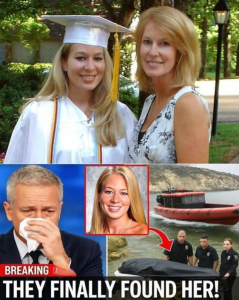
Natalee Holloway was 18 years old—an honors student from Mountain Brook, Alabama—when she joined her classmates for a celebratory trip to the Caribbean island of Aruba. On the night of May 30, 2005, she was last seen leaving a nightclub with a young Dutch man named Joran van der Sloot, then 17, and two other local men. She never returned to her hotel. Her luggage remained untouched. Her passport was never used again.
Despite exhaustive searches, international media coverage, and relentless advocacy from her mother, Beth Holloway, Natalee’s body was never found. The case became a global obsession, spawning documentaries, books, and countless theories. But no charges ever stuck. Van der Sloot was arrested multiple times, only to be released due to lack of evidence.
🧩 A Killer’s Trail of Destruction
In a cruel twist of fate, exactly five years after Natalee’s disappearance, van der Sloot murdered another young woman—Stephany Flores, a Peruvian business student—in Lima. This time, the evidence was irrefutable. He was convicted and sentenced to 28 years in prison.
Yet even behind bars, van der Sloot remained a figure of intrigue and menace. In 2010, he extorted $25,000 from Beth Holloway, promising to reveal the location of Natalee’s remains. The FBI caught him in the act, and the U.S. charged him with wire fraud and extortion. But it wasn’t until 2023, during a plea deal in that federal case, that the truth finally emerged.
🧱 The Confession: A Night of Horror
In a chilling courtroom confession, van der Sloot admitted to murdering Natalee Holloway on a moonlit beach in Aruba. He described how he had hoped to seduce her, but when she rejected his sexual advances, he became violent. According to his statement, Natalee kneed him in the groin to escape. Enraged, he kicked her in the face, rendering her unconscious. Then, he found a cinder block nearby and smashed her head in, stating that her face “collapsed in”.
The confession was part of a plea agreement in the extortion case, and though it brought long-awaited answers, it also reopened wounds. Van der Sloot’s account was graphic, remorseless, and devoid of empathy. He claimed he disposed of Natalee’s body in the ocean, ensuring it would never be found.
💔 Beth Holloway’s Reckoning
For Beth Holloway, the confession was both a vindication and a devastation. She had spent 18 years fighting for justice, enduring false leads, media scrutiny, and emotional torment. In court, she confronted van der Sloot directly, saying, “You brutally killed her. You didn’t just take her life—you took mine too.”
Her courage and persistence had kept the case alive, and her advocacy helped bring about the confession. But the lack of a body, the absence of remorse, and the legal limitations in Aruba—where the statute of limitations had expired—meant van der Sloot would not be prosecuted for Natalee’s murder.
🕯️ Closure Without Justice
Though Natalee was declared legally dead in 2012, the confession marked the first time her fate was confirmed. Yet many felt the resolution was incomplete. Van der Sloot’s account raised questions: Did he act alone? Was his story truthful or self-serving? Could others have helped cover up the crime?
Private investigators and legal experts remain skeptical. Some believe van der Sloot’s confession was tailored to fit the plea deal, minimizing his culpability while maximizing his leverage. Others argue that the confession, while horrifying, finally gave the Holloway family—and the world—an answer.
📺 A Case That Changed Crime Reporting
The Natalee Holloway case reshaped how missing persons cases are covered. It highlighted the power of media, the flaws in international law enforcement cooperation, and the resilience of families seeking justice. It also exposed the dangers of tourist destinations where jurisdictional gaps can hinder investigations.
True crime enthusiasts, journalists, and legal scholars continue to dissect the case. Documentaries like The Disappearance of Natalee Holloway and Obsession Turned Deadly have kept the story alive, while new podcasts and YouTube channels revisit the timeline, the suspects, and the cultural impact of the case.
🌊 Legacy of a Life Cut Short
Natalee Holloway’s story is more than a crime—it’s a cautionary tale, a testament to maternal love, and a reminder of the fragility of safety. Her disappearance sparked reforms in travel safety awareness, inspired advocacy for missing persons, and galvanized communities around the world.
Though her life was stolen in a moment of violence, her legacy endures. Scholarships, memorials, and foundations in her name continue to support young women and promote safety abroad. Her mother’s unwavering pursuit of truth remains one of the most powerful examples of advocacy in modern history.
🧠 Final Reflection: The Cost of Truth
The resolution of the Natalee Holloway case brings with it a sobering truth: sometimes, closure comes not with justice, but with pain. The confession may have ended the mystery, but it did not erase the trauma. It did not restore what was lost.
Yet in the face of unimaginable grief, Beth Holloway stood firm. She demanded answers, challenged systems, and gave voice to the voiceless. And in doing so, she ensured that Natalee’s story would not be forgotten.