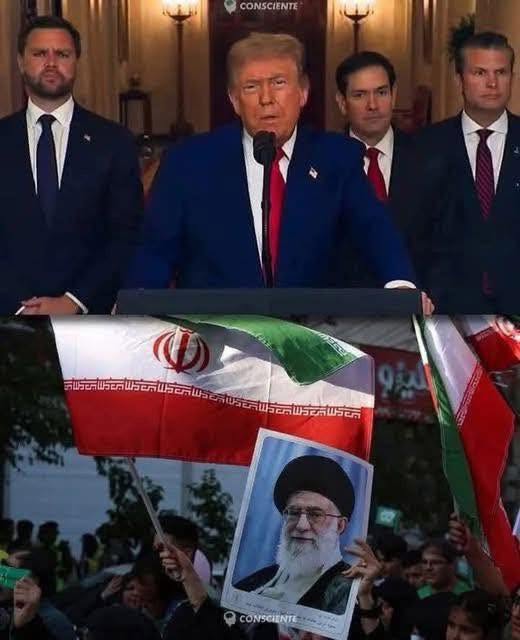
🚨 BREAKING: TRUMP ISSUES MAJOR STATEMENT ABOUT IRAN — “VICTORY IS WITHIN REACH!” THE WORLD WATCHES AS TENSIONS RISE 🌍
A major international development has captured global attention after President Donald Trump delivered a new message concerning the ongoing conflict with Iran. His latest remarks have raised questions about what could happen next, whether negotiations will succeed, and whether the region is approaching another dangerous turning point.
Speaking to reporters at his Mar-a-Lago resort in Florida on Thanksgiving Day, November 26, Trump declared that victory in the conflict would come whenever he decided the time was right.
He also said the United States was giving Iran an opportunity to make an agreement and avoid further loss of life.
His comments immediately placed renewed attention on the relationship between Washington and Tehran.
But what does this announcement actually mean?
Trump’s Message to Iran
President Trump made it clear that his administration believes it has significant leverage over Iran.
During his remarks, he indicated that the United States was prepared to continue applying pressure while leaving an opportunity open for negotiations.
He suggested that Iran still had a chance to reach an agreement, but expressed doubt about whether Iranian leaders would take that opportunity.
The comments came after months of military confrontation, economic pressure, diplomatic discussions, and uncertainty surrounding the future of the region.
For the American administration, the central objective remains preventing Iran from developing nuclear weapons and securing an outcome that Washington considers acceptable.
Iran, however, has its own demands and has repeatedly rejected certain American conditions.
That disagreement remains one of the biggest obstacles to ending the conflict.
Why Iran Is So Important to the United States
Iran occupies an important strategic position in the Middle East.
Its geographical location, military capabilities, energy resources, and relationships with regional groups make it a major factor in international security.
The country also sits near the Strait of Hormuz, one of the world’s most important energy transportation routes.
A significant amount of internationally traded oil passes through this narrow waterway.
Any disruption could affect international shipping, energy prices, and economies around the world.
This is why developments involving Iran are followed so closely by governments in Europe, Asia, the Middle East, and North America.
A conflict that begins in one region can have consequences thousands of miles away.
The Nuclear Issue Remains Central
One of Washington’s most important concerns is Iran’s nuclear program.
For years, the United States and several other Western governments have questioned Iran’s nuclear activities and their potential military implications.
Iran has maintained that its nuclear program is peaceful and has denied seeking nuclear weapons.
The disagreement has contributed to years of sanctions, diplomatic negotiations, and international tensions.
Trump has repeatedly argued that Iran must not obtain a nuclear weapon.
The administration has used economic pressure and military action as part of its approach to the conflict.
However, reaching a lasting agreement will require difficult negotiations over nuclear activities, security guarantees, sanctions, and regional stability.
Russia and China Enter the Discussion
Another important issue involves Iran’s relationships with Russia and China.
Both countries have significant diplomatic and economic relationships with Tehran.
During his Thanksgiving remarks, Trump downplayed the extent of assistance Russia and China were providing Iran.
He suggested that limited intelligence cooperation should not necessarily be interpreted as direct military involvement.
Nevertheless, the relationships between these major powers remain important.
Russia and China have their own strategic interests in the Middle East, and developments involving Iran can affect their broader international relationships.
Any major escalation could therefore create diplomatic consequences beyond the immediate region.
The Dangerous Situation Around the Gulf
The security situation around the Persian Gulf and surrounding waterways remains a major concern.
Commercial shipping, military installations, energy infrastructure, and important transportation routes all operate in this strategically sensitive region.
Recent reports have described attacks and allegations involving military facilities in the Gulf.
On November 26, two Italian nationals were reported killed in a drone attack on a Kuwaiti military facility. Iran denied responsibility for the incident.
The European Union responded by calling for increased pressure on Tehran.
These developments demonstrate how quickly regional tensions can affect countries that are not directly involved in negotiations between Washington and Tehran.
Protecting civilians and preventing further attacks remain important international priorities.
Could Negotiations Finally Bring an End to the Conflict?
Despite the strong language, Trump’s comments also included an opening for diplomacy.
He indicated that the United States was giving Iran an opportunity to reach an agreement that could prevent further loss of life.
This suggests that negotiations remain an important part of the administration’s approach.
However, reaching an agreement will not be simple.
Washington and Tehran have different expectations concerning nuclear restrictions, economic sanctions, military security, and the future of the region.
Both sides would need to make difficult decisions.
Even if negotiations progress, disagreements over the details could delay an agreement.
The coming diplomatic developments will therefore be important.
What Could This Mean for Ordinary Americans?
For people living in the United States, the conflict is not simply a distant international story.
Military developments can influence energy markets, gasoline prices, international trade, and national security discussions.
If tensions increase, financial markets could react to uncertainty surrounding oil supplies and transportation routes.
American military personnel stationed throughout the Middle East could also face additional security concerns.
Families with loved ones serving overseas naturally pay close attention to developments involving American forces.
This is why clear communication from government officials is important.
People deserve reliable information about military developments rather than exaggerated social media rumors.
The World Is Watching What Happens Next
International governments are closely monitoring the situation.
Some countries are encouraging diplomatic solutions, while others are focused on protecting their security interests and preventing attacks against their partners.
The United Nations and other international organizations also have important roles in supporting diplomatic efforts and protecting civilians.
The biggest question is whether the latest American message will encourage meaningful negotiations or lead to another period of confrontation.
There is no confirmed announcement that a final peace agreement has been reached.
There is also no verified announcement that Trump’s Thanksgiving remarks mean an immediate new military offensive has been ordered.
For now, the situation remains uncertain.
FINAL THOUGHTS: A CRITICAL MOMENT FOR THE WORLD 🌍
President Trump’s latest statement about Iran has once again placed the Middle East at the center of international attention.
His message combined confidence in America’s position with an invitation for Iran to reach an agreement.
For millions of people around the world, the hope is that diplomatic efforts will succeed before further lives are lost.
The consequences of a prolonged conflict could extend far beyond the countries directly involved.
From international energy markets to global security, the stakes remain significant.
The coming days and weeks may reveal whether Washington and Tehran can find common ground or whether tensions will continue.
One thing is clear: the world is watching closely, and the decisions made by both governments could shape the future of the Middle East.
💬 What do you think? Will Iran accept Trump’s offer to negotiate, or will tensions continue? Share your thoughts in the comments. 🕊️