A Mom Gave Her 11-Year-Old Son $50 for His School Fair – Hours Later, His Teacher Called in Tears, Saying, “You Need to See What He Did with the Money”
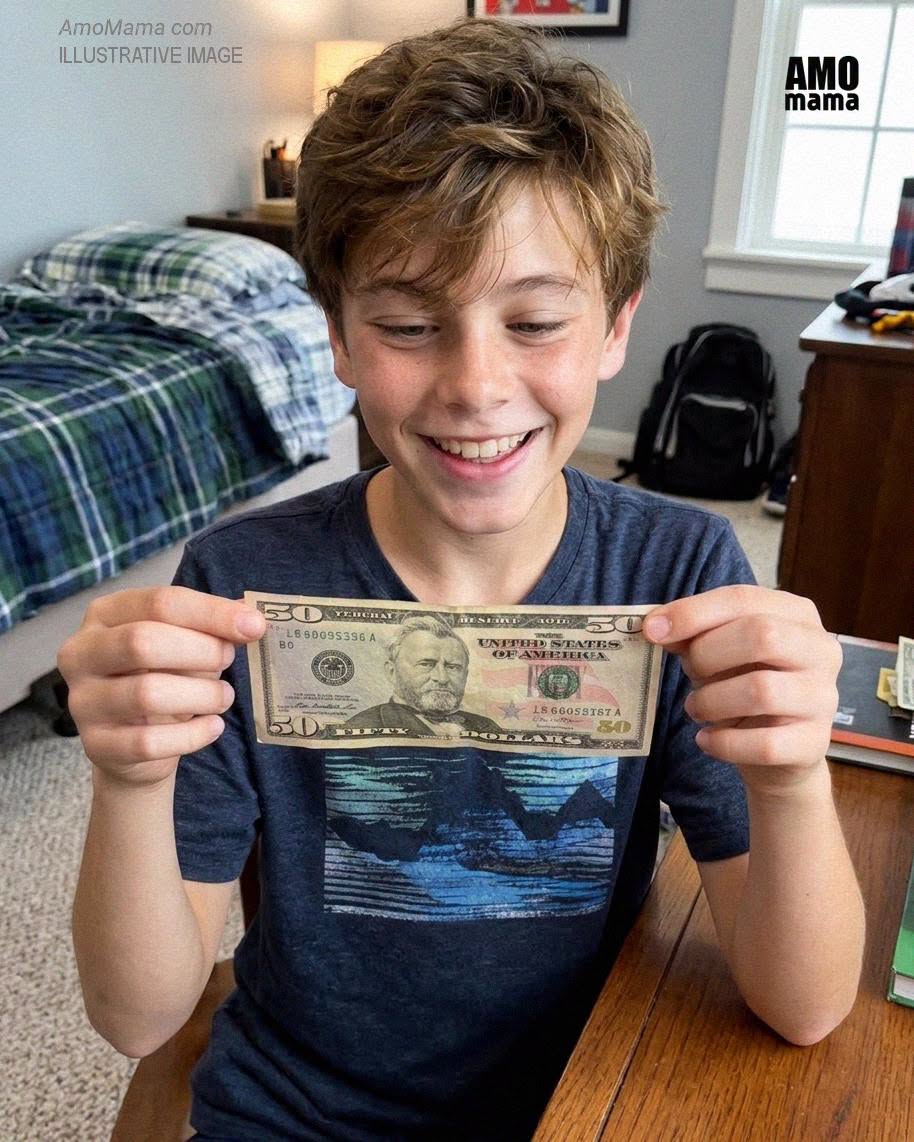
Sometimes, the smallest gestures reveal the biggest hearts. A mother thought she was simply giving her 11-year-old son a little spending money for his school’s annual fair. She handed him a $50 bill, reminded him to have fun, enjoy the activities, and perhaps buy something special for himself.
But she had no idea that this ordinary morning would turn into a moment her family would never forget.
Just a few hours later, her phone rang. It was her son’s teacher, and something about her voice immediately made the mother nervous.
“Hello?” she answered.
There was a brief silence before the teacher spoke.
“You need to come and see what your son did with the money,” she said, her voice trembling with emotion. “I’m honestly having trouble finding the right words.”
The mother immediately wondered whether something had gone wrong. Had her son lost the money? Had he gotten into trouble? Had he done something unexpected?
She asked the teacher what had happened, but the teacher simply replied, “Please come when you can. I think you’ll understand when you see it.”
The Morning Started Like Any Other
The day had begun with excitement.
The school fair was one of the most anticipated events of the year. Students had spent weeks preparing games, food stands, handmade crafts, small performances, and activities designed to bring the school community together.
For the children, it was a chance to enjoy themselves outside the usual classroom routine.
The boy had been talking about the fair for days. He was especially excited because his mother had promised him $50 to spend however he wanted.
Before leaving home, she handed him the money and smiled.
“Have fun today. You can buy something you like, play games, and enjoy yourself. Just be responsible.”
He accepted the money carefully, thanked his mother, and headed off to school.
Like most parents, she imagined he would spend the afternoon enjoying snacks, buying toys, and participating in games with his friends.
She never expected that his choices would touch an entire school.
A Decision That Changed Everything
When the boy arrived at the fair, he noticed something that many other children had overlooked.
While students were laughing, playing games, and visiting different booths, he saw a classmate sitting quietly nearby.
The classmate wasn’t participating in the activities.
Something seemed different.
Perhaps the child couldn’t afford to buy anything. Perhaps there was a family difficulty that made even a small amount of spending money impossible. Whatever the reason, the boy noticed that his classmate was missing out on the fun.
He began thinking about the $50 in his pocket.
He could have spent it all on himself. Nobody would have blamed him. His mother had given him the money specifically for that purpose.
But he had another idea.
Instead of immediately buying something, he started thinking about how he could use the money to make the day better for someone else.
That simple decision would become the most memorable part of the school fair.
The Teacher Notices Something Unusual
As the afternoon continued, the teacher noticed the boy moving between different booths.
At first, she assumed he was simply enjoying the event.
Then she began noticing something unusual.
He wasn’t just purchasing things for himself. He was using his money to help other students participate.
He bought snacks for children who had nothing to spend. He helped classmates enjoy some of the games and made sure that others weren’t left watching from the sidelines.
He wasn’t asking for attention or expecting anyone to praise him.
He simply wanted everyone to enjoy the day.
According to the fictionalized account of this story, his actions eventually caught the attention of several teachers and volunteers.
One teacher later described the moment as a powerful reminder that kindness doesn’t depend on age, wealth, or social position.
Sometimes, it begins with a child noticing that someone else needs help.
The $50 Was No Longer Just Spending Money
As the fair approached its final activities, the boy had used much of his money helping others.
What mattered most wasn’t how much he had spent.
It was the thought behind every decision.
He had understood something that adults sometimes struggle to teach: having something good doesn’t mean much if you cannot find a way to share happiness with someone who needs it.
He could have enjoyed the entire $50 himself.
Instead, he created opportunities for other children to experience the excitement of the fair.
Some students smiled because they finally had something to eat. Others joined activities they had previously avoided.
And for a few children, the kindness of one classmate may have transformed what could have been a disappointing afternoon into a happy memory.
The teacher watched everything unfold with growing emotion.
She realized that the boy had demonstrated a lesson that no textbook could fully explain.
The Phone Call That Left His Mother Speechless
After the fair, the teacher decided she needed to speak with the boy’s mother.
She picked up the phone and called.
When the mother answered, she could hear emotion in the teacher’s voice.
“You need to see what he did with the money,” the teacher explained.
The mother was confused.
“What happened? Is everything okay?”
The teacher reassured her that her son was not in trouble.
Then she began explaining what had happened throughout the day.
She told the mother how the boy had noticed classmates who couldn’t afford to participate and how he had decided to share his money with them.
As the teacher described the situation, the mother became increasingly quiet.
She had given her son $50 so he could enjoy himself.
She had never told him to spend it on others. She hadn’t instructed him to help anyone or expected him to make a sacrifice.
He had made that decision entirely on his own.
For a moment, the mother struggled to respond.
She was surprised, proud, and deeply moved.
The teacher’s emotional phone call suddenly made sense.
A Lesson Bigger Than Any School Fair
The story offers an important reminder about the way children learn kindness.
Parents often teach their children to share, be respectful, and care about others. These lessons are usually delivered through conversations, reminders, and examples.
But sometimes, children demonstrate that they have understood those lessons in ways adults never expect.
This boy’s actions showed that generosity doesn’t have to involve enormous amounts of money.
Fifty dollars might not seem like much to an adult, but to an 11-year-old, it can represent an entire afternoon of excitement.
Giving up some of that spending money meant choosing someone else’s happiness alongside his own.
That is what made the gesture meaningful.
The teacher also recognized that the school fair had become more than an afternoon of entertainment. It had become an opportunity for students to understand empathy, inclusion, and the importance of looking out for one another.
When His Mother Finally Saw Him
Imagine the moment his mother arrived at school.
She expected to find her son surrounded by teachers discussing what had happened.
Instead, she saw a young boy who probably didn’t fully understand why the adults were making such a big deal about his actions.
When she approached him, she asked why he had decided to use his money that way.
His answer, in the spirit of the story, was beautifully simple:
“I just didn’t want them to miss out.”
Those words said everything.
He hadn’t been trying to become a hero. He hadn’t been looking for recognition or a reward.
He had simply noticed that some children were having a different experience from everyone else, and he wanted to make things better.
His mother hugged him tightly.
For her, the $50 had become something much more valuable than the amount printed on the bill. It had revealed something about the person her son was becoming.
The Real Meaning of Generosity
There is an important distinction between teaching children to give and helping them understand why giving matters.
Generosity is not about showing off, receiving compliments, or proving that someone has more than another person.
True generosity comes from recognizing another person’s feelings and responding with compassion.
Children can learn this through everyday experiences.
They can share toys, include someone who is alone, help a classmate who is struggling, or offer a kind word to someone having a difficult day.
Not every act of kindness requires money.
Sometimes, simply inviting someone to join a game can make a tremendous difference.
And sometimes, as this story illustrates, a small amount of spending money can become an opportunity to create happiness for several people.
A Memory That Could Last a Lifetime
The school fair eventually ended. The booths were packed away, the games stopped, and the children returned to their normal routines.
But the lesson behind that afternoon deserved to last much longer.
The boy’s mother had expected her son to return home with souvenirs, snacks, and perhaps a little change in his pocket.
Instead, she received something she could never have purchased: a reminder that kindness is one of the most valuable qualities a child can develop.
The teacher’s emotional phone call wasn’t really about the $50.
It was about what the boy had shown everyone through his choices.
And perhaps that is the most beautiful message of this story.
We often wonder whether children are truly listening when we teach them about compassion, generosity, and caring for others.
Then, unexpectedly, they show us that they have been listening all along.
One child, one school fair, and one $50 bill created a powerful reminder that the smallest acts of kindness can leave the biggest impressions.
Because in the end, the most important thing a child can bring home from a school fair isn’t a toy, a prize, or leftover money. It’s the knowledge that they made somebody else’s day a little brighter.
❤️ What would you have done if your 11-year-old child made the same decision? Would you feel proud? Share your thoughts in the comments.