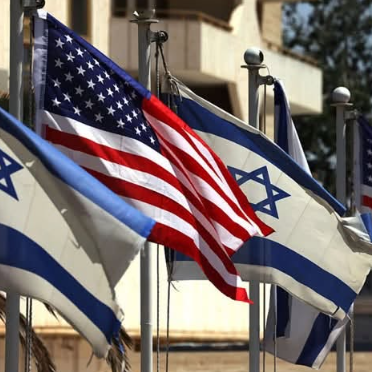
💰 A $16.5 BILLION PROPOSAL THAT COULD SHAPE THE FUTURE
According to the details reported by Ynet, the proposed arrangement would maintain $3.3 billion in annual Foreign Military Financing for five years after the existing agreement expires in 2028.
That would amount to approximately $16.5 billion in direct military financing over the five-year period, rather than continuing the existing ten-year arrangement worth $33 billion.
The distinction is important: the proposal does not necessarily mean that the United States has agreed to provide Israel with $3.3 billion every year indefinitely through 2033. Instead, it describes a shorter extension followed by a planned phaseout of direct military assistance.
The current agreement also includes another $500 million annually for joint missile-defense programs.
🛡️ MISSILE DEFENSE REMAINS A MAJOR PRIORITY
One of the most significant parts of the negotiations involves missile-defense cooperation.
Programs such as Iron Dome, David’s Sling, and Arrow are central to Israel’s defensive capabilities.
These systems are designed to detect, track, and intercept incoming rockets and missiles, helping protect populated areas and important infrastructure.
Under the reported proposal, American funding for joint air and missile-defense development could increase beyond its current $500 million annual level.
The final amount has not yet been established.
This could become an important element of the future partnership, allowing American and Israeli defense companies and military researchers to continue working together.
🇺🇸 WHY THE UNITED STATES CONTINUES TO DEBATE THE AGREEMENT
The proposed agreement is also raising questions inside the United States.
Supporters of military assistance argue that cooperation with Israel strengthens an important American strategic partnership in the Middle East.
They also point out that much of the military financing is used to purchase American-produced weapons and equipment.
That means the money can support American defense manufacturers, engineering jobs, research facilities, and supply chains.
Critics, however, question whether billions of dollars in annual assistance should continue when the United States faces its own economic pressures and competing domestic priorities.
Some lawmakers have also called for greater oversight and restrictions on military assistance.
These disagreements demonstrate that the future of the agreement will involve much more than negotiations between two governments.
🏛️ CONGRESS WILL HAVE AN IMPORTANT ROLE
Another important question is the role of the United States Congress.
A memorandum of understanding between Washington and Jerusalem can establish a framework for cooperation, but it does not automatically guarantee that every future payment will be approved.
Congress controls federal spending and must authorize and appropriate the money.
That means political changes in Washington could influence the final arrangement.
Even if American and Israeli negotiators reach an understanding, lawmakers will still have a significant voice in determining how the agreement is implemented.
This makes the coming months particularly important for both governments.
🌍 WHAT THIS MEANS FOR THE MIDDLE EAST
The future of American military assistance to Israel could have consequences throughout the Middle East.
Israel faces security challenges involving regional military threats, missile attacks, drones, and ongoing tensions with neighboring countries and armed groups.
American support has historically played an important role in Israel’s military planning.
At the same time, the United States must consider its broader regional relationships, diplomatic priorities, and efforts to prevent further conflict.
A new agreement could therefore influence military planning, defense spending, and diplomatic negotiations for years.
🔥 A SHIFT FROM FINANCIAL AID TO MILITARY PARTNERSHIP?
One idea emerging from the discussions is a gradual transition away from traditional financial assistance toward a closer defense partnership.
Israeli Prime Minister Benjamin Netanyahu has previously discussed reducing Israel’s dependence on American financial assistance.
The argument is that Israel’s economy has developed enough to eventually purchase more of its own military equipment.
However, ending direct assistance does not necessarily mean ending military cooperation.
The two countries could continue working together on weapons development, intelligence sharing, research, and missile-defense technology.
This distinction is central to understanding the reported negotiations.
⏳ NO FINAL AGREEMENT YET
Despite the headlines, the negotiations should not be confused with a completed agreement.
Reports indicate that both governments are working toward a new arrangement, but the precise terms remain subject to negotiations and political approval.
The next major questions include how much funding will be provided, how long it will continue, whether missile-defense funding will increase, and how Congress will respond.
The outcome could determine whether the longstanding financial relationship between Washington and Jerusalem changes gradually or faces a more dramatic transformation.
For now, the reported $3.3 billion annual proposal has become another major issue in the debate over America’s foreign policy.
ONE THING IS CLEAR: THE FUTURE OF U.S.-ISRAEL MILITARY COOPERATION IS ENTERING AN IMPORTANT NEW CHAPTER.
🇺🇸🇮🇱 What do you think? Should the United States continue providing billions of dollars in annual military assistance to Israel, or should the two countries move toward a partnership without traditional financial aid?
Share your opinion in the comments. 👇
Reporting note: The proposed arrangement remains under negotiation. Figures and timelines reflect media reports, not a finalized funding agreement.