The Dog at Mile Marker 347
I’d been driving for sixteen hours straight, the kind of stretch that makes your bones feel older than they are. The highway was empty, the sky bruised with the last light of dusk, and my rig hummed like a tired lullaby. I was somewhere between Amarillo and nowhere, chasing a deadline and a paycheck.
That’s when I saw the gas station.
It wasn’t much—just a flickering neon sign, a single pump, and a convenience store that looked like it hadn’t been stocked since the Clinton administration. But I needed coffee, and my bladder was staging a rebellion.
I pulled in, parked the truck, and stepped out into the dry Texas wind.
That’s when I saw her.
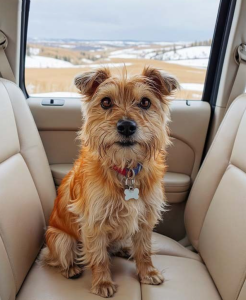
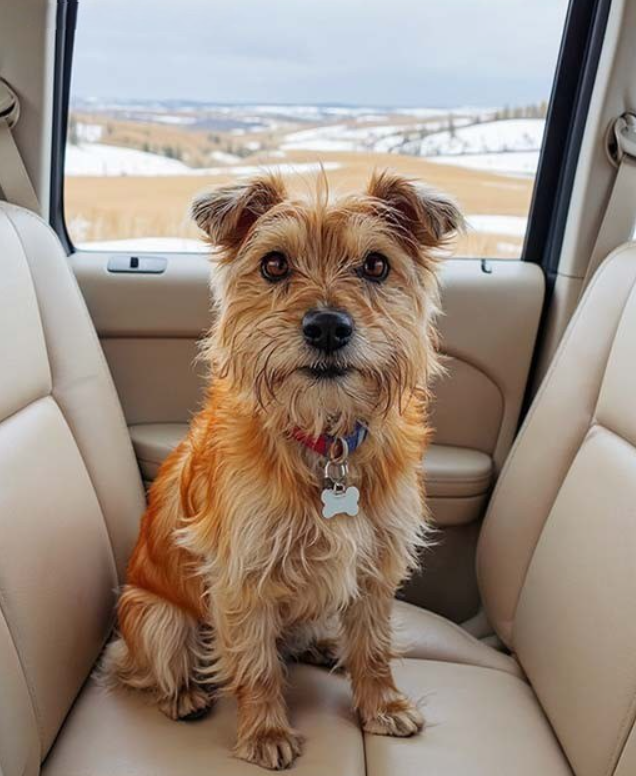
She was curled up beside the ice machine, a scrappy little mutt with matted fur and ribs you could count from ten feet away. Her eyes were wary, golden, and too intelligent for a creature that looked half-dead.
I froze.
She didn’t move.
I crouched slowly, keeping my voice low. “Hey there, girl. You okay?”
She flinched but didn’t run. I noticed a frayed rope around her neck—no collar, no tags. Just a dog who’d been left behind.
I went inside, bought a bottle of water and a pack of jerky, and came back out. I tore off a piece and tossed it gently toward her.
She sniffed it, then devoured it like she hadn’t eaten in days.
I sat down on the curb and waited.
After a few minutes, she limped over and rested her head on my boot.
That was it. That was the moment everything changed.
I named her Lucky.
Not because she was lucky—she wasn’t. She’d been abandoned, starved, and left to die beside a gas station that barely existed. But because I was. Because somehow, in the middle of nowhere, I’d found something that made the road feel less empty.
I wrapped her in an old flannel shirt and lifted her into the cab. She didn’t protest. She just curled up on the passenger seat and slept like she’d finally found peace.
I called dispatch and told them I’d be late.
They weren’t happy.
I didn’t care.
The next few weeks were a learning curve. Lucky didn’t trust easily. She flinched at loud noises, refused to eat unless I sat beside her, and had nightmares that made her whimper in her sleep. But she never tried to run. She stayed close, always watching, always waiting.
I took her to a vet in Albuquerque. They said she was about two years old, underweight, and had a healed fracture in her back leg—probably hit by a car months ago. No microchip. No record.
“She’s yours now,” the vet said.
I nodded. “She always was.”
Life on the road changed with Lucky beside me.
I started stopping more—at parks, rest areas, anywhere she could stretch her legs. I bought her toys, treats, a proper bed for the cab. She rode shotgun like she’d been born to do it, nose pressed to the window, ears perked at every passing sound.
People noticed.
Other truckers waved. Kids pointed. Gas station clerks asked to pet her. She became a kind of legend—“the dog with the trucker,” they’d say.
But she was more than that.
She was my anchor.
One night, we got caught in a storm outside Flagstaff. The rain came down in sheets, visibility dropped to nothing, and I pulled over beneath an overpass to wait it out.
I was tense. The road was dangerous, the schedule tight, and my nerves frayed.
Lucky climbed into my lap and rested her head on my chest.
I broke.
I cried for the first time in years.
Not because of the storm. But because I realized how lonely I’d been before her. How many miles I’d driven without anyone to share them with. How many sunrises I’d watched alone.
She didn’t move. Just stayed there, warm and steady.
Months passed.
Lucky gained weight, confidence, and a reputation. She learned commands, tricks, and how to beg for fries at drive-thrus. She barked at toll booths and wagged her tail at weigh stations. She became my co-pilot in every sense of the word.
And I changed, too.
I started calling my sister again. Started sending postcards to my niece. Started thinking about things beyond the next delivery.
Lucky reminded me that life wasn’t just about movement. It was about connection.
Then came the day we stopped at a diner in Kansas.
A woman approached us, eyes wide.
“That dog,” she said. “Is her name Daisy?”
Lucky froze.
The woman knelt down, tears in her eyes. “She ran away last year. We searched everywhere. She was hit by a car. We thought she died.”
Lucky didn’t move.
I didn’t speak.
The woman showed me photos—same eyes, same fur, same crooked tail.
It was her dog.
I felt my heart crack.
We talked for hours.
She’d been devastated. Her daughter still cried at night. They’d put up posters, searched shelters, even hired a tracker. But Daisy had vanished.
And now she was here.
With me.
I looked at Lucky—Daisy—and saw the question in her eyes.
She didn’t remember.
Or maybe she did, but she’d chosen me.
The woman saw it, too.
“She’s yours now,” she said softly. “She’s happy. That’s all that matters.”
I nodded, tears in my eyes.
Lucky stayed.
We kept driving.
And every time I passed that lonely gas station, I slowed down and looked.
Not for another dog.
But for the moment that changed everything.
Because sometimes, the road gives you more than miles.
Sometimes, it gives you a reason to keep going.