The Caravan Called Clementine
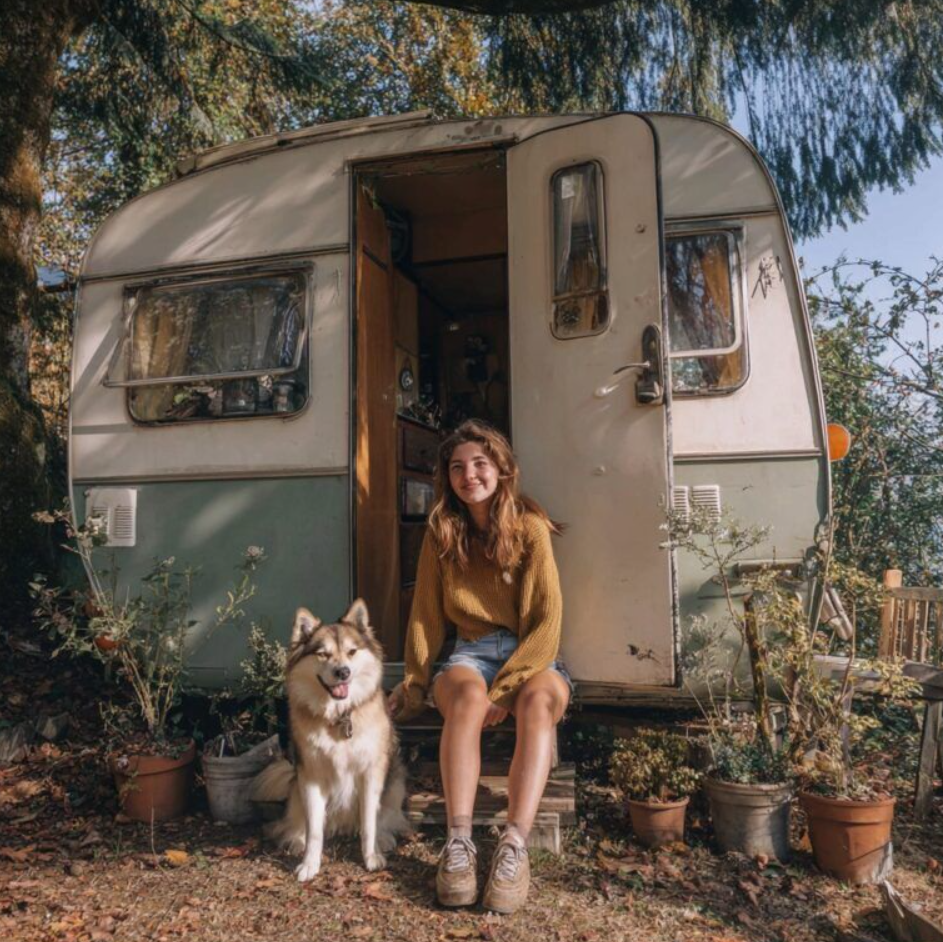
It was rusted, dented, and smelled faintly of mildew. The tires sagged like tired shoulders, and the paint—once a cheerful turquoise—had faded into a weary gray. Most people would have walked past it without a second glance.
But not Elira.
She was seventeen, with a backpack full of sketchbooks and a heart full of dreams too big for her small town. When she saw the listing online—“Old caravan, $200, needs TLC”—something stirred inside her. She didn’t know why. She just knew she had to see it.
Her parents thought she was joking.
“You don’t even drive,” her father said.
“I’ll learn,” she replied.
“You don’t even camp,” her mother added.
“I will,” she said.
They sighed, but they didn’t stop her. Elira had always been like this—drawn to broken things, convinced she could fix them. She’d rescued stray cats, glued together shattered mugs, and once spent an entire summer restoring a bicycle she found in a ditch.
So when she stood in front of the caravan, parked behind a crumbling barn on the edge of town, she didn’t see a wreck. She saw a canvas.
The seller was an elderly man named Gus, who wore suspenders and smelled like pipe smoke. He watched her circle the caravan, inspecting the cracked windows and peeling roof.
“She’s old,” he said. “Been sitting here since my wife passed. We used to take her to the coast every summer.”
Elira nodded. “What’s her name?”
Gus smiled. “Clementine.”
She handed him the money.
The first night, Elira slept inside Clementine with a flashlight and a sleeping bag. The walls creaked with every gust of wind, and a spider the size of a coin watched her from the ceiling. But she felt safe. Like she’d found something that belonged to her.
Over the next few weeks, she worked tirelessly. She scrubbed the floors, patched the leaks, and painted the walls a soft peach. She replaced the curtains with ones she sewed herself—sunflowers on one side, stars on the other. She strung fairy lights across the ceiling and hung her drawings in tiny frames.
Her friends were baffled.
“You spent your savings on that thing?” one asked.
“It’s not a thing,” Elira said. “It’s a beginning.”
Clementine became her sanctuary. After school, she’d retreat inside with her journal and a cup of tea. She wrote poems about the moon and stories about girls who ran away to find themselves. She sketched maps of imaginary countries and designed floor plans for dream homes.
But Clementine wasn’t just a hideaway. She was a statement.
Elira started a blog: The Caravan Girl. She posted photos of the renovation, shared DIY tips, and wrote essays about independence, creativity, and the beauty of imperfection. Her words resonated. Within months, she had thousands of followers.
One day, she received a message from a woman in Oregon.
“I was going to sell my camper. But then I read your blog. I’m keeping it. Thank you.”
Another from a girl in Brazil:
“You made me feel like I could build something of my own. I’m starting with my bedroom.”
Elira was stunned. She hadn’t set out to inspire anyone. She just wanted a place to breathe.
Then came the invitation.
A local arts festival was hosting a showcase on “Creative Spaces.” They wanted Clementine. They wanted Elira.
She hesitated. Clementine wasn’t perfect. The roof still leaked when it rained, and the stove didn’t work. But she agreed.
On the day of the festival, she towed Clementine to the town square with the help of Gus, who insisted on driving. They parked her beside a row of sleek, modern trailers. Clementine looked like a relic.
But people flocked to her.
They peeked inside, touched the sunflower curtains, admired the hand-painted cabinets. They asked Elira questions—about design, about courage, about why she’d chosen a caravan instead of a car or a studio.
She told them the truth.
“I didn’t choose Clementine because she was easy. I chose her because she was forgotten. And I think forgotten things deserve a second chance.”
That night, Elira sat inside Clementine with a cup of cocoa and watched the stars through the skylight she’d installed herself. She thought about Gus and his wife, about the coast they used to visit. She thought about the girl in Brazil and the woman in Oregon. She thought about herself.
She wasn’t the same girl who’d bought a broken caravan for $200. She was someone else now. Someone braver. Someone who believed in beginnings.
Clementine had given her that.
Years later, Elira would tell the story to her own daughter—how she found an old caravan and turned it into a home. How she learned to fix things, not just with tools, but with love. How she discovered that sometimes, the best journeys begin in the most unexpected places.
And Clementine, still standing, would be there to prove it.