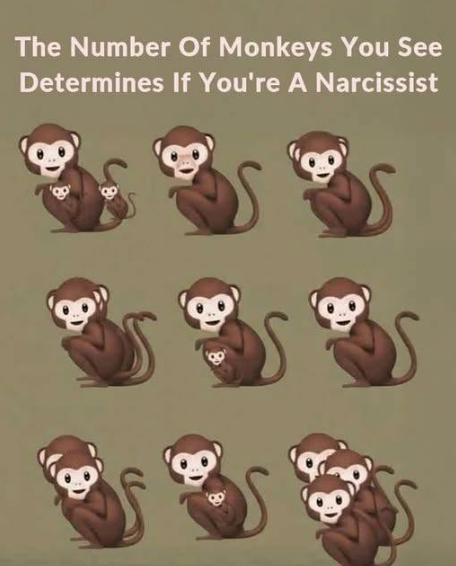
Is Your Brain Wired for Narcissism? Discover the Shocking Truth Behind This Viral Illusion
Have you ever looked at an optical illusion and wondered why you noticed one detail while someone standing beside you saw something completely different? Sometimes, a single image can reveal surprising things about how our brains interpret the world. Recently, viral optical illusions have sparked conversations about personality, self-awareness, and narcissism, leaving many people asking an intriguing question: Could the way you see an image reveal something about your personality?
The answer is more complicated than you might think. Although optical illusions can tell us interesting things about perception and attention, they cannot diagnose narcissism or determine whether someone has a particular personality disorder. Nevertheless, these images can provide an entertaining opportunity to reflect on how we think, what captures our attention, and how differently people interpret the same situation.
The First Thing You Notice May Surprise You
Imagine looking at a mysterious picture containing several overlapping shapes, faces, shadows, or hidden objects. You glance at it for just a few seconds, and one particular feature immediately catches your attention.
Your friend looks at the same picture and notices something entirely different.
Why does this happen?
The human brain constantly processes enormous amounts of information. Instead of examining every detail individually, it uses patterns, previous experiences, expectations, and attention to help make sense of what the eyes see.
This process is generally automatic. You might notice a face before a background object, or recognize a familiar shape before understanding the complete image.
Your first impression may reflect what stands out to you visually, but it does not necessarily reveal your deepest personality traits.
That is what makes optical illusions so fascinating: they demonstrate that seeing something and interpreting it are not always the same thing.
What Is Narcissism?
Narcissism is a term frequently used in conversations about relationships, confidence, social media, and human behavior. However, it is often misunderstood.
In everyday language, people may describe someone as narcissistic because that person seems self-centered, enjoys attention, or talks frequently about personal achievements.
Psychology recognizes that narcissistic traits can exist in different degrees. For example, a person might enjoy recognition, feel proud of accomplishments, or want others to appreciate their abilities without having a personality disorder.
Narcissistic personality disorder, commonly abbreviated as NPD, is a recognized mental health condition involving persistent patterns that may include an exaggerated sense of self-importance, a strong need for admiration, and difficulties with empathy or interpersonal relationships.
Only a qualified mental health professional can assess whether someone meets the diagnostic criteria.
It is important not to confuse ordinary confidence, occasional selfishness, or a preference for attention with a clinical diagnosis.
Is Your Brain Actually Wired for Narcissism?
The short answer is that there is no scientifically established optical illusion that can determine whether your brain is wired for narcissism.
Personality develops through a complex interaction of biological influences, temperament, life experiences, relationships, and environmental factors. Researchers continue to investigate how these influences shape individual differences.
Some people naturally seek recognition more than others. Others are highly sensitive to criticism or place considerable importance on how they are perceived by their peers.
However, no single behavior, visual preference, or first impression provides enough evidence to explain someone’s entire personality.
If an online quiz claims that seeing a particular face, animal, or object proves you are a narcissist, it is best to treat the claim as entertainment rather than a psychological assessment.
A genuinely useful personality assessment requires more than a quick glance at an image.
Why Do Optical Illusions Feel So Personal?
Optical illusions often feel meaningful because the brain actively searches for patterns and explanations.
When an image is ambiguous, the brain attempts to organize the available information into something recognizable. Previous experiences, expectations, and visual attention can influence which interpretation comes to mind first.
This does not mean that every interpretation has a hidden psychological meaning.
For example, if you notice a face before noticing an animal in an image, that may simply reflect the way the shapes are arranged or the features your eyes detect most easily.
If another person sees the animal first, it does not automatically mean that person has a different emotional intelligence level or personality type.
The image may reveal something about how perception works, but it cannot independently establish someone’s motives, character, or mental health.
Confidence Versus Narcissism
One reason narcissism attracts so much attention is that it can be difficult to distinguish confidence from self-centered behavior.
A confident person can recognize personal strengths while acknowledging weaknesses. They can accept constructive criticism, celebrate other people’s achievements, and admit when they make mistakes.
A person displaying pronounced narcissistic traits, on the other hand, may place excessive importance on admiration, struggle when their self-image is challenged, or repeatedly disregard other people’s feelings.
The difference is not always obvious from a single interaction. Context, frequency, and the effect of behavior on relationships matter.
Healthy confidence does not require putting other people down.
In fact, genuine self-confidence often makes it easier to appreciate others without feeling threatened by their success.
The Role of Social Media
Social media has helped make personality tests and optical illusions incredibly popular.
A picture accompanied by a dramatic question can attract thousands of comments because people enjoy discovering something new about themselves. Friends compare their answers, debate their interpretations, and share the results with their followers.
These posts can be fun conversation starters.
However, sensational claims often spread faster than careful explanations. Headlines promising to reveal a hidden personality disorder in seconds can encourage people to label themselves or others without reliable evidence.
A person who shares a particular illusion might simply enjoy the picture. Someone who chooses a flattering profile photograph may be interested in presentation rather than narcissism.
Online behavior needs context, and a single post rarely tells the complete story.
The next time you encounter a viral personality test, consider asking whether its conclusions are supported by credible research before accepting them as fact.
Can You Recognize Narcissistic Patterns in Real Life?
Although an optical illusion cannot diagnose narcissism, observing repeated behavior over time can help you understand your relationships.
For example, consider whether someone consistently respects your boundaries, listens when you express concerns, accepts responsibility for mistakes, and shows consideration for other people’s feelings.
Pay attention to patterns rather than isolated incidents.
Everyone can act selfishly when tired, stressed, insecure, or upset. A single disagreement does not establish a person’s character.
More meaningful information comes from repeated interactions and the way someone responds when their behavior affects others.
Likewise, avoid diagnosing a friend, partner, family member, or coworker based on a viral checklist. If a relationship feels unhealthy, you can address specific behaviors and establish boundaries without needing to assign a psychological label.
Understanding behavior is more useful than trying to guess a diagnosis.
Five Questions Worth Asking Yourself
Instead of relying on an optical illusion to define your personality, consider these questions:
1. Can I accept criticism?
Nobody enjoys being criticized, but being able to consider reasonable feedback can support personal growth.
2. Do I listen when someone disagrees with me?
Healthy relationships allow people to express different opinions without humiliation or intimidation.
3. Can I celebrate another person’s success?
Recognizing someone else’s achievements does not diminish your own value.
4. Do I take responsibility for my mistakes?
Acknowledging an error and making an effort to repair the damage are important parts of emotional maturity.
5. Do I consider how my actions affect others?
Empathy involves trying to understand other people’s feelings, even when their experiences differ from your own.
These questions are not a diagnostic test, and nobody answers perfectly every time. Their purpose is to encourage honest reflection rather than create another label.
The Most Surprising Truth About the Illusion
Perhaps the most interesting lesson is not that an image can expose a hidden personality trait, but that human perception is more complicated than it appears.
Two people can examine the same picture and reach different conclusions. They can remember the same conversation differently, interpret the same expression in different ways, and respond differently to the same situation.
Recognizing these differences can help us become more patient and curious about other people’s perspectives.
It can also remind us that our first interpretation is not always the only reasonable one.
Rather than assuming that someone who sees an image differently must have a particular personality, we can ask questions, compare observations, and remain open to new information.
That approach encourages understanding instead of judgment.
Final Thoughts: What Does Your First Impression Really Reveal?
The viral question, “Is your brain wired for narcissism?” is certainly attention-grabbing, but the scientific reality is more nuanced than the headline suggests.
Optical illusions can demonstrate how the brain organizes visual information. They can inspire conversations about perception and self-awareness. They may even encourage people to reflect on how they interpret the world.
But they cannot establish whether someone is narcissistic, diagnose a personality disorder, or predict how a person will behave in relationships.
Your personality is far more complex than one image, one answer, or one moment of observation.
The most valuable form of self-discovery comes from examining your habits, listening to honest feedback, considering the feelings of others, and remaining willing to learn.
So, the next time an optical illusion appears on your screen, enjoy the challenge. Look carefully, compare your interpretation with someone else’s, and have fun discussing what you notice.
Just remember: what you see first may be interesting, but how you treat people over time tells us much more about your character than any viral illusion ever could.