🕊️ Ashli Babbitt: A Funeral Honor That Rekindles a National Debate
In a move that has reignited fierce debate across political and military circles, the U.S. Air Force has reversed its previous decision and granted full military funeral honors to Ashli Babbitt, the Air Force veteran who was fatally shot during the January 6, 2021, breach of the U.S. Capitol. The announcement, made public in August 2025, comes nearly five years after her death and follows a $4.975 million wrongful death settlement between her family and the federal government.
The decision marks a dramatic shift from the original stance taken by military leadership under the Biden administration, which had denied Babbitt’s family’s request for funeral honors in early 2021, citing concerns that her actions during the Capitol riot brought “discredit upon the Air Force”.
🎖️ The Reversal: A Letter of Recognition
The reversal was formalized in a letter dated August 15, 2025, from Under Secretary of the Air Force Matthew L. Lohmeier to Babbitt’s husband, Aaron, and her mother, Michelle Witthoeft. Lohmeier wrote:
“After reviewing the circumstances of Ashli’s death, and considering the information that has come forward since then, I am persuaded that the previous determination was incorrect”.
The letter extended an official offer for full military funeral honors, which typically include a two-person honor guard, the playing of “Taps,” and the ceremonial folding and presentation of the American flag to the family.
🪖 A Veteran’s Record
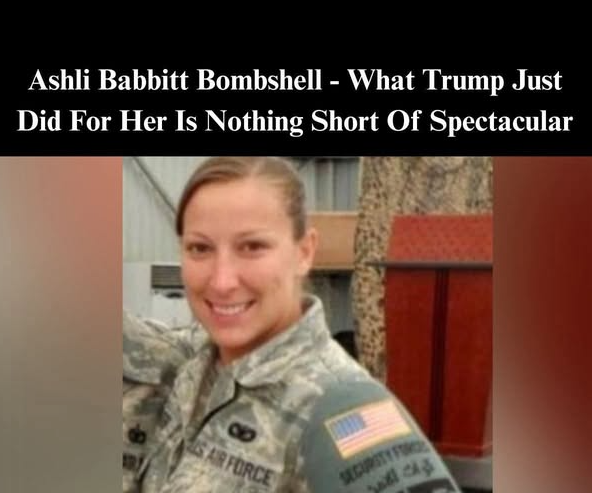
Ashli Babbitt served in the U.S. Air Force from 2004 to 2008, followed by stints in the Air Force Reserves and the Air National Guard until 2016. She deployed overseas multiple times, including missions in Iraq, Afghanistan, and the United Arab Emirates.
Her military service was never in question. What complicated her legacy was the manner of her death—shot by a Capitol Police officer while attempting to climb through a broken window into the Speaker’s Lobby during the January 6 riot.
⚖️ Legal and Political Fallout
The Department of Justice declined to pursue criminal charges against the officer who shot Babbitt, concluding that the use of force was lawful. Capitol Police also cleared the officer of internal wrongdoing.
In 2024, Babbitt’s family filed a $30 million wrongful death lawsuit against the federal government. The case was settled in June 2025 for nearly $5 million, though the terms of the agreement were not fully disclosed.
The settlement, combined with growing political pressure from conservative legal groups like Judicial Watch, appears to have influenced the Air Force’s decision to revisit its earlier denial.
🔥 A Nation Divided
The announcement has drawn both praise and condemnation.
Retired Lt. Gen. Michael Flynn, a prominent Trump ally, hailed the decision as “a long-overdue act of justice,” calling Babbitt “a light of truth”.
On the other side, former Rep. Adam Kinzinger, who served on the January 6 Congressional Committee, criticized the move:
“Babbitt dishonored her service by committing insurrection against her country. While her death is absolutely tragic and I wish it hadn’t happened, the Air Force giving her honors is in itself a dishonor”.
Former Capitol Police officer Aquilino Gonell, who was injured during the riot, expressed outrage:
“Not to officers like Brian Sicknick, who served in the Air National Guard, but the member of the mob who stormed the Capitol and put herself and others’ lives in danger”.
The decision has also sparked broader conversations about how the military recognizes service members whose post-service actions are politically or morally controversial.
🧠 The Ethics of Honor
Military funeral honors are traditionally reserved for veterans who served honorably. The criteria, while clear in policy, often leave room for interpretation when a veteran’s post-service conduct becomes contentious.
In Babbitt’s case, the original denial cited her illegal entry into the Capitol as grounds for disqualification. The reversal suggests a reassessment of whether her actions, however unlawful, should negate her years of military service.
This raises difficult questions: Can a single act overshadow a decade of honorable service? Should political context influence military recognition? And who decides?
🧍♀️ The Family’s Response
Babbitt’s family has long maintained that she was unjustly killed and that her military service should be honored. Her mother, Michelle Witthoeft, has become a vocal figure in conservative circles, often appearing at rallies and protests.
Judicial Watch, which represented the family in its legal battle, released a statement:
“Ashli Babbitt’s family is grateful to President Trump, Secretary Hegseth and Under Secretary Lohmeier for reversing the Biden Defense Department’s cruel decision to deny Ashli funeral honors as a distinguished veteran of the Air Force”.
The family has not yet announced when or where the funeral honors will take place.
🕯️ A Symbol of Polarization
Ashli Babbitt’s name has become a symbol—of martyrdom to some, of insurrection to others. Her death is one of the most emotionally charged moments of January 6, and the decision to honor her militarily reflects the deep divisions in how Americans interpret that day.
For her supporters, the honors are a long-overdue recognition of a woman who served her country and died believing she was defending it. For her critics, they represent a dangerous normalization of political violence.
🌟 Final Thoughts: Honor and Complexity
The Air Force’s decision to grant full military funeral honors to Ashli Babbitt is not just a bureaucratic reversal—it’s a reflection of the complex intersection between service, sacrifice, and accountability.
It forces us to confront uncomfortable truths: that heroes can be flawed, that institutions must navigate political minefields, and that honor, in the end, is not always a consensus—it’s a conversation.
As the nation continues to grapple with the legacy of January 6, Babbitt’s funeral honors will serve as a poignant reminder of how deeply divided we remain—and how urgently we need to find common ground.