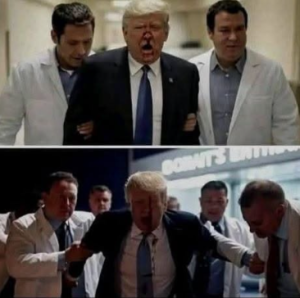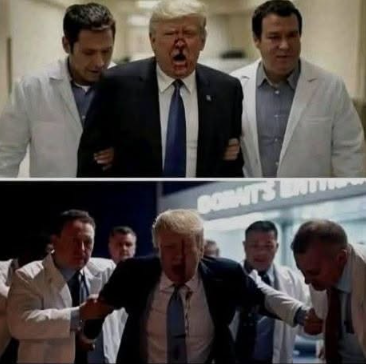
🚨 SHOCK IN WASHINGTON, D.C.: Viral Claim Says President Donald Trump Was Shot Again — But What Do We Actually Know?
A dramatic message claiming that President Donald Trump was “shot again” in Washington, D.C., has begun circulating online, triggering alarm, confusion, and thousands of reactions.
The headline is frightening:
“10 MINUTES AGO — SHOCK IN WASHINGTON, D.C. — PRESIDENT DONALD TRUMP SHOT AGAIN…”
But before sharing a post like this, there is one extremely important question that must be asked:
Is it actually confirmed?
At the time of writing, there is no credible confirmation that President Trump has been shot again.
That distinction matters.
An alleged shooting of a sitting U.S. president would be an extraordinary national security event. It would not normally remain confined to a handful of social-media posts. The White House, Secret Service, law-enforcement agencies, major news organizations, hospitals, and government officials would be expected to provide information rapidly.
So far, the available credible reporting does not support the dramatic claim.
In fact, current White House information shows presidential activity continuing. The White House has published recent presidential releases dated October 5, including information concerning Trump and his administration. Its official video library also contains a presidential appearance from October 5.
Reuters is also reporting on Trump’s current political activity, including remarks concerning voting ahead of the November midterm elections.
That does not match the picture presented by the viral headline.
⚠️ How These Claims Spread So Quickly
Social media has completely changed the speed at which breaking information travels.
A photograph can be taken from an old event, placed beside a frightening headline, and reposted thousands of times within minutes.
A video from a previous security incident can suddenly be presented as if it happened today.
A headline can say “10 minutes ago,” even when the underlying material is hours, days, months, or even years old.
Once people begin commenting, reacting, and sharing, the post can acquire an appearance of credibility simply because it has received enormous engagement.
But virality is not verification.
A post with 100,000 shares can still be false.
A video with millions of views can still be old.
And a dramatic headline can still have no reliable evidence behind it.
That is particularly important when the claim involves the president.
🇺🇸 Why a Presidential Shooting Would Be Different
The president of the United States is protected by an extensive security operation.
A confirmed attack against the president would immediately become one of the biggest stories in the country.
Emergency security procedures would be activated. Federal agencies would become involved. Officials would brief the public. Major television networks would interrupt regular programming. Newspapers and international news organizations would rapidly publish verified updates.
That is why readers should be cautious when a social-media post makes an enormous claim while providing little or no evidence.
Ask simple questions:
Who reported it?
Where did the information originate?
Has the White House confirmed it?
Has the Secret Service issued a statement?
Are reputable news organizations independently reporting the same event?
Is there a date and location that can be verified?
Could the photograph or video be old?
Those questions can prevent misinformation from spreading.
😳 The “Again” Part Can Be Especially Misleading
The word “again” is also important.
Trump has previously survived an assassination attempt, making references to another shooting particularly emotional for many people.
Because of that history, a headline claiming that he has been shot again can immediately trigger fear among supporters, opponents, and people simply concerned about the safety of the country.
That emotional reaction is exactly why readers should slow down.
When a headline is designed to make you gasp, the best response is not immediately to share it.
The best response is to verify it.
📱 Don’t Let the “See More” Button Make the Decision for You
Many viral Facebook posts use phrases such as:
“See more…”
“Read the first comment…”
“Details below…”
“Breaking — share before it’s deleted!”
These phrases encourage people to click before thinking.
Sometimes the post eventually leads to an article. Sometimes it leads to another social-media page. Sometimes it leads to advertising. And sometimes it simply repeats the original claim without providing independent evidence.
That is why the first sentence of a viral post should never automatically be treated as the truth.
A responsible reader should look beyond the headline.
📰 What Current Information Shows
Current reporting on October 6 is focused on Trump’s political and governmental activities rather than a confirmed shooting in Washington.
Reuters reported today on Trump’s remarks concerning mail-in voting and the upcoming congressional elections.
The White House has also continued publishing official presidential material. Its current news pages list recent actions and statements involving President Trump.
The White House video archive likewise lists a presidential press appearance from October 5.
None of this provides confirmation for the sensational claim circulating online.
That does not mean people should ignore legitimate breaking news.
It means they should distinguish between a claim and a confirmed event.
❤️ A Moment to Think Before Sharing
Imagine seeing the headline while sitting at home.
Your heart jumps.
You immediately think about the president, the country, the possibility of another political crisis, and what might happen next.
Then you press “share.”
A few minutes later, dozens of your friends see the same message.
Now imagine that everyone does the same thing.
Within an hour, thousands or millions of people may believe something that was never verified.
That is how misinformation becomes powerful.
The responsibility does not belong only to journalists or government officials.
It belongs to everyone who uses social media.
Before sharing a dramatic breaking-news headline, take thirty seconds.
Search for confirmation.
Check several reputable sources.
Look at the publication date.
Check whether the photograph is current.
And ask whether the headline is describing something confirmed or merely alleged.
🇺🇸 The Bigger Lesson
The most important story here may not be the viral claim itself.
It may be the lesson about how quickly fear can travel.
America is deeply divided politically. That makes dramatic claims about political leaders especially explosive.
People on every side can become emotionally invested in information that confirms what they already fear or believe.
That is precisely when careful verification becomes most important.
A false report about a celebrity can be damaging.
A false report about a natural disaster can cause panic.
But a false report claiming that the president has been assassinated or shot can create a completely different level of national fear.
It can influence markets, politics, public safety, and people’s understanding of what is happening around them.
🚨 So, Is President Trump Confirmed to Have Been Shot Again?
No credible confirmation has been found for the claim at this time.
The dramatic social-media headline should therefore be treated as unverified, not as established fact.
Current credible reporting and official White House information instead show Trump continuing his presidential activities.
If legitimate authorities confirm a major security incident, the situation would be very different. But until that happens, readers should not turn an alarming social-media headline into a statement of fact.
Don’t panic. Don’t speculate. And don’t help an unverified claim go viral.
In an era when breaking news can reach millions of people within seconds, sometimes the most responsible thing you can do is simply stop, check the facts, and wait for reliable confirmation.
Because when the headline says “SHOCKING BREAKING NEWS,” the first question should always be:
“Where is the evidence?”