🚨 BREAKING NEWS: U.S. Forces Capture a Boat Near Venezuela — What Happened Next Has Everyone Talking 🚨
A dramatic maritime operation involving U.S. forces in waters connected to Venezuela has sparked fresh attention, after reports emerged of a vessel being intercepted during an ongoing American campaign targeting suspected narcotics trafficking routes.
The headline circulating online says the U.S. Army captured a boat in Venezuela, but the details behind the claim require some clarification. Recent U.S. military operations in the region have involved multiple branches of the armed forces, including the Navy, Marine Corps, Coast Guard and joint task forces. In several documented cases, American forces have intercepted or struck vessels that U.S. authorities said were connected to drug-trafficking operations.
The distinction matters because viral social-media headlines can make a complicated military operation sound much simpler than it actually is.
According to U.S. military material published in 2026, American forces have conducted maritime interdictions and strikes against vessels they identified as being involved in narcotics trafficking. One documented August operation involved U.S. Marines and sailors intercepting, boarding and searching a vessel described as a floating refueling station supporting illicit drug trafficking in the Eastern Pacific. The operation was conducted in coordination with Ecuadorian authorities, and the people removed from the vessel were escorted to Ecuador.
That operation illustrates how these missions can unfold.
A suspected vessel may first be identified through intelligence, surveillance or reconnaissance. Military and law-enforcement personnel then have to determine where the vessel is, what it is doing, whether it presents a threat and what legal authority applies. Once a decision is made to intervene, specialized personnel can approach the vessel, establish control, search it and determine what happens to the people and equipment aboard.
In other cases, the response has been much more destructive.
U.S. Southern Command has publicly described several lethal strikes against boats that it said were engaged in narco-trafficking. For example, the command reported a June 2026 operation in the Caribbean in which two people were killed and six survivors were reported. The Coast Guard was notified so that search-and-rescue procedures could be activated.
That difference — interception versus strike — is one of the most important details hidden by dramatic viral headlines.
When a boat is intercepted, the objective can be to stop its movement and take control of the vessel. When a vessel is attacked, the consequences can be fatal and the legal and operational questions become considerably more complicated.
The broader U.S. maritime campaign has developed over a much larger area than Venezuela itself. Independent monitoring has documented strikes across both the Caribbean and Eastern Pacific. Airwars reported that the campaign began in September 2025 and that the geographic focus shifted over time, with many incidents eventually occurring in the Eastern Pacific.
Venezuela became a particularly important part of the story because U.S.-Venezuela relations deteriorated dramatically during this period.
Earlier in 2026, the United States conducted a major operation inside Venezuela that resulted in the capture of Venezuelan President Nicolás Maduro and his wife, Cilia Flores. That operation involved multiple branches of the U.S. military and other U.S. agencies. The capture fundamentally changed the political and security environment surrounding Venezuela and increased international attention on American military activity in the region.
Against that background, reports about a boat being captured can easily spread across social media with dramatic wording.
People naturally want to know what was on the boat.
Was it carrying drugs? Fuel? Weapons? People? Was it connected to a larger trafficking network? Were the occupants arrested? Did anyone escape? Where was the vessel taken?
Those questions cannot automatically be answered simply because a headline says that a boat was “captured.”
In military operations, the evidence surrounding a vessel can take time to establish. Authorities may need to inspect cargo, identify people aboard, examine navigation equipment and determine ownership. Intelligence information may also remain classified, meaning the public receives only part of the picture.
The U.S. military has previously said that some vessels targeted in the region were associated with organizations it classified as terrorist or narco-terrorist groups. In one May 2026 operation, Southern Command said intelligence showed a vessel was traveling along known narcotics-trafficking routes in the Eastern Pacific and was involved in drug-trafficking operations. One person was killed and two survivors were reported.
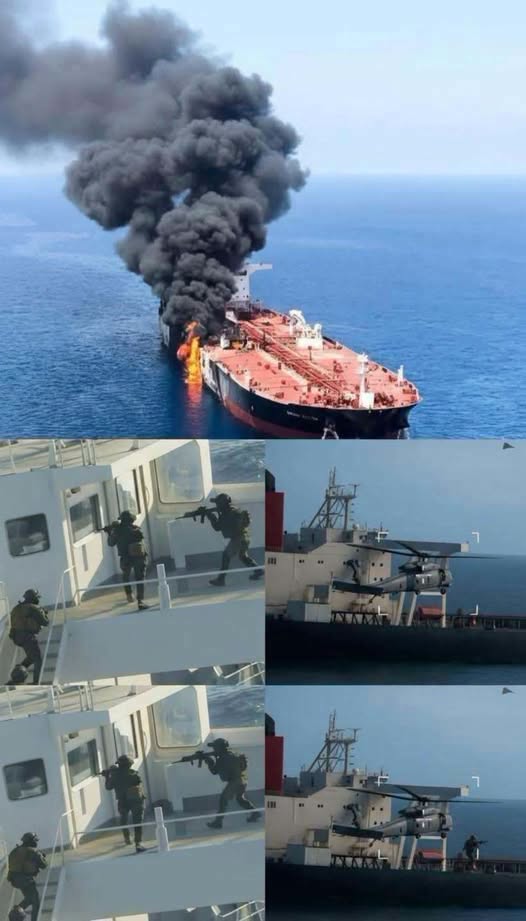
Another reported operation involved a suspected refueling vessel. According to the U.S. military account, the vessel was operating in support of illicit at-sea drug trafficking. American forces boarded and searched the vessel without incident before escorting those aboard to Ecuador. The vessel was subsequently sunk.
These incidents demonstrate why a single sentence on Facebook may leave out important context.
A vessel operating near Venezuela is not necessarily Venezuelan government property. A boat traveling through international waters is not automatically inside Venezuelan territorial waters. And an American military operation in the broader region does not necessarily mean the U.S. Army itself was responsible.
Different branches have different responsibilities.
The U.S. Coast Guard has extensive maritime law-enforcement responsibilities. The Navy operates warships and provides maritime power. The Marine Corps maintains forces capable of boarding and securing vessels. The Army can participate in joint operations, but many maritime interdictions are conducted by naval, Marine or Coast Guard personnel rather than conventional Army units.
That is why readers should be cautious when a viral headline identifies the “U.S. Army” without providing a unit, vessel, location or official statement.
Still, the larger development is significant.
The United States has demonstrated that it is willing to use substantial military and law-enforcement resources to disrupt maritime networks that American authorities associate with narcotics trafficking. These operations have involved surveillance aircraft, helicopters, military ships, specialized boarding teams and Coast Guard search-and-rescue capabilities.
For residents of the Caribbean and Latin America, such operations can have consequences far beyond the individual boat being intercepted.
Fishing communities, commercial shipping operators and ordinary travelers can all be affected when military activity increases in regional waters. Governments must also consider questions involving sovereignty, jurisdiction and cooperation between nations.
For the United States, officials have presented the campaign as part of an effort to disrupt illegal drug trafficking and organized criminal networks.
Critics and other governments have raised questions about the legality and proportionality of some operations, particularly when strikes result in deaths. Those disagreements are important to distinguish from the underlying factual question of whether a particular vessel was intercepted or attacked.
For now, the most responsible way to understand the viral claim is to separate the dramatic headline from the verified details.
A boat can be intercepted without being attacked. A vessel can be searched without being destroyed. And an operation near Venezuela does not necessarily mean that the U.S. Army alone carried it out.
The continuing military activity in the region means more reports are likely to appear, sometimes accompanied by short videos or photographs that provide little context.
Before sharing such posts, readers should look for the exact date, location, military branch involved, official statement and explanation of what happened to the people aboard.
One thing is clear: maritime security around Venezuela and the wider Caribbean and Eastern Pacific has become an increasingly important part of U.S. regional operations.
And whenever American forces approach a vessel at sea, the consequences can extend far beyond that single boat — affecting international relations, law enforcement, military policy and the safety of people throughout the region.
🚨 The full story behind any “captured boat” headline depends on the vessel, location, people aboard and the official evidence released about the operation. Readers should wait for those details before accepting the most dramatic version circulating online.