🔥 DID YOU KNOW THAT CREMATION IS NOT…?
There are many things people believe about cremation, but some of the most common ideas are based on myths, misunderstandings, or outdated information. Because cremation is a deeply personal subject connected to death, grief, family traditions, religion, and personal beliefs, it is worth taking a closer look at what actually happens.
For many families, cremation is simply another way of caring for a loved one after death. Some people choose it because of cost, simplicity, religious or cultural traditions, environmental considerations, or because they personally prefer cremation over burial. Others choose traditional burial because it feels more familiar or meaningful to their family.
But what exactly happens during cremation?
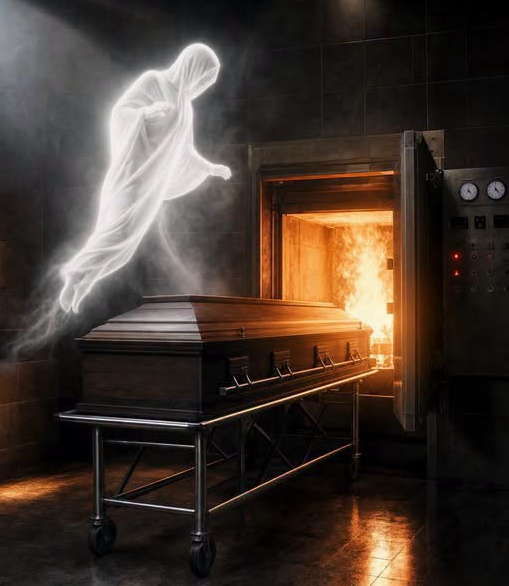
Cremation takes place in a specially designed cremation chamber, sometimes called a retort. The body is placed inside a combustible container and then exposed to very high temperatures. The process reduces the body to bone fragments and other mineral remains. After the cremation has been completed and the remains have cooled, the bone fragments are processed into a finer, more uniform material commonly called “ashes.”
One important fact is that the material families receive after cremation is primarily processed bone mineral, not simply ash in the ordinary sense of the word.
This is one reason the popular image of a body simply “turning into smoke” is misleading. Cremation is a carefully controlled process carried out using specialized equipment and procedures.
Another common misconception is that a person’s ashes are somehow exactly the same as the ashes left behind after a fire in a home. They are not. Cremated remains have a different composition and appearance because of the controlled conditions of the cremation process.
People also sometimes wonder whether cremation means a person is completely destroyed. That question can be especially emotional for grieving families. From a physical standpoint, the body’s organic material is reduced through heat, while the mineral components of the bones remain and are subsequently processed. From a spiritual or religious perspective, however, different traditions understand death and the body in very different ways.
Some faiths have traditionally preferred burial, while others permit or encourage cremation. Many families therefore make the decision based on their beliefs, the wishes of the deceased, and local customs.
Another question people frequently ask is whether personal belongings are cremated with the deceased. The answer depends on the item and the crematory’s policies. Certain materials may not be appropriate for cremation because they can create dangerous conditions, damage equipment, or release harmful substances. Medical devices such as some implanted devices may also require special attention before cremation.
This is why families should always discuss arrangements with the funeral home or crematory rather than assuming that anything can be placed inside the cremation container.
And what happens to jewelry?
This is another area where people sometimes have misconceptions. Some jewelry may not survive the cremation process intact, while certain metals can remain afterward. Families should discuss whether jewelry should accompany the deceased before the cremation takes place.
Perhaps one of the most important things to understand is that cremation is not something that should be treated casually. Funeral professionals follow procedures designed to ensure proper identification and respectful handling of remains.
Identification procedures are particularly important because families deserve confidence that the remains returned to them belong to their loved one. Requirements vary depending on location and facility, but reputable crematories generally have established protocols for identification and documentation.
After cremation, families have many choices regarding the final disposition of the remains.
Some people keep an urn at home. Others choose a cemetery niche, burial plot, memorial garden, scattering location where legally permitted, or another meaningful place. Some families divide the remains among relatives, while others incorporate a small portion into memorial jewelry or other keepsakes.
There is no single way to grieve.
For one family, a traditional funeral followed by burial may provide comfort. For another, a small memorial service followed by cremation may feel more appropriate. Some people prefer a simple private ceremony, while others organize a large celebration of life.
What matters most is that the arrangements reflect the wishes of the deceased and the needs of those who are grieving.
There are also environmental questions surrounding cremation. Cremation does require energy and produces emissions, so it is not accurate to describe it as having absolutely no environmental impact. At the same time, burial has its own environmental considerations, including land use, materials, transportation, and cemetery maintenance. The environmental impact of either option can vary depending on the specific practices involved.
Another surprising fact is that cremation does not necessarily mean a funeral cannot take place.
A family can hold a viewing or funeral service before cremation, depending on local regulations and the family’s preferences. Alternatively, a memorial service can take place afterward. The choice depends on cultural traditions, religious beliefs, finances, timing, and what feels right to the family.
Perhaps the biggest lesson is that there is no universal “right” way to handle death.
Death is something every family eventually encounters, yet many people rarely discuss their preferences beforehand. As a result, relatives may be left making difficult decisions while grieving.
Talking about final wishes before they are needed can make an enormous difference.
A person can explain whether they prefer burial or cremation, what kind of ceremony they would like, who should be contacted, and what should happen to their remains. Putting those wishes in writing can also reduce uncertainty for loved ones.
Cremation may seem mysterious because people rarely see the process themselves. But once the facts are understood, many of the myths surrounding it become easier to separate from reality.
The most important thing to remember is that cremation is not simply about what happens to a body. For families, it is part of saying goodbye.
Whether someone chooses burial or cremation, the emotional purpose is often the same: honoring a life, remembering a person, and creating a meaningful way for loved ones to move through grief.
So the next time you hear someone say, “Did you know that cremation is not…?”, remember that there is usually more to the story than a shocking headline suggests.
Death can be difficult to talk about, but understanding what actually happens can help replace fear and misinformation with knowledge.
And sometimes, learning the truth about something we rarely discuss can be one of the most valuable things we do for ourselves and our families. ❤️