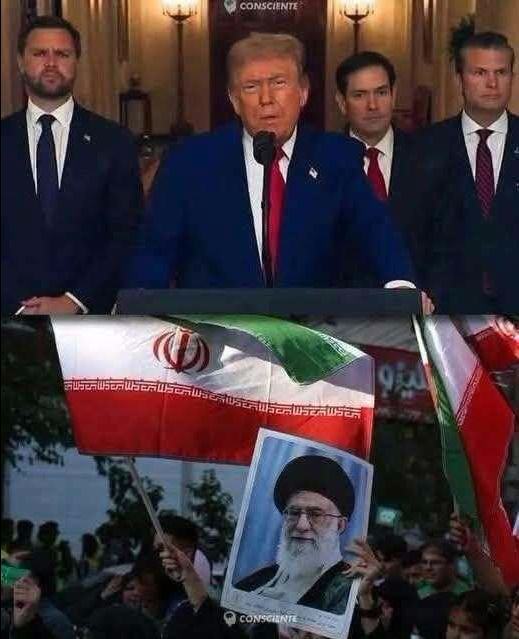
REVERSAL — Trump Announces a Major Change in U.S. Military Policy
A dramatic development involving the United States military has put Washington and the Middle East back under the international spotlight.
President Donald Trump has made a significant decision concerning potential U.S. military involvement in Yemen, declining to commit American forces to support the Saudi-backed Yemeni government in its fight against the Iran-backed Houthi movement. The development comes at a moment when tensions around one of the world’s most important shipping routes are already running extremely high.
The decision has attracted attention because expectations surrounding possible American involvement had been growing. Saudi Arabia has sought U.S. assistance as Houthi forces have made gains around the Bab al-Mandeb Strait, a strategically important maritime passage connecting the Red Sea with the Gulf of Aden.
According to Reuters, Trump spoke by phone with Yemeni President Rashad al-Alimi on September 20. During that conversation, the Yemeni leader requested American support for his government. Sources familiar with the discussion said Trump did not make a direct pledge of military assistance.
That distinction is important.
A request for military assistance does not automatically mean that American troops, aircraft, ships, or weapons will be deployed. Decisions involving U.S. forces can have enormous consequences, particularly in a region where several governments, armed groups and international powers are already involved in overlapping conflicts.
For Americans watching the story unfold, the announcement raises an obvious question: What happens next?
The answer remains uncertain.
The Houthis have become a major factor in regional security because of their position near the Bab al-Mandeb Strait. The waterway is an important route for international commerce, and instability in the area can affect shipping, insurance costs, energy markets and global supply chains.
The latest development therefore extends far beyond Yemen itself.
A military intervention by the United States could potentially widen America’s involvement in another Middle Eastern conflict. On the other hand, refusing to intervene could leave regional partners questioning how much direct American military assistance they can expect during a crisis.
That is the difficult strategic calculation confronting Washington.
Trump has previously rejected Saudi requests for direct military support against the Houthis, according to Reuters reporting. The president has also said that the United States remains in contact with the Houthis and has cited their assurance that American shipping would not be targeted.
The situation is particularly complicated because the United States has designated the Houthis as a terrorist organization.
At the same time, the administration has broader military commitments in the Middle East. The White House has reported that U.S. forces previously carried out defensive military operations against Iranian targets after attacks on American forces. A September 3 presidential report to Congress said those strikes targeted capabilities including unmanned vessels, minelaying equipment, radar systems, air defenses and other military infrastructure. The report stated that U.S. ground forces were not involved in those strikes.
That background helps explain why the latest Yemen decision is receiving so much attention.
The United States is already operating in a highly complicated security environment. Every additional military commitment brings questions about objectives, costs, risks to American personnel and the possibility of escalation.
For families of U.S. service members, those questions are especially significant.
Sending American forces into another conflict is never simply a headline. Behind every deployment are military personnel, their families and communities, logistical requirements, aircraft and ships, intelligence operations, medical support and potentially years of consequences.
That is why a presidential decision not to commit forces can be just as consequential as a decision to deploy them.
The word “reversal” has therefore become part of the conversation surrounding Trump’s recent foreign-policy decisions. The administration has repeatedly faced situations in which military threats, diplomatic negotiations and demands from foreign partners collide.
Earlier this year, Trump also changed course on other military matters. For example, reporting in May documented an abrupt shift regarding the deployment of U.S. troops to Poland, while more recent developments have involved changes to American military exercises and deployments.
But each situation has its own circumstances, and the Yemen decision should not automatically be interpreted as a permanent American withdrawal from the region.
For now, the clearest documented point is that Trump did not make a direct commitment of U.S. military support during his conversation with Yemen’s president.
That leaves several possibilities open.
Diplomacy could continue.
Regional governments could increase their own military efforts.
The United States could continue monitoring the situation without expanding its involvement.
Or circumstances could change quickly if American personnel, ships or commercial vessels come under attack.
That last possibility is particularly important.
Trump has repeatedly emphasized protecting American interests and personnel. The presidential report to Congress concerning military operations against Iran stated that U.S. forces remained prepared to take further military action if necessary to address additional attacks against the United States or its allies and partners.
In other words, declining to provide direct military support to Yemen does not mean the United States has abandoned its broader military presence or security interests in the Middle East.
It means that, at least for the moment, Washington has not committed to the specific intervention requested by Yemen.
Meanwhile, the international community is watching the situation closely.
The Bab al-Mandeb Strait is one of those locations where events occurring in one country can rapidly affect people thousands of miles away. A disruption could influence shipping routes, transportation costs and international trade.
That is why every development in Yemen receives attention far beyond the Middle East.
The latest decision also arrives as Trump prepares for major international meetings in New York. The president’s foreign-policy agenda includes discussions involving Iran, China, Russia, Ukraine and other major international issues.
With so many issues competing for attention, the Yemen situation could become another test of how the administration balances military power with diplomacy.
For Trump, the decision represents a choice to avoid making an immediate commitment to direct military assistance.
For Yemen and Saudi Arabia, it creates uncertainty about the extent of American involvement they can expect.
For the Houthis, it signals that Washington has not announced an immediate expansion of U.S. military operations against them.
And for American service members, it means there has not been a newly announced commitment to enter this particular conflict on Yemen’s behalf.
The story is therefore much more complicated than a simple “America is going to war” or “America is leaving the Middle East” headline.
Neither conclusion is established by the available reporting.
What is established is that Yemen requested military assistance and that Trump did not make a direct pledge during his conversation with President al-Alimi.
That distinction could become extremely important if events on the ground continue to change.
The coming days may reveal whether the current position remains in place or whether a new incident forces Washington to reconsider.
For now, the situation remains fluid.
The United States is watching.
Yemen is seeking support.
Saudi Arabia is facing a serious regional security challenge.
The Houthis continue to hold strategic positions.
And the world’s attention remains fixed on the waterways connecting the Middle East to global commerce.
What happens next could depend on diplomacy, battlefield developments and whether American interests or personnel become directly threatened.
For millions of people watching from around the world, one message is clear: the latest announcement is not the end of the story.
It may only be the beginning of another major chapter in an already complicated international crisis.