🔎 IF YOUR FINGERNAILS HAVE LINES, IT COULD MEAN… HERE’S WHAT YOUR NAILS MAY BE TELLING YOU
Have you ever looked down at your fingernails and noticed tiny lines, ridges, grooves, or changes in texture that weren’t there before? Maybe you assumed they were simply part of getting older—or perhaps you immediately wondered whether they were a sign that something was wrong inside your body.
The truth is more interesting.
Your fingernails can sometimes provide clues about what is happening with your health, but a line or ridge on a nail does not automatically mean you have a particular disease or vitamin deficiency. Nails grow slowly, and changes in them can reflect everything from everyday wear and tear to past illness, injury, medications, nutritional problems, or normal aging.
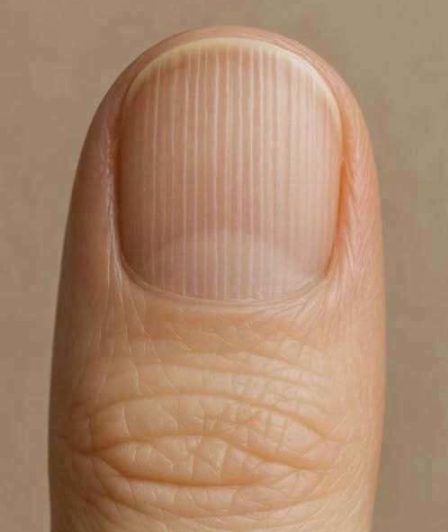
One of the most common changes is the appearance of vertical ridges. These are lines that run from the base of the nail toward the fingertip. They become increasingly common as people get older. In many cases, they are completely harmless and simply reflect changes in the nail as it ages.
However, there are other types of nail lines that deserve closer attention.
🟢 VERTICAL LINES
Vertical ridges are often the least concerning type.
You may notice that the surface of your nails feels slightly uneven when you run a finger across it. The ridges may appear on one nail or several nails.
Age is a common explanation, but dryness and repeated exposure to water, soaps, cleaning products, or other irritants can also affect the appearance of the nails.
That doesn’t mean you should ignore sudden changes, though.
If your nails suddenly become dramatically different, become brittle, change color, or develop other unusual features, it may be worth discussing the changes with a healthcare professional.
🟠 HORIZONTAL LINES OR GROOVES
Horizontal grooves are different.
These lines run across the width of the nail rather than from the base to the tip. They are sometimes called Beau’s lines.
They can appear when nail growth is temporarily interrupted or slowed. This can happen after certain illnesses, significant physical stress, injury to the nail, or some medical treatments.
An important clue is that the groove may remain visible as the nail continues growing. Because fingernails grow gradually, the position of a line can sometimes provide an indication of when the event affecting nail growth occurred.
But again, one line does not provide a diagnosis.
If several nails suddenly develop deep horizontal grooves, especially following an illness or major physical event, a healthcare professional can help determine whether further evaluation is appropriate.
🔵 WHITE LINES OR SPOTS
White marks are another extremely common nail finding.
A small white spot on a fingernail is often caused by minor trauma to the nail, sometimes from an injury that happened weeks earlier. People may not even remember bumping or damaging the nail.
White lines or bands affecting multiple nails can have other explanations, however.
Certain medications, illnesses, or nutritional problems can sometimes produce changes in nail appearance. That is why persistent or widespread changes should be interpreted in context rather than through a photograph or social-media checklist.
🟣 DARK LINES
Dark or brown-black lines under a fingernail deserve more attention.
Sometimes a dark streak is simply caused by trauma or another harmless condition. But a new, changing, or unusual dark band can occasionally be associated with a serious condition involving the nail, including melanoma.
This is one reason you should not automatically assume every dark nail line is harmless.
Pay attention if a dark streak is new, becomes wider or darker, develops irregular borders, or appears to extend onto the surrounding skin.
Those changes should be evaluated by a qualified healthcare professional.
🟡 WHAT ABOUT VITAMIN DEFICIENCIES?
You may have seen posts claiming that nail ridges automatically mean you’re deficient in iron, calcium, zinc, or another vitamin.
That is an oversimplification.
Nails can sometimes change because of nutritional deficiencies, but nail ridges alone cannot tell you which nutrient you are missing.
Taking large amounts of supplements simply because you noticed ridges may not solve the problem—and excessive amounts of certain vitamins and minerals can themselves cause problems.
If you are concerned about nutrition, especially if you also have fatigue, weakness, changes in appetite, unexplained weight changes, or other symptoms, it is better to discuss the situation with a healthcare professional.
👀 WHEN SHOULD YOU PAY ATTENTION?
A nail change deserves more attention when it is:
• New and unexplained
• Appearing suddenly on several nails
• Associated with pain or swelling
• Accompanied by changes in nail color
• Causing the nail to separate from the nail bed
• Associated with significant brittleness or deformity
• A dark streak that changes over time
• Accompanied by changes in the skin surrounding the nail
The key is change over time.
Your nails are living tissue that grows slowly, so a change can sometimes remain visible for months while the nail grows out.
🧼 TAKING CARE OF YOUR NAILS
Healthy nail habits are surprisingly simple.
Keep nails clean and reasonably short. Moisturize your hands and nails when they become dry. Wear gloves when working with harsh cleaning chemicals or when your hands spend long periods in water.
Avoid biting your nails and don’t aggressively cut or push back the cuticles.
If you frequently use artificial nails, gels, or acrylics, give your nails appropriate care between applications because repeated treatments can contribute to brittleness or damage.
And remember that nail appearance is only one piece of information. A healthcare professional considers your symptoms, medical history, medications, diet, physical examination, and—when appropriate—laboratory testing before determining whether a medical problem is present.
❤️ THE BIGGEST TAKEAWAY
So, if your fingernails have lines, it does not automatically mean you have a disease.
Vertical ridges are often associated with normal aging and other harmless causes. Horizontal grooves can occur when nail growth has temporarily been interrupted. White marks are frequently related to minor trauma. Dark streaks, particularly new or changing ones, deserve more careful evaluation.
Your nails can sometimes offer clues, but they aren’t a diagnostic test.
Instead of searching for one frightening explanation, look at the bigger picture: What type of line is it? How long has it been there? Is it changing? Are other nails affected? Do you have other symptoms?
Those questions are much more useful than simply asking what a nail ridge “means.”
And if something about your nails has changed suddenly or looks unusual and doesn’t go away, don’t rely solely on an online post. Taking a quick photo to track the change and discussing it with a healthcare professional can be a much safer way to find out what is really happening.
Sometimes the line is simply a normal part of growing older.
Sometimes it reflects an old injury.
And sometimes it can be a clue worth investigating.
Your fingernails may tell part of the story—but only the whole picture can tell you what that story really means.