License to Laugh: How One Woman’s Vanity Plate Sparked a Battle Over Free Expression
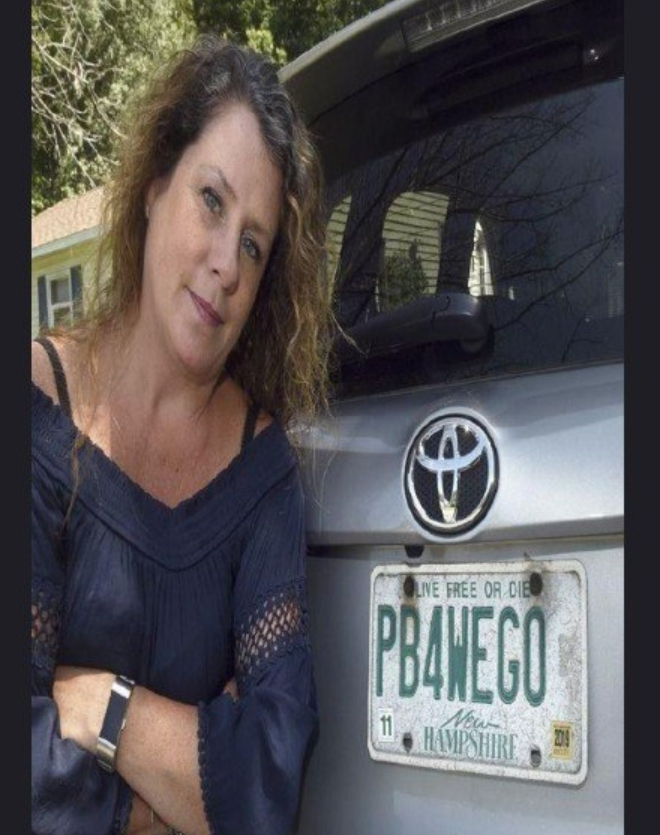
For 15 years, Wendy Auger drove through the streets of New Hampshire with a smile on her face and a message on her bumper: “PB4WEGO.” The playful vanity plate—shorthand for “pee before we go”—was a nod to the universal parental refrain, a lighthearted reminder that resonated with families everywhere. But in 2019, the state’s Department of Motor Vehicles (DMV) decided the plate was no longer appropriate, citing a policy against references to “sexual or excretory acts or functions.” What followed was a public outcry, a viral campaign, and a surprising intervention from the state’s highest office.
This wasn’t just about a license plate. It was about humor, personal expression, and the blurry line between regulation and overreach.
A Plate with Personality
Wendy Auger, a bartender and mother of four from Gonic, New Hampshire, had chosen her plate with intention. “PB4WEGO” wasn’t vulgar—it was relatable. It was the kind of phrase parents say instinctively before road trips, errands, or school drop-offs. And for 15 years, it brought smiles to strangers, sparked conversations, and became part of her identity.
“I get people taking pictures of it, people laughing, waving,” Auger told Inside Edition. “It’s just a fun thing. It’s not offensive. It’s not crude. It’s just real life”.
But in August 2019, she received a letter from the DMV informing her that the plate was being recalled. The reason? It violated a state policy banning references to bodily functions. Auger was stunned—and angry.
“I was pissed!” she said, pun intended.
The Policy Problem
New Hampshire’s DMV has long maintained guidelines for vanity plates, aiming to prevent offensive or inappropriate messages. These rules prohibit references to drugs, violence, sexual content, and excretory functions. On paper, the policy makes sense—it’s designed to keep public spaces respectful.
But in practice, it raised questions. Was “PB4WEGO” truly offensive? Or was it a harmless joke that had slipped through the cracks for years?
Auger argued that the plate had been approved legally and had never caused complaints. The sudden reversal felt arbitrary. “They passed some law and somehow I fit into that category,” she wrote on her blog. “Now something that I own, that has been the cause of so many innocent laughs and genuine smiles, is being deemed offensive or vulgar”.
A Viral Response
Outraged by the decision, Auger’s friends took to social media. A Facebook post by Corey West read: “Wendy’s license plate that she’s had for 15 years is now deemed inappropriate by the state. She has to surrender it in 2 days. Please share if you agree that this is ridiculous”.
The post quickly gained traction, racking up over 1,600 shares and drawing attention from local media outlets. Soon, the story went national. People from across the country weighed in, defending Auger’s plate and criticizing the DMV’s decision.
The public response was clear: humor is not a crime, and “PB4WEGO” was not offensive—it was endearing.
The Governor Steps In
As the story gained momentum, it reached the desk of New Hampshire Governor Chris Sununu. Recognizing the absurdity of the situation, Sununu personally contacted the DMV and urged them to reconsider.
“Upon this being brought to my attention, I reached out to the Division of Motor Vehicles and strongly urged them to allow Wendy to keep the license plate she has had for the last 15 years,” Sununu said. “I recently left a message on her phone to share the good news that her plate will not be recalled”.
With that, the battle was won. Auger could keep her plate, and the state backed down from its decision.
More Than a Plate
For Auger, the fight wasn’t just about a piece of metal—it was about principle. “In the grand scheme of things, a license plate is not a big deal,” she wrote. “But this wasn’t just about a license plate. It was about the government coming to me and taking something that was mine, that I paid for legally, and snatching it away from me. For no reason”.
Her story resonated because it touched on something deeper: the right to express oneself, even in small ways. Vanity plates are more than just identifiers—they’re reflections of personality, humor, and creativity. When the state tries to regulate that expression too strictly, it risks silencing the very individuality that makes public life vibrant.
The Slippery Slope of Censorship
Auger’s case also sparked a broader conversation about censorship and government overreach. Where do we draw the line between protecting public decency and stifling harmless fun? Who decides what’s offensive, and how consistent are those decisions?
Critics of the DMV’s policy pointed out that enforcement seemed arbitrary. Plenty of plates with suggestive or cheeky messages had slipped through the cracks. Why target “PB4WEGO” now?
The incident highlighted the need for clearer guidelines, more transparency, and a willingness to consider context. Not all references to bodily functions are crude—some are simply part of everyday life.
A Victory for Common Sense
In the end, Auger’s victory was a win for common sense. It showed that public pressure, media attention, and political advocacy can make a difference. It also reminded us that humor has a place in civic life—and that sometimes, the best way to challenge bureaucracy is with a good laugh.
Auger’s final message was a cheeky nod to her state’s motto: “Live pee or die”.
Conclusion: The Power of a Plate
Wendy Auger’s story may seem small in the grand scheme of things, but it carries a big message. It’s about the importance of personal expression, the absurdity of arbitrary rules, and the power of standing up for what you believe in—even if it’s just a license plate.
For 15 years, “PB4WEGO” brought joy to strangers and pride to its owner. And thanks to one woman’s determination, it will continue to do so. Because sometimes, the fight for freedom starts not with a protest—but with a pun.