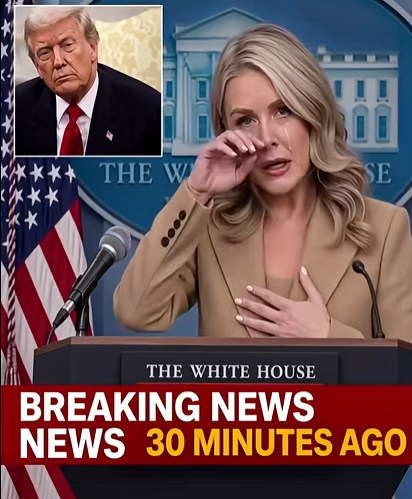
🚨 SAD NEWS? What Trump’s Latest Emergency Actions Really Mean — The Facts Behind the Viral Headline
A dramatic message circulating online says: “SAD NEWS — JUST IN: Emergency Declared as President Trump Will Be…” before cutting off with a “See more” prompt.
Headlines written this way are designed to create suspense and encourage people to click before they know what actually happened. But there have been several genuine emergency-related actions involving President Donald Trump in recent weeks, so it is important to separate confirmed developments from an incomplete social-media headline.
One significant recent action came on September 8, 2026, when Trump continued a national emergency originally declared after the September 11, 2001 terrorist attacks. The continuation extends that emergency for another year.
That is a real presidential action—but it is very different from the impression a vague “SAD NEWS” headline might create.
🇺🇸 A National Emergency Is Not Automatically a New Disaster
When Americans hear the words “national emergency,” many immediately imagine that something catastrophic has just happened.
Legally, however, a national emergency can remain in effect for years and can be renewed when the president determines that the circumstances behind the original declaration continue to require emergency authorities.
That is exactly what happened with the September 11-related emergency.
The original national emergency was declared in 2001. Trump’s September 8 notice did not announce a brand-new terrorist attack or declare that the United States had suddenly entered an unprecedented crisis. Instead, it continued the existing emergency for another year because the administration said the threat of terrorism remained.
That distinction is extremely important.
🚨 Trump Has Also Declared Other Emergencies
The September 11-related continuation is not the only recent emergency action.
On August 26, 2026, the White House announced that Trump had declared a national emergency concerning the security of America’s bulk-power system.
According to the White House, the order was intended to address national-security risks associated with foreign-produced equipment used in the American electrical grid, including cybersecurity and operational vulnerabilities.
Again, this was a genuine emergency declaration, but it concerned critical infrastructure and national security, not an immediate warning that Americans should panic.
The administration argued that foreign equipment used in the bulk-power system could create vulnerabilities capable of affecting national security, foreign policy, and the U.S. economy.
🔥 Emergency Declarations Can Also Concern Disasters
Presidential emergency powers are also used when communities experience natural disasters.
For example, Trump recently signed an emergency declaration connected to the Hawk Fire in Nevada, allowing federal assistance to support recovery efforts in the affected area.
The federal government also approved a major disaster declaration for 21 Indiana counties following deadly storms, making additional federal assistance available for recovery and emergency work.
These examples show why the word “emergency” needs context.
An emergency declaration might concern terrorism, infrastructure, severe weather, wildfires, economic threats, or another specific issue.
It does not automatically mean that the entire country is under immediate danger.
⚠️ Why Viral Headlines Cause Confusion
The headline shown in the post ends with “President Trump Will Be…”
That unfinished sentence is important.
Without the rest of the sentence, nobody can responsibly know what the original post is claiming.
Will he make an announcement?
Will he address the nation?
Will he sign an order?
Will he travel somewhere?
Will he declare another emergency?
The missing words could completely change the meaning.
This is one reason readers should be careful with “See more” headlines on social media.
A dramatic opening can encourage an emotional reaction before the reader sees the actual information.
📰 The Importance of Checking the Date
Another issue with breaking-news posts is timing.
A statement that was accurate several days ago may be presented as though it happened within the last few minutes.
In the current political environment, developments can happen quickly. Courts issue decisions, presidents sign executive orders, federal agencies announce new policies, and international events can change within hours.
For example, on September 12, 2026, a federal judge ruled that the Trump administration’s plan to reduce FEMA’s workforce by half violated federal law. Reuters reported that the judge found the Department of Homeland Security had unlawfully interfered with FEMA’s authority.
That is a significant development involving emergency management—but it is not the same thing as President Trump declaring a new nationwide state of emergency.
The distinction matters.
🏛️ What Emergency Powers Actually Do
Presidential emergency declarations can activate or expand specific legal authorities provided by Congress.
The president does not receive unlimited power simply because the words “national emergency” appear in an executive order.
Different laws provide different authorities, and those authorities can be challenged in court.
The courts have repeatedly played an important role in determining whether presidential actions exceed legal authority.
A recent example came from Michigan, where a federal appeals court ruled against the Trump administration’s attempt to keep a coal-fired power plant operating through emergency powers. The court concluded that the administration had exceeded the authority available under the Federal Power Act.
That illustrates an important principle:
Emergency powers are still subject to the law.
🇺🇸 Americans Should Pay Attention—But Not Panic
There is a difference between being informed and being frightened.
When a headline begins with “SAD NEWS” or “URGENT,” it is natural to become curious.
But emotional language should never replace verification.
If a post claims that the president has made a major announcement, look for confirmation from reliable sources such as official government statements and established news organizations.
If the claim involves a presidential order, there should generally be an official document or White House announcement that explains what was actually done.
If it involves a disaster, federal agencies such as FEMA may provide additional information.
And if it concerns national security, readers should be particularly cautious about unverified claims spreading through social media.
🔎 What We Know Right Now
Based on the recent confirmed record, several things are clear.
Trump has continued existing national emergencies.
He has declared a national emergency concerning America’s bulk-power system.
His administration has dealt with disaster declarations involving specific communities.
And his administration is facing significant legal challenges over how emergency and disaster-related authorities are being used.
But the incomplete headline does not, by itself, establish that a new nationwide catastrophe has occurred.
That is why it would be misleading to fill in the missing portion of the headline with speculation.
❤️ The Bigger Picture
The United States has always used emergency authorities during extraordinary circumstances.
Presidents from both political parties have relied on these powers.
The important questions are not simply whether an emergency has been declared, but why it was declared, what authority it activates, how long it lasts, and whether the action is legally justified.
Those questions deserve serious public discussion.
People can support Trump’s policies or oppose them. They can believe his emergency actions are necessary or argue that his administration is using emergency powers too aggressively.
But those debates should be based on facts.
The viral headline may be dramatic, but the truth is more complicated—and often more interesting—than the words “SAD NEWS” suggest.
🚨 The Bottom Line
Yes, President Trump has taken several genuine emergency-related actions recently, including continuing the long-standing national emergency concerning terrorist threats and declaring a national emergency involving the security of the U.S. bulk-power system.
But the incomplete social-media headline should not be treated as proof of a new nationwide crisis.
Before sharing a “BREAKING” or “SAD NEWS” post, check the full statement, the date, the official source, and the actual details.
In an age when one dramatic headline can reach millions of people within minutes, taking a moment to verify the story is more important than ever.