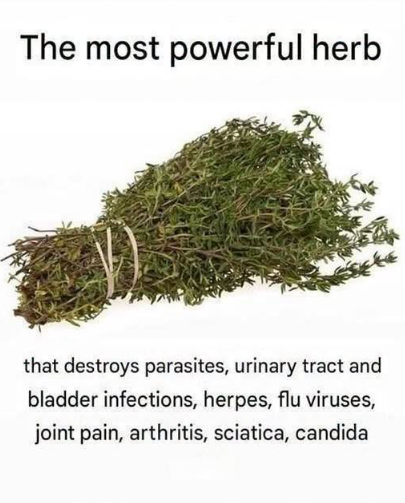
🌿 THE MOST POTENT HERB THAT “DESTROYS PARASITES” AND SUPPORTS THE URINARY TRACT — WHAT YOU SHOULD REALLY KNOW
For centuries, herbs have been used in traditional medicine to support digestion, urinary health, and overall well-being. One herb that frequently appears in natural-health discussions is oregano, particularly oregano and its concentrated oil.
Online, oregano is sometimes described with dramatic phrases such as “the most potent herb that destroys parasites and urinary tract infections.” Those claims certainly sound impressive—but the reality is more complicated.
Oregano contains naturally occurring compounds such as carvacrol and thymol, which have demonstrated antimicrobial activity in laboratory research. This has led scientists to investigate whether oregano and its compounds might have useful applications against certain microorganisms.
However, laboratory activity is not the same thing as proving that an oregano supplement can eliminate a parasite or cure a urinary tract infection in a person.
Understanding that difference is important.
🌿 Why Oregano Gets So Much Attention
Oregano has traditionally been used as a culinary herb and as a component of various traditional remedies.
Its essential oil is especially concentrated and contains compounds that researchers have studied for antibacterial, antifungal, and other biological effects.
Carvacrol and thymol can affect microorganisms under laboratory conditions. Researchers continue to investigate these compounds because they may have potential health applications.
But concentrated oregano oil is very different from sprinkling dried oregano on food.
Essential oils are highly concentrated substances. Taking them improperly can cause irritation or other adverse effects, and “natural” does not automatically mean harmless.
🦠 What About Parasites?
Parasitic infections are a broad category.
Different parasites affect different parts of the body, and treatment depends on the specific organism involved. Some parasites affect the intestines, while others can affect tissues or organs.
There is laboratory and preliminary research involving oregano compounds and certain microorganisms, but that does not establish oregano as a proven treatment for human parasitic infections.
If someone actually has a parasitic infection, identifying the organism is important because effective medications vary depending on the parasite.
Symptoms such as abdominal discomfort, diarrhea, unexplained weight changes, nausea, or fatigue can have many possible causes. Assuming that parasites are responsible—and attempting to treat them solely with herbs—can delay appropriate medical evaluation.
That is particularly important when symptoms persist or become severe.
🚽 What About Urinary Tract Health?
Urinary tract infections, commonly called UTIs, are another area where oregano is sometimes promoted online.
A UTI occurs when microorganisms infect part of the urinary system. Common symptoms can include burning or pain during urination, frequent urination, an urgent need to urinate, and discomfort in the lower abdomen.
Some laboratory studies have examined oregano compounds for antibacterial activity. But that does not mean drinking oregano tea or taking oregano oil will eliminate a UTI.
A suspected UTI deserves appropriate medical attention, particularly when symptoms are significant.
An untreated infection can sometimes spread from the bladder toward the kidneys.
Warning signs such as fever, chills, pain in the back or side, vomiting, or feeling seriously ill warrant prompt medical evaluation.
💧 Supporting a Healthy Urinary System
There are several simple habits that can support urinary health.
Staying adequately hydrated is important for general health and can help maintain normal urine production.
People should also avoid routinely holding their urine for extremely long periods.
Good personal hygiene can be helpful, and people who repeatedly experience UTIs should discuss possible contributing factors with a healthcare professional rather than repeatedly self-treating.
Cranberry products are another frequently discussed option for recurrent UTIs. Evidence suggests they may help some people reduce the risk of recurrent infections, although they are not a treatment for an existing UTI.
The key distinction is between prevention and treatment.
⚠️ More Is Not Always Better
One of the biggest mistakes people make with herbal remedies is assuming that increasing the dose increases the benefit.
That is particularly risky with essential oils.
Oregano essential oil is highly concentrated. It can irritate the mouth, throat, stomach, or digestive tract if consumed improperly. It may also interact with medications or be unsuitable for certain individuals.
People who are pregnant or breastfeeding, children, people with chronic medical conditions, and those taking prescription medications should be especially cautious about concentrated herbal products.
Before taking oregano oil internally, discussing it with a healthcare professional or pharmacist is a sensible precaution.
🍵 Food Versus Supplements
Using oregano as a culinary herb is generally very different from taking concentrated oregano supplements.
Adding oregano to vegetables, soups, sauces, beans, meat, or other foods can provide flavor while contributing small amounts of plant compounds to the diet.
Supplements and essential oils deliver much more concentrated amounts.
That distinction is often lost in viral social-media posts.
A statement such as “oregano kills bacteria” may originate from laboratory research, but that doesn’t mean consuming oregano produces the same effect inside the human body.
The dose, absorption, metabolism, location of the infection, and many other factors matter.
🔬 Why Scientific Evidence Matters
Natural-health claims should be evaluated using the same standard as claims about conventional medicines.
A promising laboratory result is an interesting starting point.
An animal study can provide additional information.
A well-designed human clinical trial provides much stronger evidence.
For a treatment to be considered reliable, researchers need evidence that it works in people, that the appropriate dose is known, and that its benefits outweigh its risks.
This is why dramatic statements such as “one herb destroys every parasite” should raise questions.
Microorganisms are diverse, infections are different, and no single herb should be assumed to cure unrelated diseases.
❤️ Listen to Your Body
If you experience urinary symptoms, don’t simply assume that an herbal remedy will solve the problem.
Burning during urination can have several causes.
Likewise, digestive symptoms do not automatically mean that someone has intestinal parasites.
Getting the correct diagnosis is often the most important step.
For people with recurrent urinary infections, unexplained digestive symptoms, blood in the urine or stool, persistent fever, severe pain, dehydration, or unexplained weight loss, professional medical evaluation is especially important.
Herbs can be part of a healthy lifestyle for some people, but they shouldn’t replace appropriate diagnosis and treatment when an actual infection is present.
🌱 The Bottom Line
Oregano is a fascinating herb with a long history of culinary and traditional use. Its naturally occurring compounds, particularly carvacrol and thymol, have attracted scientific interest because of their antimicrobial properties observed in laboratory research.
But calling oregano “the most potent herb that destroys parasites and urinary tract infections” goes beyond what the available evidence can establish.
It is better to think of oregano as a potentially useful plant with interesting biological compounds—not a universal cure.
Use culinary herbs as part of a varied diet, be cautious with concentrated essential oils, and don’t substitute an unproven herbal remedy for medical treatment when an infection is suspected.
The most powerful health habit isn’t finding one magical herb.
It is learning how to separate promising research from exaggerated claims, recognizing warning signs, and getting the right treatment when your body needs it. 🌿❤️