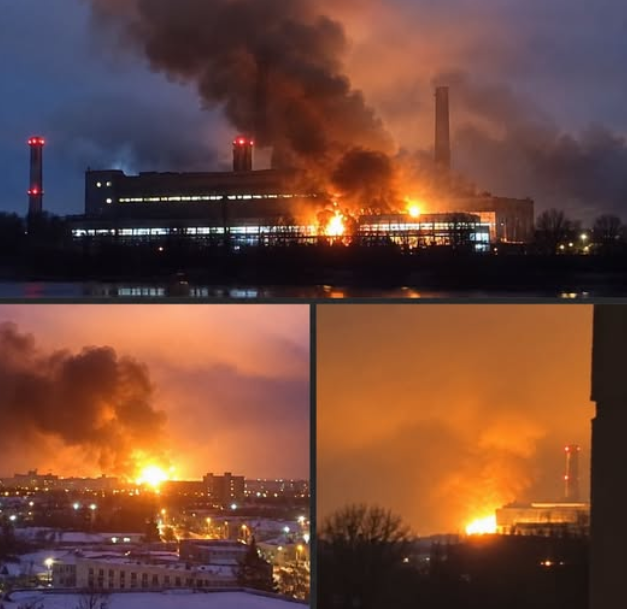
🚨 BREAKING: “Highest Global Alert” — What It Really Means
A phrase like “highest global alert” is enough to make people stop scrolling.
When headlines suddenly warn that the world has entered a state of unprecedented danger, fear can spread almost instantly. Social media posts are shared thousands of times, dramatic videos appear without context, and rumors can begin circulating faster than official information.
But what does a “highest global alert” actually mean?
The first thing to understand is that there is no single worldwide alert level used by every country or international organization. Different governments, militaries, emergency agencies, intelligence services, and international organizations use their own systems for assessing threats and determining appropriate levels of readiness.
That means a viral headline claiming that the entire planet has officially been placed on a single “highest alert” should be treated carefully unless it is supported by a specific official announcement.
🌍 Why Alert Levels Can Rise
Governments may increase security or readiness because of many different developments.
These can include military conflicts, terrorist threats, cyberattacks, natural disasters, major infrastructure risks, aviation threats, severe weather, or rapidly developing international crises.
An elevated alert does not automatically mean that war has begun or that an attack is imminent.
Often, increased readiness is designed to give authorities additional time to respond if a situation becomes worse.
Military forces may review contingency plans. Emergency agencies may increase communication with local authorities. Airports, transportation networks, energy systems, and other critical infrastructure may receive additional security attention.
Behind the scenes, officials may also monitor developments around the clock.
For ordinary people, however, the most important question is not how frightening a headline sounds.
It is whether the information has been officially confirmed.
⚠️ The Danger of Viral Headlines
The internet has changed the way people receive breaking news.
In the past, major international developments were typically reported through television networks, newspapers, radio, and official government announcements.
Today, a single social-media post can reach millions of people within minutes.
That speed can be useful when genuine emergencies occur.
But it also creates a serious problem.
A headline can be copied, exaggerated, translated incorrectly, or stripped of its original context. A report from one country can be transformed into a claim about the entire world. An old video can be presented as though it happened today.
By the time people discover that the original claim was misleading, millions may already have seen it.
This is why phrases such as “BREAKING,” “URGENT,” “HIGHEST ALERT,” and “THE WORLD IS ON THE BRINK” should encourage people to check the source rather than immediately panic.
🛰️ What Authorities Actually Watch
During periods of international tension, governments closely monitor developments across several areas.
Military activity is one.
Officials may track troop movements, aircraft activity, naval deployments, missile launches, satellite imagery, and other indicators.
Cybersecurity is another major concern.
Modern conflicts are not limited to battlefields. Cyberattacks can target government systems, banks, hospitals, telecommunications networks, transportation systems, and energy infrastructure.
Officials may also monitor diplomatic developments.
Emergency meetings between governments, military communications, international negotiations, and changes in diplomatic relationships can all provide clues about how a crisis is developing.
None of these indicators by themselves necessarily mean that a major conflict is about to occur.
They are pieces of a much larger picture.
🏠 What Should Ordinary People Do?
If reports of an international emergency are circulating, the best response is not panic.
It is preparation and verification.
People should first look for information from reliable official sources. Depending on the situation, that might include government emergency agencies, local authorities, transportation authorities, or official statements from the governments directly involved.
If an emergency actually affects your area, follow instructions from local officials.
Keep phones charged.
Know how to receive emergency alerts.
Have basic supplies available.
Make sure important medications and essential household items are accessible.
Families can also discuss where they would meet if communication becomes difficult.
These are sensible preparations regardless of whether a major international crisis is occurring.
📱 Think Before You Share
One of the simplest things people can do during a breaking-news situation is pause before sharing.
Ask:
Who published this?
When was it published?
Does the article identify a specific official source?
Are reputable news organizations reporting the same development?
Could the photograph or video be old?
These questions take only a few seconds.
They can prevent misinformation from spreading.
A dramatic image does not automatically prove a dramatic claim.
A video does not necessarily show what its caption says it shows.
And a headline containing the words “highest global alert” does not establish that a worldwide alert has actually been declared.
🌐 A World That Is Closely Connected
Modern crises can have international consequences even when they begin in one region.
Financial markets can react.
Air routes can change.
Shipping schedules can be disrupted.
Energy prices can move.
Governments can issue travel warnings.
People around the world can suddenly become interested in developments thousands of miles away.
That interconnectedness is one reason international security developments receive so much attention.
It is also why accurate information matters.
When fear spreads faster than facts, ordinary people can become unnecessarily frightened.
🚨 Stay Alert — But Stay Calm
There is an important difference between being alert and being afraid.
Being alert means paying attention to credible information and knowing where to obtain updates.
Being afraid means allowing an unverified headline to determine what you believe is happening.
During uncertain moments, calm decision-making is one of the most valuable forms of preparation.
If authorities announce an actual emergency, people should take those instructions seriously.
But until reliable sources confirm a major development, there is no reason to assume that every alarming social-media headline represents reality.
Final Thoughts
The words “highest global alert” sound frightening, and that is precisely why such language spreads so quickly online.
But the world does not operate under one universal alert system, and an alarming headline alone does not prove that a worldwide emergency has been declared.
International situations can change rapidly, and genuine breaking news deserves attention. At the same time, responsible information-sharing requires separating confirmed facts from speculation, rumors, recycled footage, and sensational headlines.
So if you see a post claiming that the world has entered a historic state of emergency, take a moment before clicking “share.”
Check the source.
Check the date.
Look for official confirmation.
And most importantly, do not let an unverified headline create panic.
In a rapidly changing world, staying informed is important.
But staying informed means knowing the difference between a warning, a possibility, a prediction, and a confirmed event.
That distinction could be more important than ever.