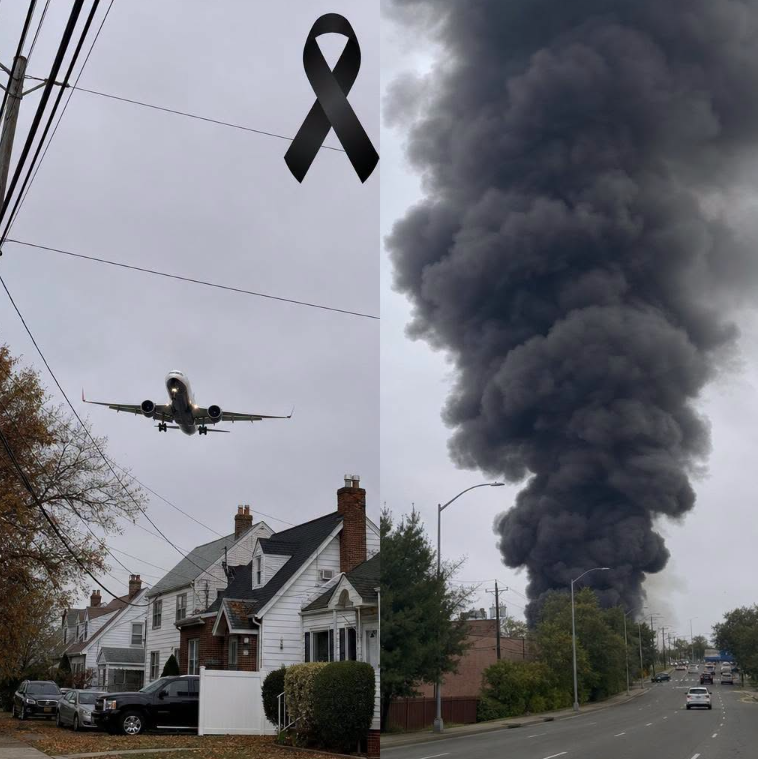
Plane With More Than 244 Onboard Crashes: What Really Happened
A frightening headline has been circulating online: “RIGHT NOW, PLANE WITH MORE THAN 244 ONBOARD JUST CRASH… See more.”
The wording immediately creates a sense of panic. It sounds as though a major passenger aircraft has crashed within the past few minutes, leaving hundreds of people in danger and emergency crews racing to the scene.
But there is an important detail that readers should know before sharing the claim.
The headline appears to be referring to a devastating aviation disaster that occurred in June 2025, rather than a newly confirmed crash happening today. Versions of the same headline have repeatedly resurfaced on social media and websites months after the original tragedy.
The tragedy involved Air India Flight AI171, a Boeing 787-8 Dreamliner traveling from Ahmedabad, India, to London Gatwick.
On June 12, 2025, the aircraft crashed shortly after taking off from Ahmedabad. There were 244 people aboard, including passengers and crew.
The accident shocked India and the international aviation community.
A Routine Flight Turns Into a Disaster
For the passengers aboard Flight AI171, the journey had begun like countless other international flights.
People boarded the aircraft, settled into their seats, prepared their belongings, and expected to spend hours traveling toward London.
The aircraft was a Boeing 787-8, a modern wide-body passenger aircraft commonly used for long-distance routes.
But shortly after takeoff, something went terribly wrong.
The aircraft failed to remain airborne and crashed in Ahmedabad.
Images and video from the area showed enormous amounts of smoke rising above the crash site as emergency responders rushed toward the scene.
The location made the disaster particularly devastating because the aircraft came down in a populated area rather than an isolated stretch of land. Buildings and people on the ground were also affected.
Emergency Crews Face a Terrifying Scene
When emergency personnel arrived, they encountered a chaotic and dangerous situation.
Firefighters worked to control flames while police officers and medical teams moved into the affected area.
Rescue operations following an aviation disaster are extremely difficult. Responders must contend with fire, debris, damaged structures, smoke, and the possibility that survivors may be trapped.
At the same time, officials must secure the crash site and begin identifying those involved.
For families waiting for loved ones, those first hours can be unbearable.
Airports can suddenly become places of uncertainty as relatives wait for information about passengers who were supposed to arrive safely at their destination.
One Survivor Became a Symbol of Hope
Among the most extraordinary aspects of the Air India tragedy was the survival of one passenger.
Vishwashkumar Ramesh survived the crash and was taken for medical treatment.
His survival attracted worldwide attention because of the enormous destruction surrounding the aircraft.
The tragedy therefore contained an extraordinary contrast: an enormous loss of life alongside a remarkable survival story.
For the families of those who died, however, the survivor’s story could not erase the magnitude of the loss.
Every person aboard the aircraft had a life beyond the passenger manifest.
There were families waiting for them.
There were friends expecting phone calls.
There were plans for the future.
Some passengers were traveling for work, while others were returning home or traveling to visit loved ones.
The number “244” represents far more than a statistic.
It represents hundreds of individual stories.
Questions About What Caused the Crash
Following a major aircraft accident, investigators begin a painstaking process to determine exactly what happened.
That process can take months or even years.
Investigators examine flight-data recordings, cockpit communications, maintenance records, aircraft components, weather information, airport operations, pilot procedures, and other evidence.
They also reconstruct the aircraft’s final moments.
The objective is not simply to determine who was responsible.
Aviation investigations are primarily intended to identify what went wrong and determine whether changes are necessary to prevent another tragedy.
That might involve aircraft equipment, maintenance procedures, pilot training, airport operations, regulations, or other aspects of aviation safety.
Why the Headline Is Misleading
The most important issue with the viral headline is the phrase “right now.”
That wording suggests a new crash is occurring on September 8, 2026.
The available information does not establish that.
Instead, versions of the headline have been circulating for months, sometimes accompanied by dramatic photographs or videos without clear dates. Similar posts have appeared repeatedly online, causing people to believe an old event is happening again.
This is a growing problem with viral breaking-news content.
A photograph from an older disaster can be paired with a new caption.
A headline can be reposted months later without its original date.
A video can be removed from its original context and presented as though it happened yesterday.
And within minutes, thousands of people may share the information before anyone checks whether it is accurate.
Why Verification Matters
Aviation disasters are among the most emotionally powerful stories that can appear online.
When someone reads that a plane carrying hundreds of people has crashed, their first reaction may be to worry about friends, relatives, coworkers, or anyone who might be traveling.
That is precisely why accuracy matters.
Readers should look for confirmation from airlines, airports, aviation authorities, emergency services, and established news organizations.
If a post does not provide a location, airline, flight number, date, or reliable source, that should immediately raise questions.
The words “breaking,” “urgent,” and “right now” do not make a report accurate.
They are simply words.
Remembering the People Behind the Number
The Air India tragedy should not be reduced to a sensational headline designed to generate clicks.
Behind the passenger count were people with families, dreams, careers, relationships, and futures.
The crash affected not only those aboard the aircraft but also people on the ground and communities connected to the victims.
For relatives, the event was not something that disappeared when social-media attention moved on.
Grief continues long after the headlines disappear.
That is why responsible coverage of aviation disasters should focus on verified information and respect for those affected.
The Lesson From the Viral Headline
The phrase “plane with more than 244 onboard just crash” may sound like an unfolding disaster, but available information indicates that the viral wording is connected to the Air India Flight AI171 tragedy of June 12, 2025—not a confirmed new crash happening today.
The disaster remains one of the most painful aviation stories of recent years.
It serves as a reminder of the importance of aviation safety, careful investigation, and accurate communication.
It also provides a lesson for everyone using social media.
Before sharing a frightening breaking-news headline, stop for a moment.
Check the date.
Find the original source.
Look for confirmation from reliable authorities.
And ask whether the photograph or video being shared actually belongs to the event described.
In an age when information can travel around the world in seconds, responsible readers have an important role to play.
The tragedy of Air India Flight AI171 deserves to be remembered accurately—not transformed into a false report of another crash.
Because behind every passenger number is a human being, and behind every aviation disaster are families who deserve truth, dignity, and respect.