Urgent Iran Tensions Rise as Fears of a Wider Attack Spread Across America
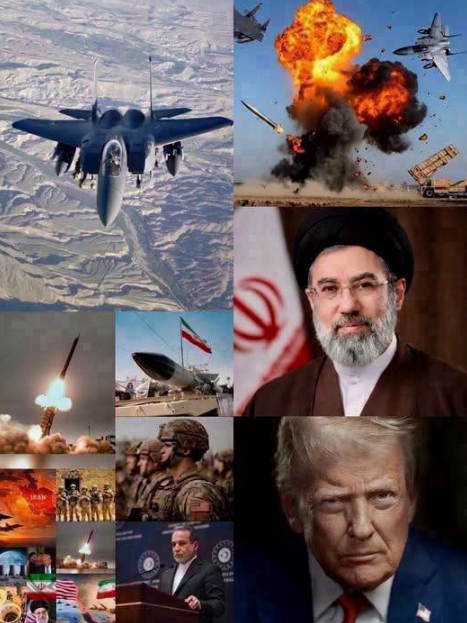
A dramatic warning circulating online has sparked fear and confusion across the United States, claiming that Iran is preparing to strike America “tonight” and suggesting that the attack could begin in a specific U.S. state.
The claim is alarming—but there is an important distinction between a viral warning and a confirmed military announcement.
As of September 8, 2026, tensions between the United States and Iran are extremely high. The two countries remain involved in an expanding military confrontation, with attacks, threats and counterattacks occurring across the Middle East. However, available reporting does not establish that Iran has announced a confirmed attack on a specific American state tonight.
The danger is nevertheless real.
Recent developments have shown how quickly the conflict can escalate. Iran has warned that American interests and energy infrastructure in the Gulf could be vulnerable if the United States carries out additional attacks. Iranian officials have also threatened retaliation and discussed restrictions involving the strategically important Strait of Hormuz.
The situation became even more serious Tuesday after Iran-backed Houthi forces launched attacks against several cities in southern Saudi Arabia. Drones and missiles were used against military and energy-related targets, while fires were reported at important oil facilities. More than 70 people were reportedly injured.
Those attacks demonstrate why officials around the world are watching the conflict so closely.
A regional confrontation can spread rapidly when multiple countries, military bases, shipping routes and armed groups are involved.
For Americans following the news from home, however, one of the biggest concerns is whether the conflict could eventually reach the United States itself.
That question is much more complicated than viral posts often suggest.
Iran possesses ballistic missiles and drones capable of threatening American military installations in the Middle East. It has also demonstrated an ability to target shipping and infrastructure throughout the region. But an attack on the continental United States would represent a dramatically different level of escalation.
There is currently no verified evidence establishing that such an attack is scheduled for tonight.
That distinction matters.
In times of war, social media can spread information faster than official authorities can confirm it. A dramatic headline can be reposted thousands of times within minutes. A warning originally referring to American military facilities overseas can eventually be rewritten as a claim about the United States itself.
A statement saying that American forces are at risk in the Middle East can therefore become an alarming headline claiming that an American state is about to be attacked.
The two claims are not equivalent.
The latest reporting does show that American forces and interests remain under serious pressure. Reuters reported that Iran has threatened retaliation following U.S. attacks and warned that Gulf energy infrastructure could become vulnerable. Shipping through the Strait of Hormuz has also slowed amid the confrontation.
The economic consequences are already being felt.
Oil prices have climbed sharply as investors worry that fighting could interfere with energy supplies. Brent crude approached or exceeded $99 per barrel in recent trading, while concerns about disruptions to shipping have increased pressure on fuel markets.
That means the effects of the conflict do not have to involve missiles falling on American soil to affect American families.
Higher gasoline prices, more expensive transportation, market volatility and increased uncertainty can all reach households thousands of miles away from the battlefield.
The military implications are even broader.
The United States has extensive military facilities and personnel throughout the Middle East. Iran has previously threatened American forces in the region and has carried out or claimed attacks against U.S.-linked targets. American officials have responded with military operations of their own.
That creates a dangerous cycle.
One side launches an attack.
The other responds.
The response becomes the justification for another attack.
Each escalation increases the possibility that a future incident could produce consequences neither side originally intended.
That is why officials and analysts are paying close attention to developments around the Strait of Hormuz, Gulf military installations and regional allies.
At the same time, Americans should be cautious about sensational posts claiming that a particular state is about to be attacked.
A genuine imminent domestic threat would normally generate warnings from federal, state or local authorities rather than appearing exclusively through anonymous social-media accounts.
People seeing such posts should check official emergency alerts and reputable news organizations before sharing them.
That does not mean the public should ignore the broader crisis.
Quite the opposite.
The current situation deserves serious attention because the underlying conflict is genuine. The United States has been exchanging military blows with Iran, and Tehran has continued making threats as the confrontation develops. The possibility of further escalation remains significant.
Iran has also unveiled claims regarding increasingly capable ballistic missiles, emphasizing a more aggressive military doctrine and its willingness to respond to perceived threats.
Meanwhile, Washington has continued applying economic pressure. On September 8, the U.S. announced dozens of new Iran-related sanctions targeting the country’s aviation sector and networks accused of helping Tehran obtain aircraft and sensitive technology.
These developments illustrate that the confrontation is occurring on several fronts simultaneously.
There is the military front.
There is the economic front.
There is the diplomatic front.
And increasingly, there is the information front.
That final battlefield may be the most confusing for ordinary people.
Every explosion, missile launch or official statement can produce dozens of competing interpretations online. Some posts contain legitimate information. Others exaggerate genuine events. Some are deliberately designed to generate fear and clicks.
The phrase “Iran will strike America tonight” is therefore the kind of statement that should be treated with extreme caution unless supported by official confirmation.
For now, the most accurate picture is one of severe and continuing escalation—not a confirmed Iranian attack on a particular American state tonight.
The coming hours could nevertheless be important.
Military commanders will be watching for signs of further attacks. Governments throughout the region will be assessing their defenses. Markets will continue reacting to developments around energy supplies and shipping. And millions of people will be waiting for indications of whether the conflict expands or moves toward another attempt at de-escalation.
For Americans, the best response to alarming claims is neither panic nor complacency.
It is verification.
Check official government alerts. Follow credible reporting. Be skeptical of posts that provide dramatic predictions without evidence. And remember that headlines designed to make people frightened are not necessarily headlines that accurately describe what is happening.
The situation involving Iran and the United States is already serious enough without adding unverified claims.
The real story is that the region is experiencing a dangerous period of military escalation, with consequences reaching far beyond the battlefield.
And tonight, as Americans watch the news and wonder what comes next, one fact remains especially important:
A frightening claim circulating online is not the same thing as a confirmed attack.