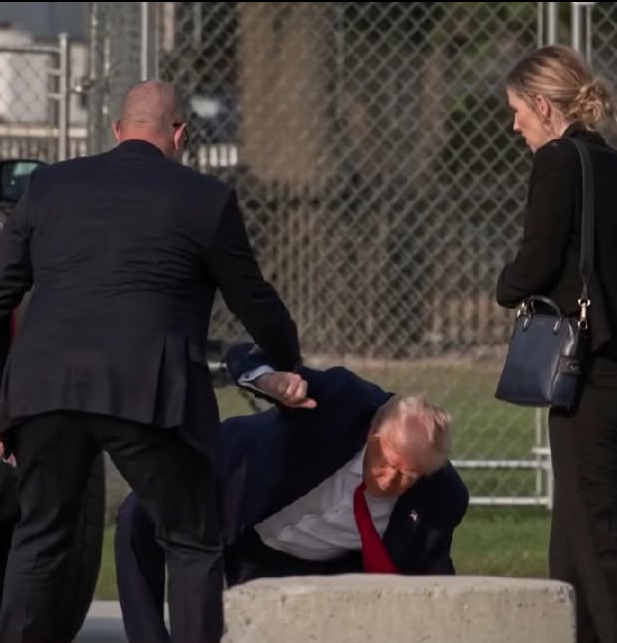
Trump FALLS Again? The Viral Video, His Doctor, and the Truth Behind the Claims
A dramatic headline spreading rapidly across social media has once again placed President Donald Trump’s health under the spotlight: “Trump FALLS AGAIN! — White House Doctor Breaks Silence.”
The wording is designed to sound like an urgent breaking-news alert. Videos accompanying the claim have prompted thousands of reactions, with viewers questioning whether the president suffered another fall or experienced a serious health episode in public.
But there is a major problem with the story.
The viral footage does not show Trump falling again.
According to reporting published by Hindustan Times on August 31, 2026, the circulating video used manipulated footage and artificial-intelligence-generated elements to make it appear as though Trump had stumbled or collapsed. The original footage, recorded earlier, showed Trump entering his vehicle without falling.
That revelation has raised a broader question: Why do dramatic health rumors involving political leaders spread so quickly?
A Viral Video Creates a New Wave of Concern
The video appeared convincing enough to generate an immediate wave of discussion.
A breaking-news-style banner claimed that Trump had fallen and that his White House physician had responded. For viewers who encountered only the short clip without any surrounding context, the footage could easily appear authentic.
Social media algorithms can make such claims particularly powerful. A sensational video attracts attention, comments, shares and arguments. Once thousands of people interact with a post, the claim can reach audiences far beyond the account that originally published it.
In this case, however, fact-checking found that the video had been manipulated.
The authentic footage showed something much less dramatic: Trump approaching and entering his vehicle. There was no confirmed fall matching the viral description.
That distinction matters enormously when discussing someone’s health.
Why Trump’s Health Remains a Major Story
Even though this particular video was misleading, public interest in Trump’s health is not entirely surprising.
Trump is an elderly president, and his age has repeatedly generated discussion about his physical condition and ability to handle the demanding responsibilities of the presidency.
His medical condition has also received considerable attention during his second term.
In May 2026, Trump underwent another medical examination at Walter Reed National Military Medical Center. His physician subsequently described him as being in “excellent health,” according to reporting from PBS and other outlets.
The White House physician also issued an official memorandum following the examination.
At the same time, questions about Trump’s health have continued in the public conversation. The Washington Post reported in August that Trump had gained approximately 20 pounds since his campaign, while physicians interviewed by the newspaper expressed concerns about the potential health risks associated with his weight.
Those legitimate discussions can unfortunately create an environment where completely fabricated videos appear believable.
The Difference Between a Health Question and a Health Claim
There is an important difference between asking questions about a public figure’s health and declaring that the person has suffered a medical emergency.
The first is legitimate public-interest journalism.
The second requires evidence.
A short social-media video cannot establish that a person suffered a stroke, fainted, lost consciousness or experienced another serious medical event. Even authentic footage of someone stumbling would not, by itself, establish the medical reason for the movement.
That is why doctors, official statements and verified reporting matter.
In Trump’s case, the most recent widely reported medical examination before this viral claim did not announce a catastrophic health condition. Instead, the White House physician described him as being in excellent health.
That does not mean every question about Trump’s health disappears. It simply means dramatic conclusions should not be drawn from an altered video.
The White House Doctor Becomes Part of the Story
The phrase “White House Doctor Breaks Silence” adds another layer of drama to the viral headline.
The physician to the president is an especially important position because the doctor is responsible for providing medical care to the president and supporting the White House Medical Unit.
But that does not mean every social-media claim about the president automatically comes with an authentic medical statement.
In the case of the viral “Trump falls again” video, the available fact-checking did not establish that the White House physician had confirmed a new fall. Instead, the central video itself was found to be manipulated.
That is an important warning for anyone seeing similar posts.
A graphic that looks like television news is not necessarily television news.
A dramatic caption is not necessarily an official statement.
And a video that appears realistic may not depict what actually happened.
Why Artificial Intelligence Makes Verification Harder
The latest generation of artificial-intelligence tools has made it easier to manipulate video and create realistic-looking political content.
A viewer may see familiar surroundings, recognizable clothing and a familiar face and instinctively assume that everything in the video is genuine.
But small changes can completely alter the meaning of an event.
A stumble can be added.
A fall can be simulated.
A reaction can be inserted.
A voice can be generated.
A television-style headline can be placed over authentic footage.
Together, these elements can create a story that never happened.
The Trump video demonstrates why viewers should pause before sharing emotionally charged political content.
What We Actually Know
The verified picture is considerably less dramatic than the headline suggests.
Trump has undergone medical evaluations during his presidency, including a substantial examination in May 2026. His physician described him as being in excellent health.
There have also been legitimate public discussions about his weight and other visible health-related concerns.
But the viral video claiming that Trump “falls again” was not evidence of another confirmed medical incident.
Fact-checking found that the footage was manipulated and that the original video showed Trump entering his vehicle without collapsing.
That means the most dramatic part of the headline—the suggestion that a new fall has been captured on camera—is not supported by the evidence currently available.
The Bigger Lesson
The episode is about more than Donald Trump.
It illustrates how quickly misinformation can spread when politics, health and artificial intelligence collide.
A headline containing words such as “BREAKING,” “FALLS,” “DOCTOR,” “EMERGENCY,” or “BREAKS SILENCE” naturally triggers curiosity and fear.
People click because they want to know what happened.
They share because they believe others need to know.
And before the truth catches up, millions of people may already have seen the misleading version.
For that reason, the safest response to a shocking political-health video is simple: stop, check the original footage, look for reliable reporting and search for an official statement before accepting the claim.
In this case, the truth is far less sensational than the viral headline.
Donald Trump has not been verified as having suffered the “fall again” depicted in the circulating video. The footage was manipulated, and the original recording does not show him collapsing.
The story is therefore not really about a president suddenly falling.
It is about how easily a manipulated image can make millions of people believe that he did.