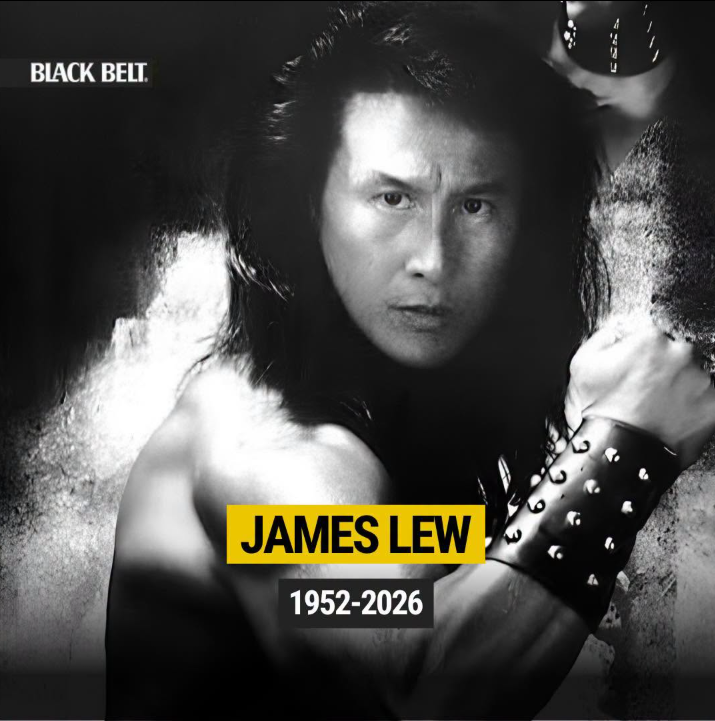
Farewell to a Legend: James Lew… Remembering the Martial Arts Icon Who Helped Shape Hollywood Action
The news that martial artist, actor, stunt performer, and fight choreographer James Lew has died at the age of 73 has brought a wave of sadness to the martial arts and Hollywood communities. Lew died on August 23, 2026, after a career spanning more than five decades. His wife, Jordana Potter, announced his death on social media. A cause of death has not been publicly disclosed.
For many casual moviegoers, James Lew may not have been the biggest name on a movie poster. But behind some of Hollywood’s most memorable action sequences was a professional who understood something fundamental: making a fight look convincing on screen requires much more than knowing how to fight.
It requires timing, choreography, athleticism, creativity, discipline, and an extraordinary understanding of the camera.
That was James Lew’s specialty.
A Martial Arts Journey Begins
Born James Jene Fae Lew on September 6, 1952, in Escalon, California, Lew was raised in South Los Angeles. He began studying martial arts when he was only 14 years old, developing skills in disciplines that included kung fu, Tang Soo Do, Tae Kwon Do, Jeet Kune Do, Hapkido, boxing, and submission grappling.
His dedication quickly became more than a hobby.
Lew competed in martial arts and became part of a generation of practitioners who helped bring authentic martial arts movement and technique into American entertainment.
He eventually became associated with Douglas Wong’s Sil Lum Demonstration Team, working alongside other prominent martial artists, including Al Leong.
That experience helped prepare him for the world that would define his professional life.
Hollywood.
From Martial Artist to Stunt Performer
Lew’s path into the entertainment industry began through martial arts.
He answered a casting call connected to the television series Kung Fu, opening the door to a career that would eventually take him across film and television productions around the world.
He also worked in Hong Kong cinema and appeared in The Young Dragon, gaining valuable experience with the precise and highly disciplined approach to martial arts filmmaking used in Asian action movies.
That experience became an important part of his development.
Hollywood action filmmaking was changing rapidly, and performers with genuine martial arts backgrounds were increasingly valuable.
Lew was not simply someone who could perform a punch or kick.
He understood how movement worked.
He understood how to make action readable.
And he understood how performers could execute complicated sequences safely while making them appear dangerous to audiences.
Big Trouble in Little China
One of the most important chapters of Lew’s career came in 1986 when director John Carpenter selected him as martial arts choreographer for Big Trouble in Little China.
The cult classic, starring Kurt Russell, blended comedy, fantasy, adventure, and martial arts into something unlike most Hollywood films of its era.
Lew worked behind the scenes to help create the movie’s action style, while also appearing on screen as a Chang Sing warrior.
The movie became a cult favorite and remains widely remembered for its eccentric characters and spectacular action.
Lew’s contribution is part of the reason the film’s martial arts sequences remain memorable decades later.
A Career Filled With Action
Throughout the 1980s and 1990s, Lew became a familiar figure within action filmmaking.
His credits included movies such as Killpoint, Ninja Turf, Best of the Best, The Perfect Weapon, Showdown in Little Tokyo, Double Impact, Rapid Fire, and Red Sun Rising.
He worked with some of the biggest action stars of the era and contributed both in front of and behind the camera.
His career was unusual because he could move between several roles.
He could act.
He could perform stunts.
He could choreograph fights.
He could coordinate dangerous sequences.
And he could help other performers understand the physical demands of action filmmaking.
That versatility made him valuable for decades.
The Invisible Artists of Action Cinema
One reason James Lew’s death may not receive the same mainstream attention as the passing of a major leading actor is that stunt performers and choreographers frequently work behind the scenes.
Audiences remember the star.
They remember the character.
They remember the explosion or fight.
But they may not know the names of the people who made those moments possible.
That is precisely why Lew’s career deserves recognition.
Action filmmaking is a collaborative art.
A great fight scene requires performers, stunt coordinators, choreographers, camera operators, editors, directors, safety personnel, and many others.
Lew was one of the professionals who helped bring those elements together.
His work helped create the illusion that audiences were witnessing spontaneous combat when every movement had actually been carefully planned.
Working Across Generations
Lew’s career did not end with the action films of the 1980s and 1990s.
He continued working for decades.
His credits included major productions such as Rush Hour, The Last Samurai, Collateral, and numerous other films and television projects.
His work also extended into the superhero era.
For Marvel’s Luke Cage, Lew served as stunt coordinator, and his work earned him a Primetime Emmy Award for Outstanding Stunt Coordination in 2017.
That award represented an important recognition of a career spent helping other people look extraordinary.
For once, the spotlight was directly on him.
A Filmmaker in His Own Right
Lew was not content to remain only a performer or choreographer.
In 2006, he wrote, directed, and starred in 18 Fingers of Death!, a martial arts comedy parodying the world of low-budget kung-fu filmmaking.
The project demonstrated another side of his personality.
He understood the absurdity and humor surrounding martial arts movies and was willing to make fun of the industry he had spent decades working within.
That ability to laugh at his own profession revealed the creative side of a man who had spent much of his career making action look serious.
Recognition From the Martial Arts Community
In 2024, Lew was honored by the Black Belt Hall of Fame in the stunt performer category alongside fellow veterans Jeff Imada and Simon Rhee.
The recognition was particularly meaningful because it came from a community that understood the full scope of his contribution.
Hollywood audiences might remember a face from a fight scene.
Martial artists understood the years of training behind that movement.
Stunt performers understood the risks.
Choreographers understood the precision.
And longtime colleagues understood the dedication required to remain active in such a physically demanding profession for more than five decades.
More Than the Fights
Perhaps the most touching part of James Lew’s legacy is not the number of movies he worked on.
It is the people he influenced.
The stunt community is built heavily on relationships. Professionals teach one another, recommend one another, protect one another, and pass knowledge from one generation to the next.
Lew belonged to a generation that helped establish modern martial arts stunt work in American cinema.
His influence therefore extends beyond the films listed in his credits.
It lives in the performers who learned from him.
It lives in the choreographers who followed his example.
And it lives in audiences who may never have known his name but remember the action sequences he helped create.
A Life Remembered
Following his death, tributes have emphasized how deeply Lew was loved within the martial arts and film communities. Black Belt Magazine described him as a friend and Hall of Famer and recalled how people from throughout his life came together during his final days.
His wife, Jordana Potter, also shared an emotional tribute after his passing, remembering him with affection and describing how deeply he would be missed.
Those personal memories reveal something that film credits cannot.
James Lew was not simply a collection of stunt numbers, movie titles, and awards.
He was a husband, friend, mentor, martial artist, filmmaker, colleague, and teacher.
That is the person his community is mourning.
The Legacy Behind the Camera
When audiences watch an action movie, they often focus on the stars.
But people like James Lew remind us that cinema is built by hundreds of talented individuals whose names may never appear prominently in advertisements.
The spectacular kick.
The perfectly timed fight.
The dramatic fall.
The carefully choreographed confrontation.
The sequence that makes an audience gasp.
Behind those moments are professionals who spent years mastering their craft.
James Lew was one of those professionals.
And he was exceptionally good at what he did.
Farewell to a Legend
James Lew’s death marks the end of an extraordinary chapter in martial arts and Hollywood action history.
He entered the entertainment world as a young martial artist and spent more than five decades expanding what was possible in front of and behind the camera.
He worked as an actor.
He worked as a stuntman.
He worked as a fight choreographer.
He worked as a stunt coordinator.
He directed.
He wrote.
He produced.
And he earned one of the industry’s most respected honors for stunt coordination.
His career was defined not by a single blockbuster but by an enormous body of work.
That may ultimately be the most fitting tribute.
James Lew kept working.
He kept learning.
He kept creating.
And he helped generations of audiences experience the excitement of martial arts cinema.
For fans of Big Trouble in Little China, Best of the Best, Double Impact, Rapid Fire, Rush Hour, Luke Cage, and countless other productions, his work remains part of the screen.
The man is gone.
The craft he helped shape remains.
And every time an expertly choreographed fight makes an audience sit forward in their seat, there is an opportunity to remember the professionals who made such moments possible.
James Lew was one of them.
A martial artist.
A stuntman.
A choreographer.
An actor.
A filmmaker.
A mentor.
And, above all, a legend whose influence reached far beyond the credits.
Farewell, James Lew. Your work will keep moving long after the final scene has ended.