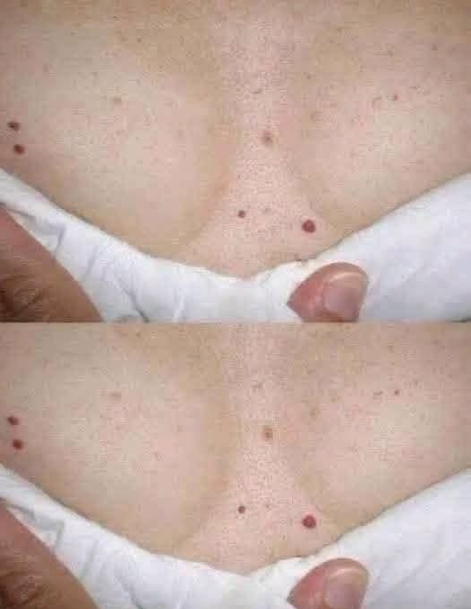
If You Have Red Spots, It Is Not Always a Clear Sign That Your Body Has…
Red spots on the skin can be alarming, especially when they appear suddenly. A small red mark may seem harmless one day and then become larger, darker, itchy, or more noticeable the next. This often leads people to search online for explanations and encounter dramatic headlines claiming that red spots are a “clear sign” that the body has a serious problem.
The truth is more complicated.
Red spots are not a diagnosis by themselves. They can occur for many different reasons, ranging from minor irritation to infections, allergic reactions, blood-vessel changes, or other medical conditions. The appearance of the spot, how quickly it developed, whether it itches or hurts, and whether other symptoms are present can all provide important clues.
One common cause is simple skin irritation.
A new soap, detergent, lotion, cosmetic product, fabric, or chemical can irritate the skin and produce redness. Friction from clothing or repeated scratching can have a similar effect. In these situations, removing the irritating substance may allow the skin to gradually improve.
Insect bites can also produce red spots. Mosquitoes, fleas, bedbugs, and other insects may leave small, itchy marks. Some people develop a much stronger reaction than others, so the size and appearance of a bite can vary considerably.
Allergic reactions are another possibility.
A person may develop a rash after exposure to a food, medication, plant, cosmetic, or another substance. An allergic rash can appear as red patches, raised bumps, or areas of irritation and may be accompanied by itching.
However, certain allergic symptoms require immediate attention. If redness or a rash is accompanied by difficulty breathing, swelling of the lips or tongue, fainting, severe dizziness, or other signs of a serious allergic reaction, emergency medical care is necessary.
Another category of red spots involves small blood vessels.
Some people develop tiny red or reddish-purple dots called petechiae. These occur when very small blood vessels under the skin leak. Petechiae can have numerous causes, including physical strain, infections, medications, and problems involving blood clotting or platelet levels.
Because the causes vary widely, unexplained petechiae should not simply be diagnosed from a photograph or social-media post. A healthcare professional may need to examine the skin and consider the person’s other symptoms and medical history.
There are also harmless vascular spots that become more common with age. Cherry angiomas, for example, are small red growths caused by an increased number of tiny blood vessels near the surface of the skin. They are generally harmless, although they can sometimes bleed if scratched or injured.
This is an important reminder that not every red spot means something is wrong internally.
Skin changes can also occur because of infections.
Certain viral, bacterial, or fungal infections can produce redness or rashes. Some may be associated with fever, fatigue, sore throat, pain, swelling, or other symptoms. The pattern of the rash can sometimes help healthcare professionals identify possible causes, but diagnosis often requires more information than simply observing its color.
Heat can also cause red spots or bumps.
Heat rash may develop when sweat becomes trapped in the skin. It can occur during hot or humid weather and may feel itchy, prickly, or uncomfortable. Keeping the affected area cool and dry can often help mild cases improve.
Another possibility is eczema or another inflammatory skin condition.
Eczema can cause red, dry, itchy, or irritated patches. It can appear in people of different ages and may come and go over time. Triggers can include certain products, weather changes, stress, and other factors.
Psoriasis is another condition that can produce noticeable red areas, often accompanied by scaling. It is a chronic inflammatory condition and is not something that can be diagnosed simply because someone notices a red mark.
This is why sensational health headlines can be dangerous.
A statement such as “red spots mean your body has a serious disease” can frighten people unnecessarily. At the same time, telling everyone that red spots are harmless can be equally irresponsible.
The correct approach is to look at the whole picture.
Ask yourself when the spots appeared. Are they spreading? Do they itch, burn, or hurt? Are they flat or raised? Do they disappear when pressure is applied? Did you recently start a medication, use a new skin product, eat a different food, travel, spend time outdoors, or experience an illness?
These details can help a medical professional determine what might be happening.
Medication is particularly important to consider.
Some medicines can cause skin reactions. A new rash appearing after starting a medication deserves medical attention, especially if it is widespread, rapidly worsening, painful, blistering, or accompanied by fever or swelling. People should not automatically stop prescribed medication without professional advice unless they are experiencing an emergency and have been instructed otherwise.
The location of red spots can also matter.
A rash limited to an area exposed to a particular product may suggest contact irritation. Spots appearing throughout the body may have a different range of possible causes. Redness concentrated around a wound may raise different concerns than isolated spots that have remained unchanged for months.
Another useful observation is whether the spots change over time.
A stable, small red spot may be very different from a rapidly spreading rash. A mark that repeatedly bleeds, changes shape, develops unusual coloration, or fails to heal should be evaluated by a healthcare professional.
People should also be cautious about diagnosing skin conditions using online photographs.
Many different conditions can look surprisingly similar. Lighting, camera quality, skin tone, filters, and image editing can all make interpretation difficult. Even dermatologists sometimes need a detailed history and physical examination before reaching a diagnosis.
So when a social-media post says that red spots are a “clear sign” of a particular disease, it is worth taking a step back.
There may be a small piece of truth behind the claim, but the conclusion may be exaggerated.
The human body produces many visible changes for many different reasons. A single symptom rarely tells the entire story.
There are situations, however, when a rash should be treated as urgent.
Seek prompt medical attention if a new rash is accompanied by severe illness, high fever, difficulty breathing, facial or throat swelling, confusion, fainting, severe pain, extensive blistering, skin peeling, or rapidly worsening symptoms. A rapidly spreading rash accompanied by significant illness also warrants urgent evaluation.
For less urgent but persistent skin changes, scheduling an appointment with a primary-care clinician or dermatologist can provide reassurance and appropriate diagnosis.
In the meantime, avoid scratching irritated areas and be cautious about applying multiple new creams or home remedies. Adding several products at once can make it harder to determine what caused or worsened the reaction.
Taking a clear photograph can also be useful for documenting how the spot changes over time, particularly if the rash comes and goes.
Ultimately, red spots are a symptom, not a diagnosis.
They may represent something as ordinary as irritation, an insect bite, heat rash, or a harmless vascular spot. They can also occur with allergies, infections, inflammatory skin conditions, or other medical problems.
The important lesson is not to panic—and not to ignore significant changes either.
Instead of believing a frightening headline, pay attention to the characteristics of the spots and any accompanying symptoms. When something looks unusual, persists, spreads, or is associated with feeling seriously unwell, professional medical evaluation is the safest way to find out what is actually happening.
Your skin can provide useful clues about your health, but one red spot rarely tells the whole story. Understanding the difference between a common skin change and a warning sign is far more valuable than assuming every red mark means something dangerous.