The Cup of Coffee That Changed Everything: A Mother, a Daughter, and the Price of Respect
If I had known that a simple cup of coffee could erase 65 years of dignity in one terrible moment, perhaps I would have handled that morning differently.
Perhaps I would have stayed silent.
Perhaps I would have handed over my credit card, as I had done so many times before.
Perhaps I would have convinced myself that my daughter’s anger was temporary and that family was worth any price.
But I didn’t.
For the first time in my life, I said no.
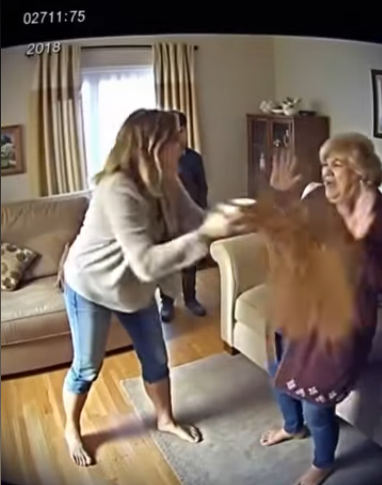
And my daughter threw a cup of hot coffee at me.
What she didn’t know was that, only days later, she would discover something inside my house that would force her to confront a truth she had spent years refusing to see.
My name is Margaret, and I am sixty-five years old.
I never imagined that the most painful betrayal of my life would come from the child I had once carried in my arms.
The Morning Everything Changed
It started on an ordinary Tuesday morning.
Rain tapped against the kitchen windows while I stood beside the counter preparing coffee. I remember the smell clearly—the dark roast, the cinnamon I always added, and the faint scent of toast burning because I had become distracted by the sound of my daughter’s voice.
“Mom, I need your card.”
I turned around.
My daughter, Rachel, stood near the kitchen doorway with her coat still on.
“Good morning to you too,” I said.
She didn’t smile.
“I said I need your credit card.”
“For what?”
“For Tyler.”
Tyler was her eight-year-old son, my grandson.
I loved that little boy more than I could explain. I had bought him school supplies, paid for summer activities, helped with his clothes, and quietly covered expenses when Rachel told me she was struggling.
But something had changed.
Over the previous year, my financial help had stopped feeling like help.
It had started feeling like an obligation.
Rachel expected it.
Every time she needed money, she called me.
“Mom, can you cover this?”
“Mom, Tyler needs that.”
“Mom, my car payment is late.”
“Mom, I promise I’ll pay you back.”
I had heard that promise so many times that it had stopped meaning anything.
That morning, I shook my head.
“No.”
Rachel stared at me.
“What?”
“No, Rachel. I’m not giving you my credit card.”
Her expression changed instantly.
“You’re kidding.”
“No.”
“It’s for Tyler.”
“I know.”
“So what’s the problem?”
“The problem is that you’re asking me to give you access to an account that I worked my entire life to build.”
She crossed her arms.
“You don’t trust me?”
I took a breath.
“This isn’t about trust. It’s about boundaries.”
She laughed bitterly.
“Boundaries? Now you suddenly have boundaries?”
That sentence hurt more than she realized.
Because I had spent most of my life without them.
I had confused being a good mother with constantly rescuing my daughter.
I had mistaken sacrifice for love.
And I had allowed Rachel to believe that my bank account was an extension of hers.
“No,” I said quietly. “I’m not doing this anymore.”
Then she picked up the coffee.
For a fraction of a second, I thought she was going to put it down.
Instead, she threw it.
The cup struck my shoulder and shattered against the floor.
Hot coffee soaked my blouse and burned my skin.
I cried out and stumbled backward.
Rachel froze.
For several seconds, neither of us moved.
Then she looked at me—not with remorse, but anger.
“You could have just given me the card.”
I stared at my daughter.
That was the moment something inside me broke.
Not because of the coffee.
Because I finally understood that she believed my refusal was worse than what she had just done to me.
She grabbed her purse and walked out.
The front door slammed.
I stood alone in my kitchen surrounded by broken ceramic and coffee.
And for the first time, I didn’t chase after her.
The Life Behind the Credit Card
That afternoon, I sat at my kitchen table and looked at the credit card Rachel had wanted.
It was just a piece of plastic.
But to me, it represented forty years of work.
I had started working when I was twenty-one.
I married young, raised two children, worked nights when necessary, saved money whenever I could, and learned to live below my means.
There were years when I didn’t buy new clothes.
Years when I drove an old car because I refused to take on unnecessary debt.
Years when vacations meant sitting in the backyard with a book.
I wasn’t wealthy.
I was careful.
I had built a small financial cushion because I wanted my children to have something I never had growing up: security.
Rachel knew that.
And somewhere along the way, she had mistaken security for endless availability.
That night, I made a decision.
I called my bank.
I canceled the card Rachel had access to.
Then I changed my passwords.
I reviewed my accounts.
And I began documenting every payment I had made on Rachel’s behalf during the previous three years.
The total shocked me.
School expenses.
Rent.
Medical bills.
Car repairs.
Utilities.
Shopping.
Restaurants.
Vacation expenses.
More than I wanted to admit.
I had spent years telling myself that each individual payment wasn’t important.
Together, they told a different story.
Three Days Later
Three days after the coffee incident, Rachel returned.
She didn’t apologize.
Instead, she walked through the front door carrying a cardboard box.
“What are you doing?” I asked.
“I need some of my things.”
“Your things?”
“Things from when I was a kid.”
I nodded.
“Fine.”
She walked toward the hallway.
Then she stopped.
“What is that?”
She was pointing toward a locked wooden cabinet in my living room.
“Nothing.”
“Why is it locked?”
“Because it’s private.”
Rachel frowned.
“You’ve never locked that before.”
“I have now.”
She stared at me.
Then something changed in her expression.
“Mom, what did you put in there?”
I didn’t answer.
She walked closer.
“Is this about the money?”
I shook my head.
“No.”
“Then what?”
I looked at my daughter.
“It’s about the truth.”
She laughed nervously.
“What truth?”
I stood up.
“Come with me.”
I unlocked the cabinet.
Inside was a collection of folders, envelopes, photographs, receipts, letters, bank statements, and handwritten notes.
Rachel stared at them.
“What is all this?”
“Your childhood.”
She looked confused.
I picked up the first folder.
Inside were hospital bills from the year she was born.
Then photographs.
Rachel as a baby.
Rachel’s first birthday.
Her first day of school.
Her graduation.
Her wedding.
Her son’s birth.
There were birthday cards she had forgotten.
Letters she had written to me when she was a teenager.
A note that simply said:
Mom, you’re my favorite person in the whole world.
Rachel’s eyes filled with tears.
“I didn’t know you kept these.”
“I kept everything.”
Then I handed her another folder.
This one contained something different.
Receipts.
Hundreds of them.
I had kept them because I had always been meticulous about finances.
Rachel began flipping through them.
Her face slowly changed.
“What are these?”
“Every time I helped you financially.”
She stopped.
“You kept records?”
“I never intended to use them against you.”
“Then why?”
“Because I wanted to understand where my money was going.”
She looked at the pages.
Her name appeared again and again.
And then she reached the final document.
It was my updated will.
Her hands started shaking.
“What is this?”
“My estate plan.”
She looked at me.
“Mom…”
“I changed it yesterday.”
She swallowed.
“What did you do?”
“I didn’t disinherit you.”
Her eyes lifted.
“You didn’t?”
“No.”
She seemed relieved.
Then I continued.
“But I did change how your inheritance will work.”
She stared at me.
“Everything I leave behind will go into a protected trust.”
Her mouth opened slightly.
“You won’t be able to withdraw it whenever you want.”
“Why?”
“Because I don’t want my lifetime of work to become a source of conflict between you and your son.”
She sat down.
For the first time since the coffee incident, she looked less angry than frightened.
“I wasn’t trying to hurt you.”
“You did.”
“I was stressed.”
“I understand.”
“I was worried about Tyler.”
“I understand that too.”
“Then why won’t you forgive me?”
I sat across from her.
“Forgiveness isn’t the same as permission.”
She looked down.
“I thought you would always help me.”
“I will always love you.”
She looked up.
“But that doesn’t mean I will always give you money.”
What She Found Next
Rachel thought the folders were the whole story.
They weren’t.
At the bottom of the cabinet was an old envelope.
I handed it to her.
She opened it.
Inside was a letter written thirty years earlier.
It was from her father.
Her father had died when Rachel was young.
She had always remembered him as a quiet, distant man.
But the letter revealed something she had never known.
He had written to me shortly before his death.
It said:
Margaret, if anything happens to me, don’t spend the rest of your life sacrificing everything for the children. Give them love, but teach them to stand on their own.
Rachel read the letter twice.
Then she began crying.
“I never knew Dad said that.”
“He did.”
“Why didn’t you tell me?”
“Because I didn’t think it was my place.”
She covered her face.
For several minutes, the room was silent.
Then she whispered:
“I became the person you were warned about.”
I didn’t answer.
Because sometimes people need silence more than reassurance.
The Apology
Rachel eventually stood.
She walked toward me.
“I am sorry.”
I looked at her.
Not because I doubted her words.
Because I needed to know whether she understood them.
“For the coffee,” she continued.
“For demanding the card.”
“For treating you like an ATM.”
“For making you feel like your love had to be proven with money.”
She wiped her eyes.
“And I’m sorry because I forgot that you’re my mother.”
I felt tears gathering in my own eyes.
“I am still angry.”
“I know.”
“I am still hurt.”
“I know.”
“And things won’t go back to the way they were.”
She nodded.
“I understand.”
Then she said something I never expected.
“Can you teach me how to manage my money?”
I smiled sadly.
“Yes.”
A New Beginning
Rachel didn’t suddenly become perfect.
Neither did I.
But something changed.
She started budgeting.
She opened her own savings account.
She canceled unnecessary subscriptions.
She sold things she didn’t need.
She found additional work.
Most importantly, she stopped treating me as her financial safety net.
Our relationship slowly changed.
Instead of calling me when she needed money, she began calling me simply to talk.
Sometimes we had coffee.
The irony wasn’t lost on either of us.
The first cup of coffee had nearly destroyed our relationship.
The next one helped rebuild it.
Months later, Rachel came to my house with Tyler.
My grandson ran into my arms.
“Grandma!”
I hugged him tightly.
Rachel stood behind him.
She smiled.
“Mom?”
“Yes?”
“I brought you something.”
She handed me a small envelope.
Inside was a photograph.
It was a picture of the three of us at my kitchen table.
On the back she had written:
Thank you for teaching me that love isn’t money, and boundaries aren’t rejection.
I cried.
She cried.
And Tyler, completely unaware of the emotional history behind the moment, asked:
“Can we have cookies?”
We laughed.
And somehow, after everything, that laughter felt like healing.
The Lesson I Learned at Sixty-Five
I used to believe that being a mother meant giving everything.
My money.
My time.
My energy.
My comfort.
My peace.
But I finally learned something important.
Love without boundaries can become resentment.
Generosity without limits can become expectation.
And helping someone constantly can sometimes prevent them from learning how to stand on their own.
I don’t regret helping my daughter.
I regret teaching her that she couldn’t survive without me.
The coffee hurt.
But the realization hurt more.
My daughter hadn’t suddenly become cruel that morning.
I had spent years quietly teaching her that my needs came second.
That my money was available.
That my boundaries were negotiable.
That I would always rescue her.
The coffee simply forced both of us to see what our relationship had become.
Today, my daughter has her own credit card.
She pays her own bills.
She saves money for her son’s future.
And when she comes to my house, she brings groceries instead of asking for them.
Sometimes she still says, “Mom, can you help me?”
And sometimes I say yes.
Sometimes I say no.
And now she understands that neither answer determines how much I love her.
As for me, I finally understand something I should have learned decades earlier:
You can love your children deeply without financing every decision they make.
You can forgive without forgetting.
You can establish boundaries without becoming cruel.
And you can say no without feeling guilty.
That morning, my daughter threw a cup of hot coffee at me because I refused to give her my credit card.
Days later, she found the evidence of a lifetime inside my house—not evidence of how much money I had spent on her, but evidence of how much love I had given her.
And perhaps that was the greatest lesson of all.
The coffee cooled.
The broken cup was thrown away.
The burns healed.
But the truth remained.
Sometimes the hardest word a parent can say is no.
And sometimes, that single word is exactly what a family needs to finally learn the meaning of love.