“13 Countries Join Forces to Attack”: What We Know About the Viral Breaking-News Claim
A dramatic message spreading across social media claims that “13 countries have joined forces to attack,” accompanied by emergency emojis and an invitation to “see more.” The wording is designed to create an immediate sense of danger, but it leaves out one crucial piece of information: which countries are supposedly involved, who they are attacking, and where the alleged attack is taking place?
That missing information matters.
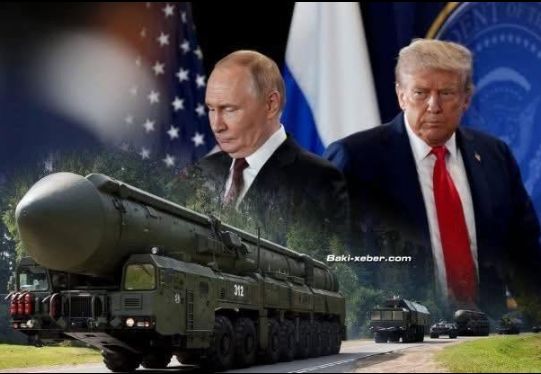
In an era when breaking news can spread around the world within seconds, sensational posts can easily make an uncertain situation appear confirmed. A short headline, dramatic photograph, or cropped video can be shared thousands of times before journalists, governments, or independent investigators have established what actually happened.
The phrase “13 countries join forces” sounds enormous. If thirteen nations truly formed a military coalition and launched an attack, it would represent a major international development with potentially enormous consequences. Such an event would normally generate widespread coverage from major news organizations, official government statements, military announcements, and diplomatic reactions.
That is why readers should be cautious before treating a social-media headline as established fact.
Why the Number 13 Gets Attention
Numbers are powerful in headlines. Saying that “13 countries” are involved sounds specific enough to appear credible while still creating mystery. But specificity without supporting evidence can be misleading.
A viral post may use a precise number even when it provides no documentation explaining where that number came from. Readers may assume that someone has already verified the information simply because the headline sounds authoritative.
The same technique appears frequently in online misinformation. A post might say “BREAKING,” use siren emojis, mention a precise number of countries, and then direct readers toward the comments. The goal can be to encourage engagement rather than provide complete information.
That does not automatically prove the claim is false. It means the claim requires verification.
What Would a Real Multinational Attack Look Like?
A military operation involving thirteen countries would be extremely difficult to conceal.
Modern military actions involve governments, armed forces, intelligence agencies, diplomats, journalists, satellite imagery, aviation authorities, and countless other organizations. Large-scale operations can produce visible evidence including aircraft movements, naval deployments, missile launches, explosions, emergency alerts, and official statements.
International organizations would also likely become involved in assessing the situation.
If thirteen governments simultaneously participated in a major attack, the event would almost certainly become one of the biggest international stories of the day.
That is why a social-media post containing only a few words should not be considered sufficient evidence.
The Importance of Identifying the Target
Another major problem with the viral wording is its lack of a target.
“Thirteen countries joined forces to attack” is incomplete without explaining whom they are attacking.
Is the claim referring to another country? A militant organization? A terrorist group? A military installation? A region experiencing an existing conflict?
Without that information, readers cannot meaningfully evaluate the story.
The same headline could theoretically be attached to dozens of completely different situations, some real and some entirely fabricated.
It is also possible for a legitimate multinational military operation to be exaggerated online. Several countries may participate in a military coalition, peacekeeping mission, maritime operation, or defensive deployment without actually launching a new attack.
The difference is enormous.
Why “See More” Headlines Are Worth Questioning
The phrase “see more” is another warning sign.
Social-media posts sometimes use incomplete headlines to encourage users to click, comment, or share. Instead of presenting the essential facts in the post itself, the message creates suspense.
This strategy works because people naturally want to know what happened next.
But responsible news reporting works differently. A credible report should tell readers the basic facts: who, what, when, where, and why. Additional details can follow, but the central claim should not depend entirely on curiosity.
When a headline provides almost no factual information while promising an extraordinary revelation, readers should slow down rather than immediately share it.
How International Crises Can Become Confusing
Another reason viral claims spread so quickly is that real international conflicts can be complicated.
Several countries may support the same side without being directly involved in combat. Governments may provide weapons, intelligence, funding, humanitarian assistance, logistical support, or diplomatic backing.
Military alliances can also conduct joint exercises that look dramatic in photographs or videos but are not attacks.
Older footage can be another source of confusion. Images from previous wars, military exercises, explosions, or natural disasters can be reposted during new events and presented as if they happened recently.
A photograph alone does not establish when or where an event occurred.
What Readers Should Look For
Before sharing a claim about a massive international military operation, readers should look for confirmation from multiple reliable sources.
First, check whether major established news organizations are reporting the same event.
Second, look for statements from governments or military authorities directly connected to the alleged incident.
Third, determine whether the article provides a specific date, location, and target.
Fourth, examine photographs and videos carefully. Reverse-image searches and other verification methods can reveal whether an image appeared online years earlier.
Finally, be cautious when a post relies heavily on emotional language such as “BREAKING,” “URGENT,” “THE WORLD IS AT WAR,” or “YOU WON’T BELIEVE WHAT HAPPENED.”
Emotional language does not make information more accurate.
The Cost of Spreading Unverified Claims
False reports about military attacks can have consequences beyond ordinary internet arguments.
People may become unnecessarily frightened. Families with relatives in affected regions may panic. Financial markets can react to rumors. Communities may become divided. False claims can also make it harder for people to recognize genuine emergencies.
This is especially important during periods of international tension.
When people repeatedly encounter dramatic but inaccurate headlines, they can become desensitized. Eventually, a real emergency may receive the same reaction as a fabricated one.
Reliable information therefore matters.
The Bigger Lesson
The viral “13 countries join forces to attack” headline illustrates a broader problem in the modern information environment: speed often comes before verification.
Social media rewards content that generates strong reactions. Fear, outrage, surprise, and curiosity are powerful drivers of engagement. A dramatic headline can travel much faster than a carefully researched article.
But speed is not the same as accuracy.
Readers should not feel pressured to share a story simply because the post says it is happening “right now.” If an event is truly significant, taking a few minutes to verify it is usually more valuable than being the first person in a friend group to share it.
Final Thoughts
The claim that “13 countries have joined forces to attack” is too vague to treat as confirmed news based solely on the viral wording provided. The post does not identify the countries, target, location, date, or evidence supporting the allegation.
That does not establish that nothing happened. It simply means the headline, by itself, does not provide enough information to reach a reliable conclusion.
In moments of international tension, the best response is not panic. It is verification.
Before believing—or sharing—a dramatic breaking-news post, ask five simple questions: Who is involved? What happened? Where did it happen? When did it happen? And what reliable evidence confirms it?
Those questions can turn a frightening social-media rumor into something much more useful: an informed understanding of what is actually happening.