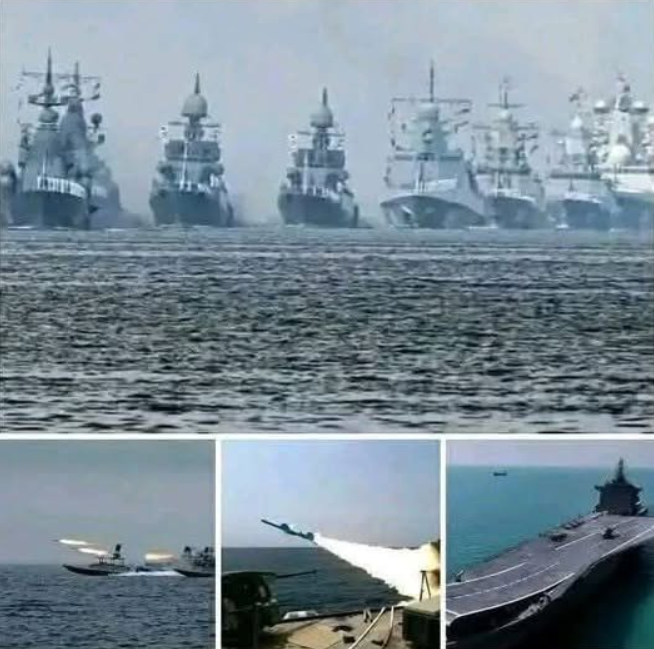
Latest News: “US Begins Its War” — What Is Actually Happening?
A dramatic headline circulating online says, “Latest News: US begins its war… See more.” The wording is designed to sound like a sudden announcement that America has just entered a new conflict. But the reality is more complicated—and, in this case, the headline is misleading if it suggests that the United States has only just started fighting.
As of August 18, 2026, the United States is already involved in an ongoing conflict with Iran. Recent reporting says the U.S.-Iran ceasefire arrangement has expired without a broader peace agreement, while tensions surrounding the Strait of Hormuz remain extremely high. President Donald Trump said Tuesday that there were no current or planned talks with Iran, while Iranian officials said the country was adopting a more aggressive posture.
That means the phrase “the U.S. begins its war” should not be interpreted as confirmation of a brand-new war beginning today.
A Conflict That Has Already Escalated
The current crisis is the result of months of escalating confrontation.
According to current reporting, the conflict between the United States, Israel, and Iran began with major strikes in late February. Since then, military operations, diplomatic negotiations, attacks on shipping, and threats involving the Strait of Hormuz have continued to shape the international situation.
The expiration of the latest ceasefire arrangement has now created another dangerous moment.
The 60-day negotiation period ended without producing the larger agreement that Washington and Tehran had hoped to reach. Reuters reported Tuesday that Trump said there were no negotiations underway, while Iran maintained that the Strait of Hormuz remained closed until its demands—including the lifting of sanctions and other measures—were addressed.
For ordinary people watching the headlines, the situation can therefore look like a new war beginning when it is actually another stage of an existing conflict.
Why the Strait of Hormuz Matters
One of the most important locations in the current crisis is the Strait of Hormuz.
The narrow waterway connects the Persian Gulf with the Gulf of Oman and is one of the world’s most important routes for energy transportation. Any prolonged disruption can have consequences far beyond the Middle East.
Recent reporting says shipping through the strait remains severely restricted. Reuters reported that vessel movement has been limited, while a ship was reportedly struck by an unknown projectile.
The consequences are already being felt in financial markets.
Oil prices have risen as traders worry that the disruption could last longer. The Guardian reported that Brent crude climbed above $91 per barrel as fears increased about prolonged instability around the waterway.
That matters because higher oil prices can eventually affect transportation, manufacturing, electricity, and household expenses around the world.
Trump’s Latest Statements
President Trump has continued to take a hard line toward Tehran.
On August 18, Trump said there were no talks planned with Iran. At the same time, he disputed Iran’s characterization of the Strait of Hormuz, saying the waterway was open and cleared of naval mines. Iranian officials disagreed.
The disagreement demonstrates how difficult it is to establish a stable path toward de-escalation.
One side says the route is effectively open.
The other says conditions have not been met for normal shipping to resume.
Meanwhile, military forces remain deployed throughout the region.
This is precisely the kind of situation that can produce sudden changes.
The United States Is Still Moving Military Assets
The American military presence in the region remains significant.
Recent reporting indicates that U.S. defense assets, including the aircraft carrier USS George Washington, have been redeployed toward the Middle East. Reuters reported that the Philippines does not expect this redeployment to weaken U.S.-Philippine defense cooperation in Asia.
The movement of military equipment does not automatically mean a new offensive is about to begin. Naval vessels, aircraft, troops, and missile-defense systems can be repositioned for many reasons, including deterrence, protection of shipping, evacuation preparations, and support for existing operations.
Nevertheless, such movements are being closely watched because the region is already experiencing significant tension.
Why People Are Confused by the Headlines
Social-media headlines often remove important context.
A phrase such as “US begins its war” can generate thousands of clicks because it creates the impression that something extraordinary has just happened.
But the phrase leaves out several crucial questions:
What country is the United States supposedly fighting?
When did the fighting begin?
Was a new attack launched today?
Did the president make a formal declaration?
What evidence confirms the claim?
Without answers to those questions, the headline is incomplete.
The current evidence indicates that the United States is already involved in an ongoing war with Iran rather than suddenly declaring a completely new war on August 18.
Could the Conflict Get Worse?
That remains one of the biggest concerns.
The breakdown of negotiations creates additional uncertainty. Iran has indicated that it will not simply accept demands from Washington, while Trump has continued to insist on a tough negotiating position.
At the same time, the Strait of Hormuz remains a potential flashpoint.
A confrontation involving a U.S. warship, Iranian forces, or a commercial vessel could potentially trigger another escalation.
This is why military leaders and diplomats are paying close attention to every incident in the region.
Even a relatively small event can have consequences when forces from multiple countries are operating in close proximity.
The Economic Consequences
War is not only about missiles, aircraft, ships, and soldiers.
It also affects ordinary households.
When oil prices rise, transportation costs can increase. Airlines may face higher fuel expenses. Trucking companies can pay more to move goods. Manufacturers may face increased energy costs, and those expenses can eventually reach consumers.
The Strait of Hormuz is especially important because of the amount of energy that normally passes through it.
The recent increase in oil prices demonstrates how quickly geopolitical events can affect global markets.
If disruption continues for an extended period, governments and businesses around the world may have to adjust their energy strategies.
What About America’s Other Allies?
The current crisis is also affecting U.S. alliances.
Washington is simultaneously dealing with major security questions in Europe and Asia.
In South Korea, the Trump administration has significantly reduced portions of the annual Ulchi Freedom Shield military exercise. The decision has sparked debate among defense experts who worry about the potential impact on deterrence against North Korea.
Meanwhile, U.S. officials are attempting to reassure Asian allies that America’s broader security commitments remain intact.
The Philippines, for example, has said that U.S. military redeployments to the Middle East will not weaken defense ties between Washington and Manila.
These developments show that the consequences of the Middle East conflict extend far beyond Iran.
What Should Readers Believe?
The safest approach is to separate confirmed events from sensational language.
Yes, the United States is involved in an ongoing conflict with Iran.
Yes, the ceasefire and negotiation process has broken down.
Yes, tensions around the Strait of Hormuz are extremely serious.
Yes, U.S. military forces remain active in the region.
But the statement “the U.S. begins its war” is misleading if it suggests that a completely new war has suddenly started today.
Current reporting describes an already-existing conflict entering another dangerous phase.
The Bigger Picture
The most important question now is whether the latest escalation leads to renewed diplomacy or another round of military action.
There is still a possibility that negotiations could eventually resume. But the immediate diplomatic environment is difficult.
The previous agreement has expired.
Iran and the United States disagree over the status of the Strait of Hormuz.
Military forces remain positioned throughout the region.
Oil markets are reacting nervously.
And leaders on both sides continue making statements that leave little room for compromise.
For that reason, the coming days could be important.
Final Thoughts
The viral headline “Latest News: US begins its war” captures the intensity of the moment but leaves out critical context.
The United States is not simply starting a new war today. Instead, America is already engaged in an ongoing conflict with Iran, and the collapse of the latest ceasefire and negotiation process has created another period of uncertainty.
The situation around the Strait of Hormuz is particularly important because any prolonged disruption could affect global energy markets and economies far from the battlefield.
For readers, the lesson is simple: don’t let a dramatic “See more” headline become the entire story.
Look for the date, identify the countries involved, check whether the event is genuinely new, and compare the claim with reporting from multiple credible sources.
The situation is serious enough without exaggeration. The real story—an ongoing U.S.-Iran conflict, renewed diplomatic deadlock, military deployments, and uncertainty over one of the world’s most important shipping routes—is already significant.
And as tensions continue, the world will be watching closely to see whether Washington and Tehran return to negotiations or move toward another dangerous escalation.