U.S. Forces Capture Vessel Linked to Venezuela, Raising New Questions Across the Caribbean
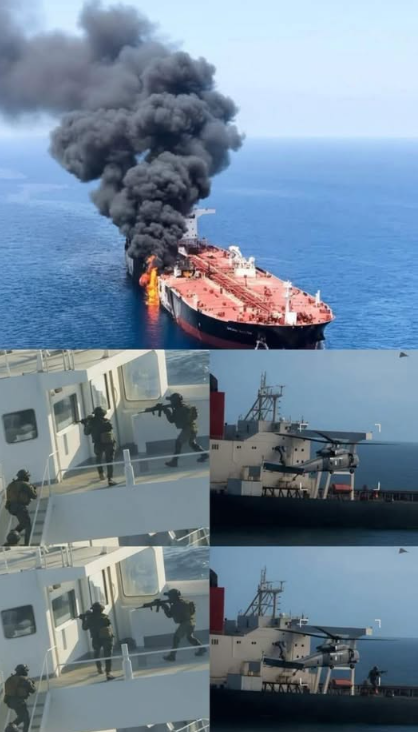
A dramatic headline circulating online claims that the U.S. Army has captured a boat in Venezuela, prompting questions about what happened and whether the incident signals another major escalation involving the United States and Venezuela.
The reality is more complicated than the viral headline suggests. U.S. forces have conducted multiple maritime interdictions and seizures involving vessels connected to Venezuela, but publicly available reporting does not establish that the U.S. Army itself captured a small boat inside Venezuela in the way some social-media posts imply.
One documented incident involved the U.S. military seizing the vessel Bella 1, later renamed Marinera, after it was associated with Venezuelan oil and U.S. sanctions. The operation involved the U.S. Coast Guard, with support from the Department of War, rather than being simply an Army operation. The Coast Guard monitored the vessel after it resisted initial boarding attempts off Venezuela in late December 2025, and the ship was ultimately seized.
The distinction matters because the United States has several military services, each with different responsibilities. The Navy operates warships, the Coast Guard conducts maritime law-enforcement missions, and the Army maintains ground forces while also possessing highly specialized aviation and special-operations capabilities.
A tense maritime environment
The vessel seizures occurred against the backdrop of an extraordinary period in U.S.-Venezuela relations.
During late 2025 and early 2026, the United States significantly increased military activity in the Caribbean and surrounding waters. American officials described many of the operations as part of efforts against suspected drug trafficking and to enforce sanctions involving vessels connected to Venezuela.
U.S. forces have also carried out strikes against boats that American authorities alleged were involved in drug trafficking. In January 2026, for example, U.S. Southern Command forces struck a suspected drug boat in the Eastern Pacific, killing two people, according to reporting by USNI News.
Those operations generated substantial controversy because questions were raised about the evidence used to identify the boats, the legal basis for military action and the circumstances under which force was used.
The maritime seizures are therefore part of a much larger story rather than isolated incidents.
What does “captured” mean?
The word “captured” can be misleading when used to describe a maritime interdiction.
A military or law-enforcement boarding may involve stopping a vessel, approaching it with another ship or aircraft, placing personnel aboard, searching the vessel, detaining people aboard and taking control of the ship. That is very different from a conventional military battle in which one side attacks and destroys an enemy vessel.
In the case of the Bella 1, U.S. forces reportedly monitored the tanker before ultimately seizing it after it violated U.S. sanctions and resisted earlier attempts to board it.
The incident demonstrates the increasingly important role of maritime enforcement in the U.S. campaign surrounding Venezuela.
The Venezuela connection
Venezuela became the center of an extraordinary U.S. military operation in January 2026 when American forces captured Venezuelan leader Nicolás Maduro.
The Pentagon said President Donald Trump announced Maduro’s capture on January 3 following an overnight joint military operation in Caracas.
The operation involved multiple branches of the U.S. military. Reporting indicates that Army special-operations forces played a central role in the ground operation, while other services contributed air, sea and logistical support.
That event fundamentally changed the context surrounding subsequent reports about U.S. military activity in the region.
It also explains why even a relatively small report about a boat or maritime interception can generate enormous public attention. After the Maduro operation, observers began watching U.S. movements around Venezuela much more closely.
Why the boat stories spread so quickly
Social media has played a major role in amplifying reports of U.S. military activity.
A short video showing a vessel being approached, a helicopter flying overhead or personnel boarding a ship can quickly be presented as evidence of a major military confrontation. Without information about the date, location or circumstances of the footage, however, viewers may have difficulty determining what they are actually watching.
This has happened repeatedly with military videos. Fact-checkers have previously identified footage shared online as supposedly showing current U.S. military activity near Venezuela when the video actually came from an earlier training exercise.
Consequently, dramatic captions such as “U.S. Army captures a boat in Venezuela” should be approached carefully. The underlying event may be genuine, but the caption may simplify or exaggerate important details.
Coast Guard involvement is especially important
One of the most significant details in maritime enforcement cases is the involvement of the U.S. Coast Guard.
The Coast Guard is part of the U.S. armed forces but also has extensive law-enforcement responsibilities. Its specialized teams can board and inspect vessels under appropriate legal authorities, making it particularly suited for maritime interdiction operations.
The Bella 1 seizure illustrates this distinction. According to U.S. Army Corps of Engineers material describing the operation, the Coast Guard cutter Munro monitored the tanker before Coast Guard deployable specialized forces seized it, with support from the Department of War.
Therefore, describing such an operation simply as an “Army capture” can leave out the agency actually responsible for the boarding.
A broader campaign
The boat seizures also occurred during a broader U.S. campaign involving suspected narcotics trafficking, sanctions enforcement and Venezuela.
Reports in early 2026 documented numerous American attacks against suspected drug boats in the Caribbean and Eastern Pacific. Military officials said the operations were aimed at vessels connected to drug trafficking networks.
At the same time, legal experts questioned the authority under international law for some of the U.S. military actions. Analysts have debated the distinction between maritime law enforcement and military force, particularly when vessels are attacked rather than boarded.
Those legal questions remain important because stopping a vessel is not automatically equivalent to engaging an enemy combatant. The legal authority, location of the vessel, nationality of the ship, nature of the suspected activity and circumstances surrounding the operation can all affect how an incident is evaluated.
What happens next?
For now, reports about U.S. forces and vessels connected to Venezuela are likely to continue attracting intense attention.
The United States has demonstrated that it is willing to use substantial military and maritime resources in the region. At the same time, American officials have continued to describe various operations in terms of sanctions enforcement, counter-narcotics efforts and broader security objectives.
For readers following the story, the most important thing is to distinguish between verified facts and dramatic social-media captions.
There is evidence that U.S. forces have seized vessels connected to Venezuela. There is also evidence of extensive U.S. military operations in the region. But the claim that the U.S. Army simply “captured a boat in Venezuela” should not be repeated as an established fact without identifying the specific vessel, location, date and military unit involved.
The broader story remains significant. U.S.-Venezuela relations have entered an extraordinary period, maritime operations have become a major component of American policy, and military and law-enforcement activities are increasingly occurring in the same strategic environment.
What appears at first to be a simple story about a boat may therefore represent something much larger: the continuing consequences of an unprecedented confrontation between Washington and Caracas, the expansion of maritime enforcement operations and the growing international debate over how far the United States can go in pursuing vessels it believes are connected to sanctions violations or illicit trafficking.
As more information becomes available, official statements and independently verified reporting will be essential for determining exactly what happened in each individual vessel seizure—and whether the dramatic claims appearing online accurately describe the events.