U.S. Army Captures a Boat in Venezuela: What Happened and Why It Matters
A dramatic headline claiming that the U.S. Army captured a boat in Venezuela has attracted widespread attention online, but the details require some context. Maritime operations involving Venezuela have become an increasingly important part of U.S. security policy, particularly as American forces have conducted operations in the Caribbean aimed at disrupting illicit trafficking and enforcing restrictions on sanctioned vessels.
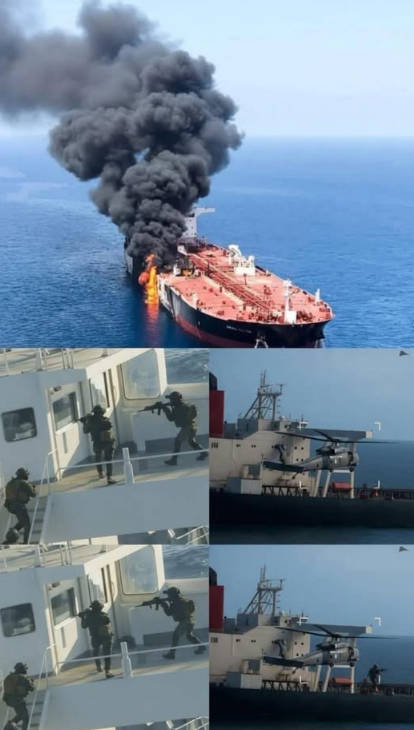
One documented example occurred on January 20, 2026, when U.S. military forces, working with the U.S. Coast Guard, apprehended the motor vessel Sagitta during a maritime interdiction operation. U.S. Southern Command described the action as part of Operation Southern Spear and said the vessel was apprehended without incident.
Although social-media posts may describe such events simply as the “Army capturing a boat,” maritime interdictions are generally joint operations involving different branches and federal agencies. The Coast Guard has a particularly important role because vessel boardings, law enforcement authorities, sanctions enforcement, and maritime security often overlap.
The situation surrounding Venezuela has changed dramatically in 2026. U.S. military activity in the Caribbean has included naval deployments, maritime surveillance, and operations intended to disrupt illicit networks. A U.S. Army Europe and Africa report documenting Operation Southern Spear specifically stated that American forces were working with the Coast Guard and other federal agencies to enforce maritime restrictions.
The Sagitta operation is significant because it demonstrates how modern maritime security missions can take place without a conventional naval battle.
A vessel suspected of violating restrictions can be identified through intelligence and surveillance. Military and law-enforcement personnel can then track its movement, establish communications, and determine whether an interdiction is necessary. If authorities decide to board the vessel, specially trained personnel can take control while investigators examine documentation, cargo, and the ship’s operational history.
In successful operations, the objective is often to resolve the situation without gunfire.
That distinction is important because dramatic social-media headlines can make an incident appear far more chaotic than it actually was. In the case of the Sagitta, U.S. officials explicitly characterized the apprehension as occurring without incident.
The broader story, however, is much more complicated.
The United States has increasingly focused on maritime traffic connected to Venezuela because of concerns surrounding sanctioned oil shipments, illicit financial networks, and alleged drug-trafficking organizations.
Earlier in 2026, U.S. authorities also seized or apprehended several oil tankers associated with Venezuela. Reuters reported in January that the United States had seized a Russian-flagged tanker linked to Venezuelan oil shipments after an earlier confrontation over boarding.
These operations have created a new reality in the Caribbean.
Ships operating in the region must pay close attention to sanctions, ownership structures, flags of registration, cargo documentation, and international maritime rules. A vessel may have one country listed as its flag state while its ownership, cargo, or commercial connections involve several others.
That makes maritime enforcement extremely complicated.
It also explains why a relatively ordinary-looking ship can suddenly become the center of an international dispute.
For military planners, surveillance is essential. Aircraft, helicopters, surface ships, intelligence systems, and other assets can help determine where vessels are located and what they may be carrying. The presence of U.S. naval forces in the region also provides a visible demonstration of American military capability.
In May 2026, for example, the USS Iwo Jima and USS Lake Erie were reported operating near Venezuela during a U.S. Southern Command mission. The deployment was described as supporting Operation Southern Spear and broader efforts to disrupt illicit trafficking and protect U.S. interests.
At the same time, U.S. forces have also carried out humanitarian activities in Venezuela.
That may seem contradictory, but military operations can involve very different missions occurring in the same region. In July 2026, U.S. Marines and other personnel were involved in disaster-assistance efforts following earthquakes in Venezuela. U.S. military personnel delivered supplies and worked with Venezuelan counterparts at La Guaira.
This highlights an important point: the presence of American forces near Venezuela does not automatically mean that every operation is an attack or an act of war.
Some missions involve law enforcement.
Others involve surveillance.
Others involve humanitarian assistance.
And some involve military deterrence.
The viral “boat captured” headline therefore needs to be understood within that larger framework.
There is also a legal dimension.
When the United States intercepts a vessel, authorities must determine what legal authority applies. Questions can involve the location of the ship, its flag, the nationality of those aboard, the nature of its cargo, applicable sanctions, and whether American law provides authority for the action.
Those questions can become particularly controversial when an operation occurs outside U.S. territorial waters.
International maritime law contains extensive rules governing freedom of navigation, jurisdiction, boarding, piracy, sanctions enforcement, and the rights of vessels. Governments can disagree strongly over how those rules apply to a particular incident.
That is why statements from officials on all sides matter.
A viral video showing a military helicopter approaching a ship may look dramatic, but the footage alone may not reveal why the vessel was stopped, what legal authority was being used, or what investigators discovered afterward.
The same is true of headlines.
A phrase such as “U.S. Army captures a boat in Venezuela” can attract millions of views while leaving out the most important information.
Was the vessel inside Venezuelan territorial waters?
Was it carrying sanctioned cargo?
Was it suspected of drug trafficking?
Which U.S. agency actually conducted the boarding?
Were Venezuelan authorities notified?
Was anyone injured?
What happened to the crew?
Those are the questions that determine the real significance of an operation.
The documented Sagitta case provides one useful example. U.S. Southern Command said the vessel was apprehended as part of a maritime interdiction operation and connected the action to enforcement against sanctioned vessels moving Venezuelan oil.
For ordinary observers, the incident may appear to be simply another military confrontation.
For policymakers, however, it represents something larger: control of maritime routes, enforcement of economic restrictions, intelligence gathering, and the projection of U.S. power in the Caribbean.
For Venezuela, such operations can carry a very different meaning. Any foreign military action involving a Venezuelan-linked vessel can become a matter of sovereignty and national security.
For shipping companies, the consequences are practical. Operators must understand sanctions requirements and ensure that ownership and cargo documentation are accurate. The cost of violating restrictions can be enormous, especially when a vessel is detained or seized.
And for the public, the biggest lesson may be the importance of separating verified facts from sensational claims.
The internet moves faster than official investigations.
A short video can circulate worldwide before authorities have released a full statement. A headline can be copied thousands of times, with each repost making it sound more definitive than the original.
The truth may be much more complicated.
The United States has unquestionably conducted maritime interdiction operations connected to Venezuela, including the documented apprehension of the Sagitta.
But the precise circumstances behind any new viral claim should be checked against official statements before conclusions are drawn.
What appears to be a dramatic “capture” may actually be the result of hours or days of surveillance, legal review, coordination between agencies, and careful planning.
That is what makes modern maritime operations so different from the naval battles of the past.
There may be no explosions.
There may be no prolonged firefight.
Sometimes the most consequential moment is simply when a military or Coast Guard boarding team steps onto a vessel, takes control, and begins examining what is inside.
And in the increasingly tense waters surrounding Venezuela, even a single boat can become part of a much larger geopolitical story.