Then vs. Now: How Parent-Teacher Meetings Have Changed
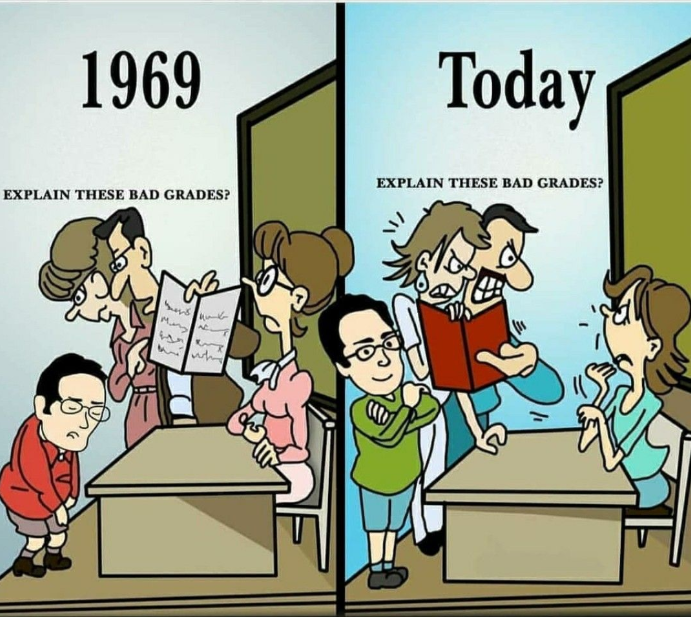
For generations, parent-teacher meetings have been an important part of education. They provide an opportunity for teachers and parents to discuss a child’s academic performance, behavior, strengths, and areas that need improvement. While the purpose of these meetings has remained largely the same, the way they unfold has changed dramatically over the decades. The cartoon comparing a parent-teacher conference in 1969 with one today humorously captures this shift and has sparked countless conversations online.
In the 1969 panel, a teacher calmly presents a student’s poor report card to the parents. The child stands nearby with a worried expression, clearly expecting to take responsibility for the disappointing grades. The parents appear serious but respectful, listening carefully to the teacher’s explanation. The atmosphere suggests that everyone shares the common goal of helping the child improve. Accountability rests primarily with the student, while parents and teachers work together to encourage better performance.
The modern panel presents a very different scene. Here, the teacher is confronted by visibly angry parents who appear to be challenging the teacher rather than discussing the student’s performance. The child stands confidently beside the adults, seemingly free from responsibility while the adults argue on their behalf. Instead of focusing on solutions, the meeting appears tense and confrontational.
Of course, cartoons are designed to exaggerate situations for humor and social commentary. They often rely on stereotypes rather than presenting an accurate picture of every family or every school. Many parents today continue to work closely with teachers, support their children’s education, and encourage accountability. Likewise, many teachers report having productive and respectful conferences with families every year. Still, the image resonates because it reflects concerns that many people believe have become more common in recent decades.
One major factor behind these perceived changes is the evolution of parenting styles. In the past, many parents placed significant trust in teachers and school administrators. Educators were often viewed as authority figures whose opinions carried considerable weight. If a teacher reported poor behavior or weak academic performance, parents were generally inclined to believe the teacher’s assessment first before asking for their child’s perspective.
Today’s parenting culture is often more involved and protective. Many parents want to understand every detail of a situation before reaching conclusions. They may advocate strongly for their children, especially if they believe the school has been unfair or overlooked important circumstances. This increased involvement can be positive, ensuring that students receive appropriate support and that misunderstandings are addressed. However, critics argue that excessive defensiveness can sometimes prevent children from learning responsibility for their own actions.
Education itself has also changed significantly. Classrooms now include a greater emphasis on individualized learning, technology, mental health awareness, and diverse teaching methods. Teachers face expectations that extend far beyond simply delivering lessons. They are often responsible for supporting students’ emotional well-being, managing behavioral challenges, adapting instruction for different learning needs, and maintaining communication with families through emails, messaging apps, and online grade portals.
Technology has transformed parent-teacher communication as well. Decades ago, parents often learned about academic problems only during report card season or scheduled conferences. Today, many schools provide real-time access to grades, attendance records, homework assignments, and teacher comments. Parents can contact teachers almost instantly through email or school communication platforms. While this increased transparency has many benefits, it can also create more frequent disagreements or misunderstandings when concerns arise.
Another important change involves society’s growing awareness of learning differences and mental health challenges. Modern educators recognize that poor grades may stem from many factors beyond effort alone. Students may struggle with anxiety, attention disorders, family stress, bullying, learning disabilities, or other personal difficulties. As a result, parent-teacher conferences often involve discussions about support services, accommodations, counseling, and intervention plans rather than focusing solely on discipline.
The relationship between teachers and parents has become more collaborative in many schools. Rather than viewing education as the school’s sole responsibility, successful learning is increasingly seen as a partnership involving teachers, parents, and students working together. When this partnership functions well, everyone benefits. Parents gain insight into classroom expectations, teachers learn about challenges students face at home, and students receive consistent encouragement from both environments.
However, challenges remain. Teachers sometimes report feeling that their professional judgment is questioned more frequently than in previous generations. Some educators experience difficult conversations when discussing poor performance, classroom behavior, or disciplinary actions. On the other hand, many parents believe they must advocate for their children to ensure they receive fair treatment and equal opportunities. These differing perspectives can occasionally create tension, even when both sides genuinely care about the child’s success.
Ultimately, the student should remain at the center of every conversation. Effective parent-teacher meetings focus less on assigning blame and more on identifying practical solutions. Questions such as “How can we improve study habits?” “What additional support would help?” and “What goals should we set for the next grading period?” encourage productive discussions that benefit everyone involved.
The cartoon’s popularity reflects nostalgia for simpler times while also highlighting concerns about changing social attitudes. Yet reality is far more complex than a single illustration can capture. Every family is different. Every teacher has unique experiences. Every student faces individual strengths and challenges. Some conferences today resemble the respectful discussions portrayed in the 1969 panel, while others may indeed become emotionally charged.
Rather than viewing one generation as entirely right or wrong, the comparison invites reflection on how education continues to evolve. Respect, communication, accountability, empathy, and cooperation remain timeless values regardless of the decade. When parents, teachers, and students approach conferences with open minds and a shared commitment to learning, they create the best possible environment for academic growth and personal development.
In the end, successful parent-teacher meetings are not about winning arguments or assigning blame. They are about building trust, understanding challenges, celebrating achievements, and helping young people reach their full potential. While the methods and attitudes surrounding education may continue to change, the shared goal remains constant: giving every child the opportunity to succeed.