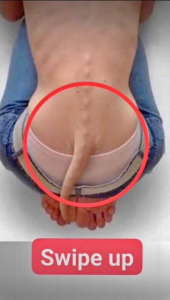
Take This Optical Illusion Challenge
Have you ever looked at an image and immediately thought you knew what you were seeing—only to realize a few seconds later that your eyes had completely fooled you? If so, you’re certainly not alone. Optical illusions have fascinated scientists, artists, and curious minds for centuries because they reveal something remarkable about the human brain: seeing isn’t always the same as understanding.
An optical illusion is more than just a clever picture. It is a visual puzzle that challenges the way our brains process information. Instead of recording the world like a camera, our brains constantly interpret colors, shapes, shadows, movement, and depth. Most of the time, this process works incredibly well, allowing us to navigate our surroundings quickly and efficiently. Occasionally, however, our brains make assumptions that lead us to see something entirely different from reality.
That is exactly what makes optical illusions so entertaining. They surprise us by exposing the shortcuts our brains use every day. A simple arrangement of lines, colors, or patterns can convince us that an object is moving when it is perfectly still, that two identical shapes are different sizes, or that hidden images exist where we never expected them.
The challenge begins the moment you look at the illusion. Some people notice one image instantly, while others see something completely different. Neither response is necessarily wrong. Your perception depends on factors such as your focus, attention, experience, and even your expectations. That’s why two people can stare at the same picture and describe entirely different things.
One of the most famous optical illusions is the image that appears to show either a young woman or an elderly woman. Once someone points out the second figure, it’s difficult to believe you missed it. Another classic illusion can be interpreted as either a rabbit or a duck depending on how your brain organizes the shapes. These examples demonstrate that perception is flexible rather than fixed.
Patterns also play an important role in visual illusions. Rows of carefully arranged circles or squares may appear to shift, ripple, or rotate even though nothing is actually moving. Scientists believe this occurs because tiny involuntary eye movements interact with contrasting colors and repeating patterns, creating the sensation of motion inside the brain.
Color illusions are equally fascinating. Two identical shades may appear completely different when surrounded by contrasting backgrounds. A gray square placed on a dark surface seems lighter than the same gray square placed on a bright surface. Although the colors are identical, your brain adjusts its interpretation based on surrounding information.
Depth perception creates another category of illusions. A carefully positioned photograph can make someone appear to hold up a famous landmark with one hand or stand inside the palm of another person’s hand. These forced-perspective photographs rely entirely on camera angles rather than digital editing. They remind us that a two-dimensional photograph cannot always accurately represent three-dimensional space.
Nature itself produces countless optical illusions. Sunsets make the moon appear enormous near the horizon, although its size remains essentially unchanged. Heat rising from pavement creates shimmering images that resemble water. Reflections on calm lakes sometimes blur the line between the real landscape and its mirror image.
Optical illusions have fascinated researchers because they offer valuable insights into how the brain works. Neuroscientists study these images to better understand perception, attention, memory, and decision-making. Rather than revealing weaknesses in human vision, illusions demonstrate how efficiently our brains process enormous amounts of information every second.
Artists have embraced optical illusions for generations. Painters use perspective to create depth on flat canvases. Architects incorporate visual tricks that make buildings appear taller or more symmetrical than they actually are. Graphic designers rely on contrast and alignment to guide viewers’ attention through advertisements, logos, and websites.
Today’s internet has made optical illusion challenges more popular than ever. Social media users enjoy testing themselves with images that ask questions like, “What did you see first?” or “Can you spot the hidden object?” These puzzles spread rapidly because everyone enjoys comparing answers with friends and discovering how differently people perceive the same image.
Psychologists caution, however, that many viral posts exaggerate what these illusions reveal. While some claim to determine personality traits or intelligence based on what you notice first, there is usually little scientific evidence supporting those conclusions. The images remain fun and interesting, but they should not be viewed as psychological tests.
Still, optical illusions encourage an important habit: slowing down before reaching conclusions. They remind us that first impressions are not always accurate. Looking more carefully often reveals details we overlooked initially. This lesson applies not only to pictures but also to everyday life, where careful observation and thoughtful analysis frequently lead to better decisions.
Children especially benefit from exploring optical illusions because they strengthen observation skills, patience, and critical thinking. Teachers often use them in classrooms to introduce lessons about vision, the brain, and scientific reasoning. Adults enjoy them just as much because they provide a playful reminder that learning never stops.
The next time you encounter an optical illusion, resist the urge to glance at it for only a second. Study every corner of the image. Change your viewing distance. Tilt your head slightly. Ask someone else what they notice first. You may be surprised at how many different interpretations emerge from a single picture.
Ultimately, optical illusions celebrate one of the most extraordinary abilities humans possess: the power of perception. Our brains perform billions of calculations every day without our awareness, transforming light into meaningful experiences. Occasionally, those calculations produce amusing mistakes, and those mistakes become opportunities to learn more about ourselves.
So, are you ready to take the optical illusion challenge? Remember that there is no prize for being first and no embarrassment in missing a hidden image. The real reward comes from discovering just how remarkable—and occasionally mischievous—the human brain can be. Every illusion invites us to question what we think we see, appreciate the complexity of perception, and enjoy the delightful moment when reality finally comes into focus.