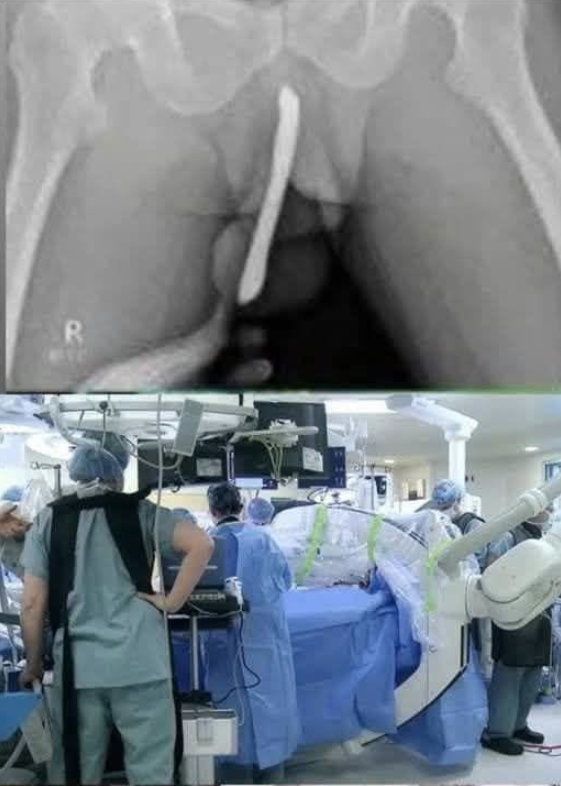
A reported case of a teenage girl hospitalized after inserting a pen into her vagina circulated on social media and low-quality aggregator sites around July 2025.
According to the brief accounts (primarily from sites like 7news.co), a young girl inserted a pen into her private parts. This caused severe internal injuries and complications. She was rushed to the hospital, where doctors performed emergency surgery to remove the object and stabilize her. Medical experts were quoted issuing warnings against experimenting with foreign objects due to risks of life-threatening infections or permanent damage. Parents were urged to discuss body safety and health with their children. The posts used truncated clickbait phrasing such as “Girl had to be hospitalized for wanting to use a pe…See more.”
Details in these reports are extremely sparse. No name, exact age beyond “teen” or “young girl,” location, date of the incident, hospital, specific injuries, or outcome beyond the emergency surgery are provided. The sources appear to be social-media-driven aggregators rather than primary medical or news outlets with verification. Similar foreign-body cases appear in medical literature and hospital data (e.g., National Electronic Injury Surveillance System records of pens/pencils in the genital area), but those are anonymized aggregate statistics, not this specific viral claim.
Medical context and risks
Inserting non-medical objects into the vagina (or other body orifices) is a known cause of emergency department visits. Objects can cause lacerations, perforations of the vaginal wall or nearby structures (bladder, rectum, or uterus in more severe cases), bleeding, retained fragments, and rapid infection. The vaginal environment is moist and warm; bacteria introduced on an unclean object can lead to pelvic inflammatory disease, abscesses, sepsis, or toxic shock-like presentations. Sharp or rigid items like pens raise the chance of puncture wounds. Removal sometimes requires examination under anesthesia or formal surgery if the object is lodged, broken, or has caused deeper trauma. Long-term complications can include scarring, chronic pain, fertility issues, or need for further procedures.
These are not theoretical risks. Emergency physicians and gynecologists routinely manage foreign-body cases in adolescents and adults. The advice from clinicians in the circulating reports—“never insert non-medical objects”—aligns with standard medical guidance. Body cavities are not designed for rigid household items. Proper sexual health education emphasizes anatomy, consent, safe practices, and the difference between curiosity and actions that can require surgical intervention.
Why such incidents occur and broader patterns
Adolescent sexual curiosity, incomplete knowledge of anatomy, peer influence via social media or pornography, or impulsive experimentation can lead to dangerous choices. Some teens lack accurate information about what is safe. Others may be testing boundaries, responding to online challenges, or acting without adult guidance. In rare documented cases, foreign-body insertion has also been linked to underlying issues such as prior trauma, developmental differences, or mental-health factors, though the viral reports give no indication of any of those here.
Hospital data and case reports over years show that pens, pencils, highlighters, and similar objects appear periodically in genital foreign-body presentations among adolescents. Most are managed successfully when patients seek care promptly. Delay increases infection risk. The viral framing of this particular story—“wanting to use a pe…”—turns a medical emergency into clickbait. That style of headline often prioritizes shock over accuracy or prevention.
Prevention and practical guidance
Parents, caregivers, and educators can reduce risk through straightforward, age-appropriate conversations:
- Teach basic anatomy and that the vagina, urethra, and rectum are not interchangeable or intended for rigid non-medical items.
- Discuss that online content frequently omits real-world consequences (pain, bleeding, surgery, infection).
- Encourage open questions without shame so a teen who has already done something risky feels able to seek help rather than hide symptoms.
- Emphasize that any retained object, unusual pain, bleeding, discharge, fever, or difficulty urinating after experimentation warrants immediate medical evaluation—not home remedies.
- Provide accurate sexual-health resources from pediatricians, school nurses, or reputable organizations rather than leaving education to algorithms.
Clinicians stress that most such injuries are preventable. When they do occur, early presentation improves outcomes. Emergency surgery, as described in the reports, is a serious intervention involving anesthesia risks, potential blood loss, and recovery time. Infection prophylaxis, imaging, and follow-up are standard.
Limitations of the available information
Because the circulating accounts are thin and appear on aggregator sites rather than peer-reviewed journals or established news organizations with named sources, the precise facts of this individual case cannot be independently confirmed from the material available. It may be a genuine isolated incident that went viral, an exaggerated retelling, or a composite of known medical patterns. Similar real cases exist in the medical literature and injury databases; the general warnings remain valid regardless of whether every detail of this particular story is accurate.
In short: the reported event, if accurate, illustrates a preventable injury from inserting a rigid everyday object into the vagina. Emergency surgery was required. The medical takeaway is unambiguous—do not do this. Accurate education, reduced stigma around asking questions, and prompt care for any resulting symptoms are the practical responses. Curiosity about the body is normal; turning household pens into medical emergencies is not.