Breaking News: Reports of New Iranian Drone Strike on U.S. Base in Kuwait Raise Regional Tensions
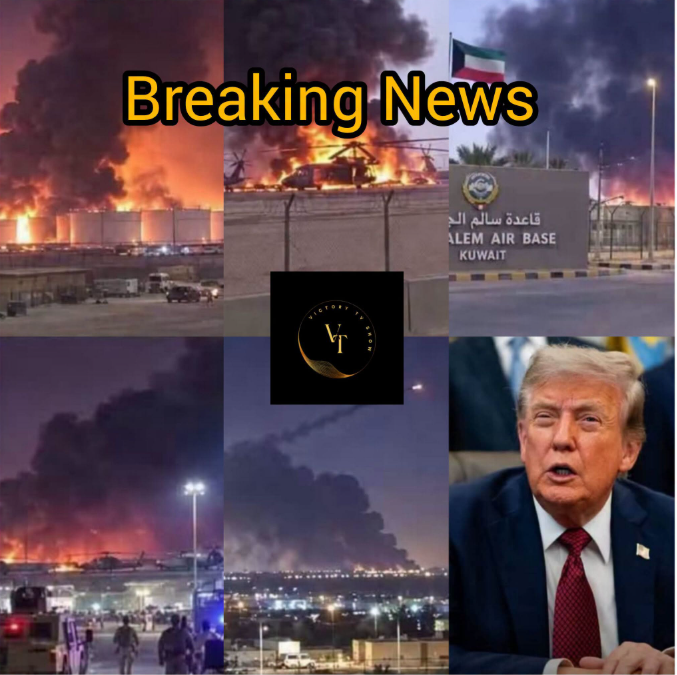
The Middle East remains on edge following reports that Iran launched another drone strike targeting a U.S. military installation in Kuwait, marking the latest development in the rapidly escalating confrontation between Washington and Tehran. According to multiple reports, the attack targeted a U.S. base in Kuwait as part of a broader exchange of military actions across the region.
Initial information indicates that air defense systems were activated shortly after incoming drones were detected. U.S. and allied forces reportedly engaged the drones, while military officials began assessing any potential damage to facilities and equipment. At the time of reporting, officials had not released a comprehensive assessment of casualties or operational impacts.
The reported strike comes amid one of the most serious periods of confrontation between the United States and Iran in recent years. Over the past several days, both sides have exchanged military operations, with U.S. forces conducting strikes on Iranian military targets while Iran has claimed responsibility for attacks on American installations throughout the Gulf region.
Kuwait has long hosted an important American military presence. Bases such as Camp Arifjan and Ali Al Salem Air Base serve as major logistics, transportation, and operational hubs supporting U.S. forces across the Middle East. Because of their strategic importance, these installations have become potential targets whenever tensions rise between Washington and Tehran.
Iranian state media has repeatedly announced attacks against American facilities in Kuwait, claiming that drones targeted military infrastructure, radar systems, and logistics centers. However, U.S. officials have frequently disputed Iranian claims regarding the scale of damage, stating that many incoming drones and missiles have been intercepted before reaching their intended targets.
Military analysts say drone warfare has become one of the defining features of modern conflicts. Compared with traditional aircraft or ballistic missiles, drones are relatively inexpensive, can be launched in large numbers, and are often difficult to detect until they approach their targets. This has forced militaries around the world to invest heavily in integrated air-defense systems capable of tracking and intercepting low-flying threats.
The latest reports suggest that U.S. and Kuwaiti air-defense systems responded quickly after warning systems detected incoming aircraft. Officials are continuing to evaluate whether any drones penetrated the defensive perimeter or caused damage on the ground.
The attack also highlights Kuwait’s increasingly difficult position. While the country remains a close security partner of the United States, it has historically sought balanced diplomatic relations throughout the Gulf region. The recent escalation places Kuwait in the challenging position of hosting major American military facilities while attempting to avoid becoming directly involved in the broader conflict.
Regional governments are closely monitoring developments. Neighboring countries have increased security around airports, military installations, energy infrastructure, and shipping routes amid concerns that additional attacks could occur.
Energy markets are also watching events carefully. The Gulf region is responsible for a significant portion of the world’s oil exports, and any military escalation involving major energy producers or transportation routes can influence global prices. Investors often react quickly whenever attacks occur near strategic infrastructure or military facilities.
Defense experts note that even unsuccessful attacks can have significant strategic effects. Launching repeated drone operations forces defenders to expend expensive interceptor missiles, maintain high alert levels, and continuously adapt defensive strategies.
International leaders have continued urging restraint as concerns grow that additional military exchanges could draw more countries into the conflict. Diplomatic efforts aimed at reducing tensions remain underway, although recent events suggest that the security situation remains highly volatile.
For the United States, protecting personnel stationed across the Middle East remains a top priority. Tens of thousands of American service members are deployed throughout the region, supporting counterterrorism operations, regional partnerships, and maritime security. Military commanders have emphasized that force protection measures remain in place and that installations continue operating despite heightened threats.
Iran, meanwhile, has maintained that its operations are responses to U.S. military actions, while American officials argue that their strikes are defensive measures intended to deter further attacks on U.S. personnel and allies. This cycle of action and retaliation has contributed to fears of a wider regional conflict.
Military observers caution that early reports during active conflicts are often incomplete. Damage assessments, casualty figures, and responsibility for specific attacks may change as additional evidence becomes available. Governments typically rely on intelligence, surveillance, and forensic investigations before releasing official conclusions.
The latest reported drone strike illustrates how rapidly the security environment in the Gulf has evolved. Advances in drone technology have enabled armed groups and nation-states alike to threaten installations hundreds of miles away without deploying conventional aircraft.
As investigations continue, officials from the United States and Kuwait are expected to provide further updates regarding the effectiveness of defensive systems, the extent of any damage, and possible responses to the reported attack.
For now, the reported strike serves as another reminder of the fragile security situation across the Middle East. With military operations continuing, diplomatic efforts struggling to gain momentum, and regional tensions remaining high, governments around the world are watching developments closely.
Whether this latest incident becomes another isolated exchange or marks the beginning of a broader escalation will likely depend on the decisions made by regional leaders in the coming days. Until more verified information is released, the situation remains fluid, and authorities continue to assess the full impact of the reported drone attack on the U.S. military base in Kuwait.