Investigators Search Air India Crash Site as Modi Meets Lone Survivor
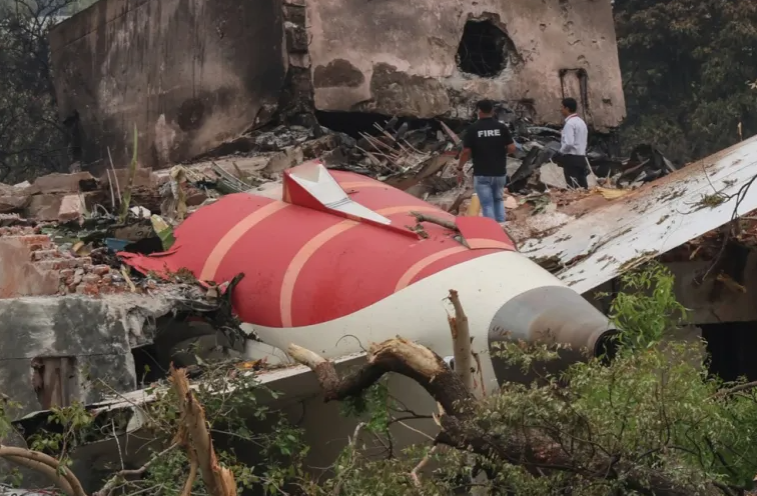
Investigators continued their painstaking search of the Air India crash site as emergency crews worked around the clock to recover evidence that could explain one of the country’s most devastating aviation disasters in recent years. The tragic accident has left families grieving, officials demanding answers, and aviation experts beginning what is expected to be a lengthy investigation into the cause of the crash.
The wreckage, scattered across a wide area, has become the focus of an intensive operation involving aviation investigators, forensic specialists, firefighters, and police officers. Every piece of debris could provide a crucial clue, and teams have been carefully documenting the scene before moving damaged aircraft components for further examination.
Authorities established a secure perimeter around the crash site to prevent contamination of evidence. Investigators photographed the debris field, mapped the locations of major aircraft sections, and searched for the flight data recorder and cockpit voice recorder—commonly known as the aircraft’s “black boxes.” These devices are expected to play a critical role in determining what happened during the flight’s final moments.
While investigators worked at the scene, Indian Prime Minister Narendra Modi traveled to meet the lone survivor of the disaster. During the visit, Modi expressed condolences to the families of those who lost their lives and wished the survivor a full recovery. According to officials, the meeting also served as a reminder of the enormous human cost of the tragedy.
Medical staff caring for the survivor reported that the individual remained under close observation but was stable enough to communicate with doctors. Investigators hope that once the survivor has recovered sufficiently, they may be able to provide valuable firsthand information about the events leading up to the crash. However, aviation experts caution that survivor accounts are only one part of a much broader investigation that relies heavily on physical evidence and recorded flight data.
Families of passengers gathered near hospitals and assistance centers, anxiously awaiting updates from authorities. Counseling teams and support staff were deployed to help relatives cope with the emotional aftermath, while government agencies established information centers to provide verified updates and assist with identification procedures.
Air India released a statement expressing profound sorrow over the tragedy and pledged full cooperation with investigators. The airline said its priority remained supporting affected families while working closely with aviation authorities to determine the cause of the accident. Company representatives also emphasized that safety remains their highest priority.
The investigation is being led by India’s aviation accident authorities, with technical assistance expected from aircraft manufacturers and international aviation experts if necessary. Standard investigative procedures include examining maintenance records, reviewing the aircraft’s operational history, analyzing weather conditions, and studying communications between the flight crew and air traffic controllers.
Investigators are also expected to inspect the aircraft’s engines, flight control systems, and structural components. Any signs of mechanical failure, bird strikes, weather-related damage, or other contributing factors will be carefully documented and analyzed.
One of the most significant pieces of evidence will be the flight data recorder, which stores hundreds of technical parameters throughout the flight. These recordings can reveal information about engine performance, aircraft speed, altitude, control inputs, and system warnings. The cockpit voice recorder captures conversations between pilots, radio communications with air traffic control, and other cockpit sounds that may help investigators reconstruct the sequence of events.
Experts caution that determining the cause of a major aviation accident is rarely straightforward. Modern aircraft are equipped with sophisticated safety systems, and investigators typically consider multiple factors before reaching conclusions. Mechanical issues, environmental conditions, human factors, maintenance history, and operational procedures are all evaluated as part of the investigative process.
Recovery crews continued working despite challenging conditions at the crash site. Heavy equipment was brought in to assist with removing large sections of wreckage, while forensic specialists carefully collected smaller fragments that might contain evidence of structural failure or impact patterns. Every recovered component is cataloged and preserved for detailed examination.
Government officials have assured the public that the investigation will be conducted transparently and independently. Preliminary findings may be released once investigators have gathered sufficient evidence, but a comprehensive final report could take many months to complete. Such reports often include safety recommendations intended to prevent similar accidents in the future.
The tragedy has prompted renewed discussions about aviation safety and emergency preparedness. Although commercial aviation remains one of the safest modes of transportation globally, every major accident is studied extensively to identify lessons that can improve aircraft design, maintenance practices, pilot training, and operational procedures.
Messages of sympathy have poured in from around the world. Governments, airlines, and international organizations expressed condolences to the victims’ families and offered support to India’s ongoing investigation. Social media has also been flooded with tributes to those who lost their lives, as well as messages of hope for the survivor’s recovery.
Authorities have urged the public to rely on official updates rather than unverified rumors circulating online. In the hours following the crash, numerous speculative claims appeared across social media platforms, highlighting the importance of confirming information through credible sources during rapidly developing events.
For the families affected by the disaster, however, the investigation is about more than determining technical causes. It is about understanding what happened to their loved ones and ensuring that every possible lesson is learned to help prevent similar tragedies in the future.
As investigators continue their meticulous examination of the wreckage, attention remains focused on uncovering the facts behind the accident. Each recovered piece of evidence brings officials one step closer to understanding the sequence of events that led to the crash.
The coming weeks will likely involve laboratory analysis of aircraft components, interviews with witnesses, reviews of maintenance documentation, and detailed examination of flight recorder data. Until those processes are complete, aviation experts emphasize that it would be premature to draw conclusions about the cause of the disaster.
The Air India crash has left a lasting impact on the nation, reminding the world of both the importance of aviation safety and the resilience shown by first responders, medical teams, investigators, and the families facing unimaginable loss. As the investigation moves forward, the hope remains that the findings will provide answers, accountability, and improvements that strengthen aviation safety for the future.