The History of Baboons: From Evolutionary Origins to Modern Times
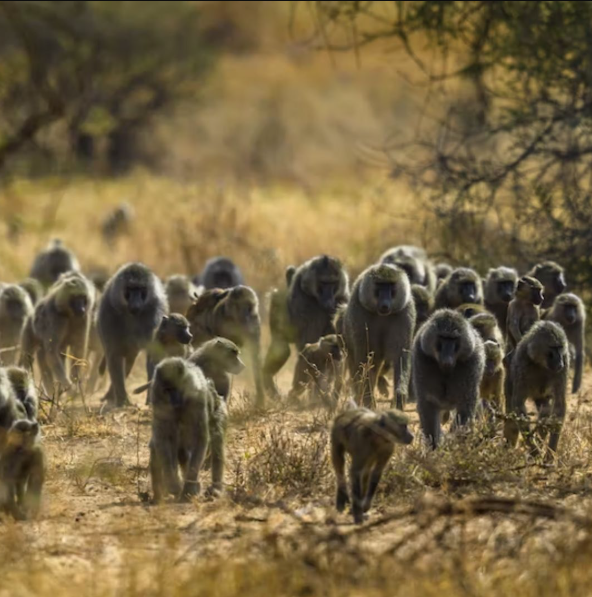
Baboons, members of the genus Papio, are among the most recognizable and adaptable primates in the world. These large, terrestrial monkeys have fascinated humans for millennia, appearing in ancient mythology, scientific research, and ongoing conservation debates. With six recognized species—olive (Papio anubis), yellow (Papio cynocephalus), chacma (Papio ursinus), hamadryas (Papio hamadryas), Guinea (Papio papio), and Kinda (Papio kindae)—baboons inhabit diverse environments across sub-Saharan Africa and parts of the Arabian Peninsula. Their history spans millions of years of evolution, complex interactions with early humans and ancient civilizations, and a modern era marked by scientific discovery and conservation challenges.
Evolutionary History
The evolutionary story of baboons begins in southern Africa during the Pleistocene epoch, roughly 1.5 to 2.1 million years ago. Fossil records and phylogeographic analyses show that the genus Papio originated there before expanding northward and across the continent as savanna habitats shifted with climatic changes. This expansion mirrors patterns seen in early human evolution, making baboons valuable models for understanding how environmental pressures shape primate adaptation.
Baboons belong to the tribe Papionini within the family Cercopithecidae (Old World monkeys). Genetic studies reveal a complex history involving hybridization rather than a simple branching tree. Different species interbreed in overlapping zones, producing fertile offspring. This reticulate evolution—where genes flow between populations—has been shaped by repeated cycles of habitat fragmentation and reconnection due to ice ages and climate fluctuations.
Olive baboons, for example, have one of the widest distributions, ranging from West Africa to East Africa. Hamadryas baboons are notable for their presence in the Horn of Africa and southwestern Arabia, representing one of the few primate populations outside Africa. Their adaptability as “eclectic omnivores” — eating fruits, seeds, tubers, insects, and small vertebrates — allowed them to thrive in savannas, woodlands, and semi-arid regions where other primates struggled.
Ancient Human Interactions
Baboons entered human cultural history prominently in ancient Egypt. No wild baboons live in Egypt today, but mummified remains and artistic depictions show they were highly revered. Hamadryas baboons were imported from regions like Punt (likely modern-day Somalia/Eritrea) and kept in captivity as sacred animals. They symbolized the god Thoth, deity of wisdom, writing, and the moon. Egyptians observed baboons basking in the morning sun, interpreting this as reverence for the sun god Ra, leading to their association with solar worship.
Baboons were mummified as votive offerings, and some were trained for practical roles, such as picking fruit or even assisting in law enforcement (depicted apprehending thieves). Archaeological studies of mummies reveal signs of malnutrition and captivity stress, highlighting the challenges of keeping these wild animals in ancient times. Recent isotope analysis of hair and teeth from mummified baboons has helped trace ancient trade routes, confirming imports from distant lands.
In other African cultures, baboons appear in folklore as clever tricksters or symbols of strength, though often with wariness due to crop-raiding behavior. Their presence in rock art and oral traditions underscores long-standing coexistence and conflict with human communities.
Scientific Discovery and Research
Modern scientific interest in baboons surged in the 20th century. Their large size, social complexity, and genetic closeness to humans (over 90% DNA similarity) made them ideal models for research in physiology, behavior, and anthropology.
Long-term field studies transformed our understanding. At Gombe Stream National Park in Tanzania, where Jane Goodall began her pioneering chimpanzee research in 1960, baboons have been studied for over 50 years alongside chimps. Researchers like Anthony Collins have documented baboon social dynamics, interspecies interactions (including play between chimps and baboons), and responses to environmental change.
Other key sites include Amboseli in Kenya and various South African locations. Robert Sapolsky’s work on stress and social hierarchies in olive baboons revealed how personality and culture influence health outcomes, with insights applicable to humans. Studies on locomotion, reproduction, osteoporosis, and diet have positioned baboons as critical biomedical models.
Genetic sequencing in the 2010s further illuminated their evolutionary history, showing extensive hybridization and adaptation similar to early hominins. Baboons’ terrestrial lifestyle and flexible social structures (multi-male/multi-female troops in most species, one-male units in hamadryas and Guinea) provide parallels for reconstructing early human societies.
Modern Challenges and Conservation
Today, baboons face significant pressures. While not globally endangered as a genus, some populations and the Guinea baboon (Near Threatened) are at risk. Habitat loss from agriculture, human settlement, and overgrazing fragments populations. Baboons frequently raid crops, leading to retaliatory killings and persecution as pests. Bushmeat hunting and the exotic pet trade add further threats.
In South Africa, urban baboons on the Cape Peninsula have adapted remarkably to human environments, developing unique behaviors but also facing conflict. Conservation efforts focus on mitigating human-wildlife conflict through education, fencing, and non-lethal deterrents. Protected areas remain crucial, but many populations live outside them and are vulnerable to silent decline.
Climate change poses another layer: shifting rainfall patterns affect food availability and force baboons into closer contact with humans. Long-term studies show how environmental stressors influence social bonds, foraging, and reproduction.
Cultural Legacy and Future
Baboons continue to captivate through documentaries, research, and ecotourism. Their intelligence, complex societies (with dominance hierarchies, alliances, and cultural transmission), and resilience offer lessons in adaptability. As models for human evolution, they remind us of our shared history in African savannas.
Efforts by organizations like the Jane Goodall Institute and local initiatives emphasize coexistence. Understanding baboon history—from Pleistocene survivors to sacred Egyptian symbols to subjects of cutting-edge science—highlights the need for balanced conservation that respects both ecological and cultural significance.
In summary, the history of baboons is one of remarkable survival and adaptation. Spanning millions of years of evolution, thousands of years of human fascination, and decades of scientific insight, they embody the intricate connections between primates and their environments. Protecting their future requires addressing human pressures while appreciating their vital role in ecosystems and our understanding of life itself