15 Brain-Confusing Photos That Need to Be Analyzed
The internet has become a treasure chest of strange and mysterious photographs that make us stop scrolling and stare for a second—or even a minute. Some images seem impossible at first glance, while others trick our brains into seeing something completely different from reality. These optical illusions, unusual camera angles, and perfectly timed moments remind us that a single photograph doesn’t always tell the whole story.
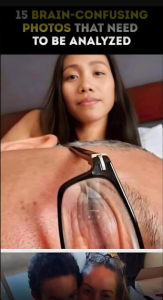
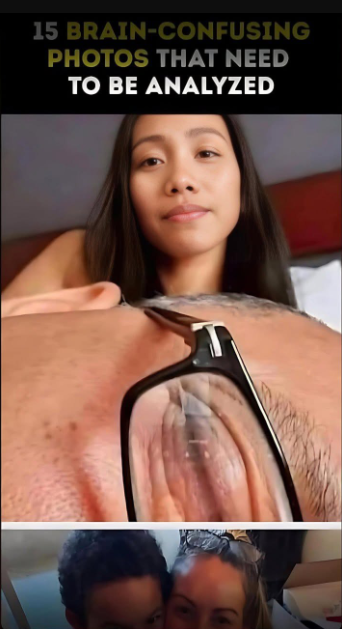
One of the most fascinating examples is the image shown above. At first glance, it looks incredibly confusing. Many viewers think they’re looking at a giant eye, an oddly shaped face, or even a surreal digital creation. However, after examining it carefully, the mystery begins to unravel.
The woman standing in the background appears perfectly normal, but the foreground completely changes our perception. What initially seems like a distorted face is actually the top of another person’s head viewed from an unusual angle. The person’s glasses, eyebrow, and forehead create an optical illusion that tricks the brain into interpreting the image incorrectly.
The reflection inside the glasses adds another layer of confusion. Because reflections naturally distort light and perspective, our minds struggle to identify what we’re actually seeing. Combined with the close-up camera angle, it creates a photograph that looks almost impossible until someone explains it.
This is exactly why optical illusions fascinate people. Our brains are constantly trying to make sense of visual information as quickly as possible. Instead of carefully analyzing every detail, the brain fills in missing pieces using patterns it has learned over a lifetime. Most of the time this works perfectly, but occasionally it leads us completely astray.
Scientists have studied this phenomenon for decades. Human vision isn’t simply like a camera recording reality. Instead, the brain actively interprets everything we see. It uses lighting, shadows, depth, color, and previous experiences to build what it believes is the correct image. When unusual perspectives disrupt those expectations, our minds become confused.
Photography has become the perfect medium for creating these visual puzzles. Modern smartphones capture images from almost any angle imaginable, and people constantly discover new ways to create accidental illusions without using any editing software.
Sometimes these confusing images happen completely by chance.
A dog standing behind its owner may appear to have human legs.
A cat lying beside a black blanket may seem to disappear.
A person’s reflection in a mirror may make it look like someone has two heads.
Even simple shadows can transform ordinary objects into mysterious figures.
Perspective plays an enormous role in these illusions. When two unrelated objects line up perfectly from the camera’s viewpoint, they can appear connected even though they’re several feet apart. This effect has been used by photographers for decades to create creative and humorous images.
Tourists frequently use forced perspective photography when visiting famous landmarks. Someone might pretend to hold up the Leaning Tower of Pisa with one hand or pinch the top of the Eiffel Tower between two fingers. Although everyone understands the trick, the images remain entertaining because they manipulate our perception so effectively.
Lighting also contributes significantly to visual confusion. Bright sunlight creates harsh shadows that hide important details. Soft indoor lighting can flatten depth, making objects appear closer together than they actually are. Reflections from glass, mirrors, or water further complicate the scene by introducing duplicate images and unexpected distortions.
The photograph above demonstrates several of these principles simultaneously. The extreme close-up of the forehead dominates the frame, while the woman in the background provides a completely different scale reference. Because our brains expect faces to appear in certain proportions, the unusual composition temporarily breaks those expectations.
Many viral internet photos achieve popularity for exactly this reason. People enjoy challenging their own perception and comparing what they saw first with what others noticed. Reading the comments under these images often becomes just as entertaining as viewing the picture itself.
One person might immediately recognize the correct explanation.
Another might remain convinced they’re looking at something entirely different.
Some viewers continue discovering new details even after the illusion has been explained.
These shared moments of confusion create engaging conversations across social media platforms.
Psychologists sometimes use similar visual puzzles to study attention and perception. They examine how different people process the same information and why certain individuals notice hidden details more quickly than others. Age, experience, expectations, and even cultural background can influence how someone interprets an ambiguous image.
Children often see these illusions differently than adults because they have fewer visual assumptions based on years of experience. Meanwhile, professional photographers or artists may immediately recognize perspective tricks that confuse most viewers.
The rise of artificial intelligence has added another interesting dimension to these discussions. Many people now wonder whether unusual photographs are genuine or AI-generated. While some images are indeed created digitally, countless confusing pictures are completely authentic, captured through nothing more than excellent timing and creative camera placement.
This uncertainty makes viewers examine photographs even more closely than before. Every shadow, reflection, and unusual angle becomes a clue in solving the visual puzzle.
Social media accounts dedicated to optical illusions continue attracting millions of followers because these images provide something increasingly rare online: a reason to slow down and really look. Instead of quickly scrolling past another ordinary picture, viewers spend several seconds analyzing every detail until the mystery becomes clear.
These moments remind us that appearances can be deceptive—not just in photography but in everyday life. First impressions are valuable, but they’re not always accurate. Looking more carefully often reveals an entirely different reality hidden beneath the surface.
The image above perfectly captures this lesson. What first appears bizarre gradually transforms into a perfectly ordinary scene once the viewer understands the perspective. The illusion isn’t created through editing or special effects; it’s simply the result of an unusual camera angle and the remarkable way our brains interpret visual information.
That’s what makes brain-confusing photos so captivating. They challenge our assumptions, encourage careful observation, and remind us that reality often depends on the angle from which we choose to look. Whether accidental or intentionally composed, these visual puzzles continue to entertain millions of people because they demonstrate something remarkable about human perception: sometimes our own eyes can fool us, and discovering the truth is half the fun