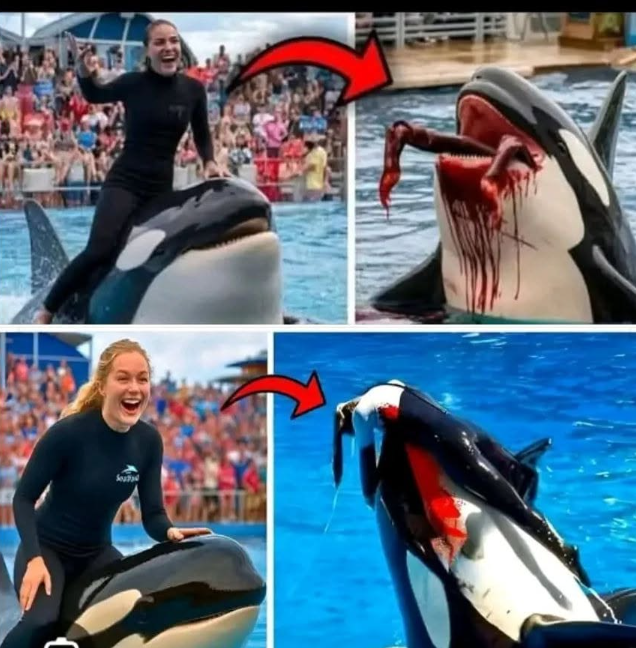
An orca trainer is devoured by this one while performing… is the kind of dramatic clickbait that surfaces on social media, usually referencing tragic incidents in marine parks. The most prominent case is the 2010 death of SeaWorld trainer Dawn Brancheau, killed by the orca Tilikum during a “Dine with Shamu” session in Orlando. These events are heartbreaking, not entertainment fodder. They spotlight complex issues around captive orcas, animal intelligence, trainer safety, and ethics of marine mammal captivity. Here’s a full, respectful exploration (~1,000 words).
The 2010 Incident and Tilikum’s Story
On February 24, 2010, experienced trainer Dawn Brancheau, 40, was interacting with Tilikum, a large male orca (roughly 12,000 pounds and 22+ feet long), after a public show. Witnesses described Tilikum grabbing her by the ponytail (or arm/shoulder per varying accounts) and pulling her into the water. He held her underwater, leading to drowning and blunt force trauma. The autopsy detailed severe injuries, including fractures and trauma consistent with the orca’s power. It took staff significant time and effort to recover her body.
Tilikum was no ordinary orca. Captured from the wild off Iceland in 1983 as a young whale, he lived in Canadian facilities before moving to SeaWorld. He was linked to two prior human deaths: Keltie Byrne (1991 at Sealand of the Pacific) and Daniel P. Dukes (1999 trespasser at SeaWorld). Brancheau’s death was the third associated with him. The case drew massive scrutiny, an OSHA investigation, and inspired the 2013 documentary Blackfish, which examined captivity’s impacts on orca behavior.
Orcas (killer whales) are apex predators with complex social structures, advanced echolocation, and cultural behaviors passed across generations. In the wild, they roam oceans in pods, hunting, playing, and communicating over vast distances. Captivity confines them to tanks that, while large by zoo standards, represent a tiny fraction of their natural range. Stress, altered diets, limited stimulation, and social disruptions are cited by critics as factors in aggression.
SeaWorld maintained that incidents resulted from specific circumstances, not systemic issues, and emphasized safety protocols. After Brancheau’s death, regulations changed: no water work with certain orcas, barriers, and modified shows. Tilikum continued limited performances under new rules before his death in 2017 from infections.
Broader Context of Captive Orca Incidents
Brancheau’s death was not isolated. Since the 1960s, when orcas entered captivity, over 40 documented safety incidents have occurred, with trainers injured or killed. Another notable case involved Alexis Martínez in 2009 at Loro Parque (linked to SeaWorld animals). These events reveal risks of working with powerful, intelligent wild animals in artificial environments.
Orcas possess brains comparable in complexity to humans in some cognitive areas. They exhibit play, problem-solving, mourning, and coordinated hunting strategies. In captivity, abnormal behaviors like repetitive swimming, collapsed dorsal fins (seen in some males like Tilikum), and aggression toward trainers or other whales have been documented. Advocates argue this stems from psychological distress—boredom, frustration, or trauma from separation and confinement.
Defenders of captive programs highlight education, conservation research, and veterinary advancements. Marine parks have contributed to understanding orca physiology, though critics counter that wild studies provide better data without ethical costs. Public opinion shifted post-Blackfish, pressuring parks. SeaWorld phased out orca breeding and theatrical shows emphasizing tricks, pivoting toward conservation messaging. Many facilities now focus on rescue/rehab rather than entertainment.
The Human and Ethical Toll
Trainers like Dawn Brancheau were passionate professionals who formed deep bonds with the animals. They dedicated careers to care, training, and public education, often viewing orcas as partners. Families and colleagues grieve these losses profoundly. Brancheau’s death prompted industry-wide safety reforms, including OSHA citations (later contested) emphasizing inherent dangers of close contact.
Ethically, the debate centers on whether keeping highly intelligent, wide-ranging social animals like orcas in captivity is justifiable in the 21st century. Proponents point to breeding success (though controversial), public awareness leading to ocean conservation support, and medical breakthroughs. Opponents, including former trainers and scientists, advocate for sanctuaries in natural sea pens where animals can exhibit more natural behaviors, though challenges like cost, veterinary care, and release feasibility remain.
Laws and practices evolved. The U.S. has restricted imports and seen declining captive orca populations through natural attrition and no-breeding policies at major parks. Internationally, some countries ban orca shows entirely. The conversation mirrors broader zoo and aquarium ethics: balancing human wonder, education, and profit against animal welfare.
Lessons and the Future
These tragedies underscore that orcas are not oversized dolphins for表演 but wild predators with their own agency. “Devoured” language in clickbait sensationalizes horror, but reality involves complex factors—animal stress, human error, protocol limits, and biology. No trainer “deserves” such an outcome; incidents reveal systemic risks.
Positive shifts include:
- Technology: Better monitoring, enrichment programs, and virtual/above-water presentations.
- Research: Non-invasive wild orca studies via drones, tags, and acoustics.
- Public Engagement: Documentaries, books, and advocacy driving informed choices.
- Sanctuary Efforts: Projects aiming to retire captive cetaceans to more natural settings.
For aspiring marine biologists or trainers today, education emphasizes safety, ethics, and science. Modern programs prioritize animal welfare science, behavioral observation, and reduced human-animal contact in high-risk scenarios.
Orcas symbolize ocean health. Their declining wild populations face threats from pollution, ship strikes, prey depletion, and climate change. Captivity debates should ultimately serve conservation: inspiring protection of natural habitats over spectacle.
Dawn Brancheau and others lost in these incidents represent dedication that advanced understanding, even amid controversy. Their stories fuel ongoing dialogue about humanity’s relationship with powerful wildlife. Respecting orcas means acknowledging their majesty in the wild while critically assessing captivity.
In summary, clickbait reduces tragedy to shock value. The fuller picture involves respect for lives lost, orca complexity, industry evolution, and ethical progress. As society learns, the goal is safer practices—or ideally, environments where such risks never arise. Supporting responsible marine conservation, education, and habitat protection honors both the trainers and the whales.