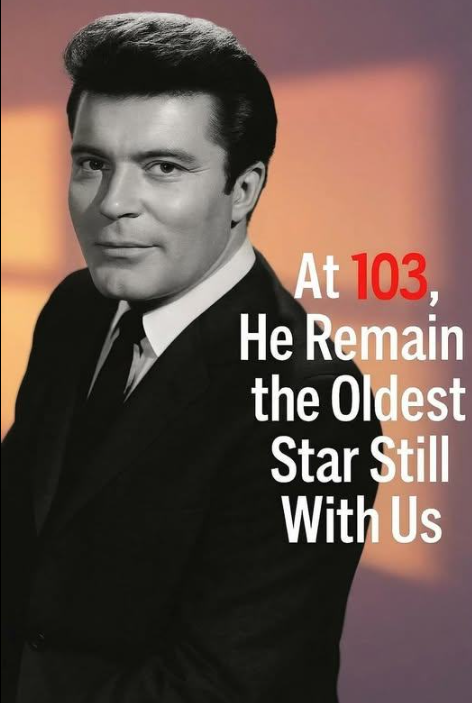
At Almost 103, He Is The Oldest Living Star
In the glittering annals of Hollywood and American entertainment, few figures bridge the gap between the golden age of big bands and the digital streaming era quite like Ray Anthony. At nearly 103 years old, the legendary trumpeter, bandleader, and actor stands as one of the oldest living stars in the entertainment industry. Born Raymond Antonini on January 20, 1922, in Bentleyville, Pennsylvania, Anthony has lived through more chapters of American cultural history than most history books can contain. His story is one of resilience, talent, and an unwavering passion for music that has kept him vibrant well into his second century.
Anthony’s journey began in the heart of the Jazz Age and Swing Era. Raised in Cleveland after his family relocated, he picked up the trumpet as a teenager and quickly showed prodigious talent. By his late teens, he was already performing professionally. His big break came when he joined the Glenn Miller Orchestra in 1940, just as the band was ascending to national fame with hits like “In the Mood” and “Moonlight Serenade.” As one of the last surviving members of that iconic ensemble, Anthony’s memories of those whirlwind tours and recording sessions offer a living link to a bygone era of American optimism and swing rhythms.
World War II interrupted his rising career. Anthony served in the U.S. Navy, entertaining troops as part of naval bands. The discipline and camaraderie of military life reinforced his work ethic. Upon discharge, he formed his own orchestra in the mid-1940s, capitalizing on the post-war boom in live music. His band became a staple of the ballroom and nightclub circuit, known for tight arrangements, energetic performances, and Anthony’s crisp, bright trumpet sound. Hits like “Hokey Pokey,” “Bunny Hop,” and “Dragnet” theme brought him mainstream success in the 1950s, blending jazz, pop, and danceable swing.
Beyond music, Anthony made his mark in film and television. He appeared in several movies during Hollywood’s golden age, including The Girl Can’t Help It (1956) alongside Jayne Mansfield and This Could Be the Night (1957). His on-screen charisma and musical cameos showcased a natural performing talent. Television variety shows frequently featured his orchestra, exposing him to millions during the early days of the medium. These ventures established him as a multifaceted entertainer—a “star” in the truest sense, capable of commanding both stage and screen.
A Life of Discipline and Adaptation
Reaching 103 is remarkable for anyone, but for a musician who spent decades on the road, it borders on the miraculous. Anthony credits a combination of genetics, passion, and healthy habits. He maintained an active lifestyle long after many contemporaries retired. Even in his 90s, he continued occasional performances and recordings, demonstrating that creative drive can be a powerful preservative.
His philosophy on longevity emphasizes staying engaged. “Music keeps me young,” he has said in interviews. The mental sharpness required to lead a band—remembering arrangements, reading audiences, and improvising—serves as constant cognitive exercise. Physically, trumpet playing demands strong lungs and breath control, benefits that compound over a lifetime. Anthony also speaks of moderation: enjoying good food and company without excess, maintaining social connections, and finding joy in simple routines.
Family has been central to his strength. Married multiple times, including a notable union with actress Mamie Van Doren in the 1950s, Anthony raised children who remain close. Grandchildren and great-grandchildren provide regular visits that keep his spirits high. In later decades, he settled in California, where the mild climate and access to entertainment circles allowed him to stay connected without the rigors of constant touring.
The entertainment industry has changed dramatically around him. From the big band era to rock ‘n’ roll, disco, and hip-hop, Anthony witnessed—and sometimes collaborated across—evolving genres. His adaptability is key to his endurance. While rooted in swing, he appreciated innovation and encouraged younger musicians. Modern tributes often highlight him as a bridge between eras, someone who can discuss Tommy Dorsey with the same enthusiasm as later jazz fusion experiments.
Reflections on a Century of Change
At almost 103, Anthony’s perspective on life offers profound insights. He lived through the Great Depression as a child, learning resourcefulness early. World War II shaped his sense of duty. The post-war economic boom fueled his success, while cultural shifts in the 1960s and beyond tested traditional entertainers. Through it all, he maintained optimism.
He recalls the magic of live radio broadcasts in the 1940s, when families gathered around sets to hear orchestras perform. The transition to television felt revolutionary, yet he adapted by embracing the visual medium. Today, he marvels at streaming and digital archives that preserve his work for new generations. “The music lives on,” he notes, pleased that young people discover his recordings online.
Challenges came, of course. The decline of big bands in the rock era forced reinvention. Personal losses—including friends and bandmates—tested his resilience. Yet Anthony’s strength lies in forward momentum. He released albums into his later years and participated in documentaries celebrating the Swing Era. His status as the oldest living star brings media attention, which he handles with gracious humor, often joking about still being able to hit high notes.
Health at advanced age requires care. Anthony benefits from attentive medical support, family oversight, and a positive mindset. He avoids dwelling on limitations, focusing instead on what he can still enjoy: listening to music, sharing stories, and occasional public appearances. His voice, though softer, retains warmth and clarity when recounting anecdotes from the Glenn Miller days or Hollywood nights.
Legacy and Inspiration
Ray Anthony’s longevity transcends personal achievement. He embodies the enduring power of American entertainment—how art created in one era can resonate across generations. As the last link to the Glenn Miller Orchestra, he preserves cultural memory that might otherwise fade. Schools and jazz programs invite him (or his recordings) for educational sessions, inspiring students to pursue music with discipline.
His story encourages reflection on what sustains a long, fulfilling life. Beyond talent, it involves curiosity, adaptability, relationships, and purpose. In an age obsessed with youth, Anthony proves value accrues with time. Wisdom, perspective, and a rich backlog of experiences become assets.
Fans and fellow musicians celebrate him as a gentleman of the old school—polite, professional, and passionate. Tributes on his birthdays often feature remastered tracks and interviews where he reflects without regret. At nearly 103, he continues inspiring, reminding us that a life dedicated to beauty and joy can extend far beyond expectations.
As the entertainment world honors its centenarians and near-centenarians, Ray Anthony stands tall. Not just as the oldest living star in his category, but as a testament to the human spirit’s capacity for endurance and delight. His trumpet may not blaze as fiercely as in 1945, but its echo reverberates through a century of American sound. In him, we see that stardom isn’t fleeting fame—it’s the light that persists, illuminating paths for those who follow.
The world is fortunate to still have Ray Anthony among us. At almost 103, he remains a living archive, a charming storyteller, and a beacon of timeless artistry. His life urges us to play our own music with full hearts, for as long as the notes will carry.