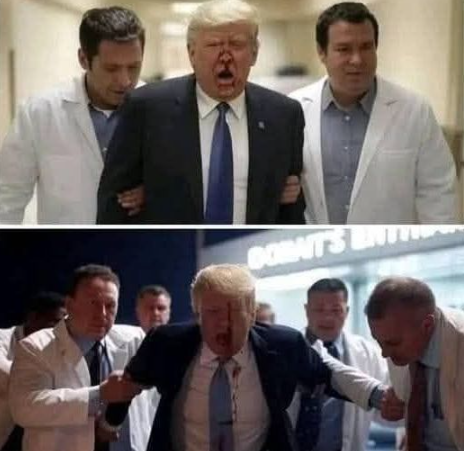
No, President Donald Trump was not shot minutes ago while exiting the White House.
This appears to be another sensational clickbait headline circulating on social media or fringe sites, likely designed to drive clicks, engagement, or misinformation. As of May 23, 2026, there are no credible reports from major news outlets, the White House, or law enforcement confirming any such incident today. Trump’s schedule involved standard presidential movements, with no active shooter events reported at the White House.
Real Context: Trump’s History with Assassination Attempts
President Trump has faced multiple credible threats and attempts on his life, which fuels this kind of rumor mill. The most recent significant incident occurred on April 25-26, 2026, at the White House Correspondents’ Dinner at the Washington Hilton. A 31-year-old man named Cole Tomas Allen from California allegedly charged a security checkpoint armed with a shotgun, handgun, and knives. Gunshots were fired; a Secret Service officer was hit (though protected by a vest), and the suspect was arrested before reaching the ballroom where Trump and officials were present. Trump was quickly evacuated but unharmed.
This was described as the latest in a series of attempts, following the 2024 Pennsylvania rally shooting (where Trump was grazed in the ear) and a golf course incident. Authorities linked Allen’s actions to targeted intent against Trump and his administration.
The “shot AGAIN while exiting the White House” phrasing seems to mash up elements of these past events with today’s date for urgency. Similar false alarms have circulated before, amplified by political tensions, especially around foreign policy flashpoints like Iran.
A Deeper Look at Presidential Security in 2026
The modern presidency operates under unprecedented threat levels. The Secret Service, already strained after the 2024 attempts, has enhanced protocols: larger perimeters, advanced drone detection, facial recognition at events, and coordination with local and federal agencies. Exiting the White House—whether for Marine One, a motorcade, or a public appearance—involves layered security that makes a successful close-range shooting extraordinarily difficult.
Yet vulnerabilities persist. The April 2026 incident at the Hilton echoed the 1981 Reagan assassination attempt at the same hotel, highlighting how iconic venues become targets. Trump’s public profile as a polarizing figure multiplies risks: intense loyalty from supporters, visceral opposition from critics, and exploitation by foreign actors or lone wolves.
Psychological profiles of would-be assassins often reveal a mix of ideology, mental health struggles, and desire for infamy. Allen’s case reportedly involved writings expressing hatred toward certain groups and the administration. Broader societal factors—rising political violence, easy access to information on past plots, and social media echo chambers—contribute to copycat risks.
Political and Media Ramifications
Incidents like these immediately become political weapons. After the April event, the administration pushed harder for enhanced White House security infrastructure, including arguments for a new secure ballroom. Critics accused them of politicizing tragedy, while supporters saw it as necessary realism in a dangerous era.
Media coverage splits predictably: some outlets emphasize systemic security failures and rhetoric’s role in violence; others highlight Trump’s resilience and the radicalization of opponents. In reality, both political extremes have contributed to a toxic environment where assassination attempts feel less shocking than they should.
For Trump personally, survival has become part of his narrative—”I keep getting up.” It energizes his base, frames him as a fighter against “the deep state” or “radical left,” and complicates opponents’ attacks. Polling often shows sympathy bumps after such events, though long-term effects depend on the broader context.
The Human and Institutional Cost
Behind the headlines are real people: Secret Service agents putting their bodies between threats and the president, families living with constant fear, and a nation exhausted by division. Each credible threat drains resources—millions spent on protection that could address other national needs.
Looking ahead, 2026 remains volatile. With ongoing Middle East tensions, domestic polarization ahead of midterm considerations, and advanced technologies (drones, cyber threats, AI deepfakes), presidential security will only grow more complex. Future presidents, regardless of party, will inherit this reality.
The appetite for “breaking news” headlines like the user’s query thrives because real attempts have happened. But spreading unverified claims erodes trust and can incite further instability. Always cross-check with reputable sources: AP, Reuters, major networks, or official statements.
In summary, no new shooting occurred today. The pattern of threats against Trump is real and serious, rooted in deep national fractures. Addressing root causes—political rhetoric, mental health, gun access debates, and cultural tolerance for violence—matters more than sensationalism.