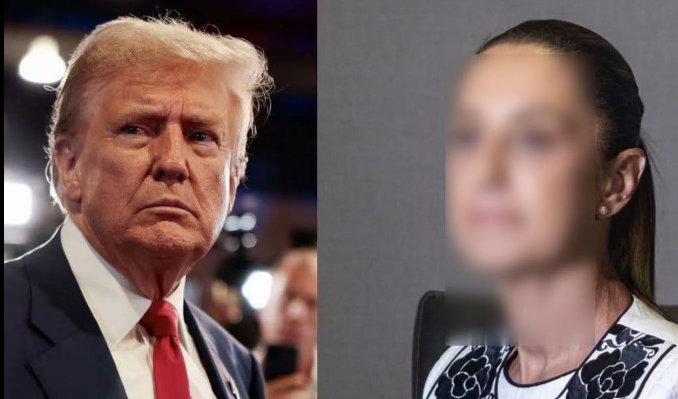
Mexican President Claudia Sheinbaum States That Trump Is Not Very Well Informed: Mexico Is a Sovereign Nation, Not Run by Cartels
In a recurring point of tension in U.S.-Mexico relations during Donald Trump’s second term, Mexican President Claudia Sheinbaum has pushed back firmly against claims from the U.S. president and his administration. She stated, in essence, that Trump (or members of his team) may not be fully informed about the realities on the ground in Mexico, emphasizing that her country is a free, sovereign democracy—not a “narco-government” controlled by drug cartels.
This statement, which has circulated widely on social media in variations like “Mexican president states that Trump is not…”, reflects deeper ongoing disputes over border security, drug trafficking (especially fentanyl), cartel violence, potential U.S. military intervention, tariffs, and trade under the USMCA framework. As of mid-2026, the relationship remains a mix of cooperation and sharp rhetorical friction.
Background on the Leaders and Context
Claudia Sheinbaum, a scientist by training and the first female president of Mexico (inaugurated in October 2024), leads a continuation of the Morena party’s “Fourth Transformation” agenda from her predecessor Andrés Manuel López Obrador (AMLO). Her approach prioritizes Mexican sovereignty, non-intervention, human rights in migration policy, and domestic security strategies without foreign troops on Mexican soil.
Donald Trump, back in the White House, has long viewed the southern border and Mexican cartels as critical threats to U.S. national security. He has repeatedly highlighted fentanyl deaths, migrant flows, and cartel power, at times suggesting drastic measures including military options or major tariffs. Trump has claimed cartels are effectively “running Mexico” and offered U.S. assistance that Sheinbaum has rejected as unnecessary and a violation of sovereignty.
The specific phrasing attributed to Sheinbaum—“Perhaps Trump is not very well informed”—appears tied to moments when Trump or officials like then-Attorney General Pam Bondi criticized Mexico’s cooperation or labeled it a “foreign adversary.” Sheinbaum countered by pointing to existing bilateral coordination on intelligence, law enforcement, and security, while rejecting any narrative of Mexico as a failed or cartel-dominated state.
Key Points in Sheinbaum’s Position
Sheinbaum has consistently stressed several themes:
- Sovereignty and Non-Intervention: Mexico welcomes intelligence sharing and joint operations (e.g., with DEA, DHS) but draws a hard line against U.S. military strikes or troops inside Mexico. She has said such actions are “not going to happen” and violate Mexico’s constitution.
- Cooperation Exists: Despite public disagreements, both sides have described some calls as “very good” or productive, covering trade, security, and migration. Mexico has taken steps on water deliveries, migration management, and cartel targeting.
- Mexico Is Not a Narco-State: Sheinbaum rejects characterizations that diminish Mexico’s democratic institutions. While acknowledging serious cartel challenges (violence in regions like Sinaloa or Guerrero), she highlights Mexican security forces’ efforts and argues external intervention would complicate rather than solve problems.
- Broader Diplomacy: She has downplayed some Trump threats as “his way of speaking,” advocating calm heads and collaboration based on mutual respect rather than subordination.
Trump’s Perspective and Actions
From the U.S. side, frustration stems from real statistics: fentanyl precursors from China often transit Mexico, cartels like Sinaloa and Jalisco New Generation control significant territory and generate enormous profits from drugs and other crimes. Trump has used blunt language—calling out Sheinbaum for rejecting help and warning Mexico to “get its act together.”
His administration has pursued pressure tactics including tariff threats, increased border enforcement, and targeting financial networks. At the same time, pragmatic deals continue on trade (USMCA review looming) and security pacts.
Historical and Structural Context
U.S.-Mexico relations have long balanced deep economic integration (Mexico is a top U.S. trading partner) with sovereignty sensitivities rooted in history—U.S. interventions in the 19th-20th centuries, the Mexican-American War, and oil nationalization. Modern cooperation includes the Mérida Initiative (security aid) and joint anti-cartel work, but Mexican leaders across parties resist any hint of U.S. forces operating domestically.
Cartel power is a genuine crisis for Mexico, with thousands killed annually in organized crime violence. Yet Mexico’s government argues that solutions must respect its institutions and address root causes like U.S. demand for drugs, poverty, and corruption. U.S. critics counter that Mexican authorities sometimes lack the will or capacity for decisive action.
Implications for Bilateral Relations
This rhetorical back-and-forth highlights structural challenges:
- Security vs. Sovereignty: Finding a balance where the U.S. feels secure without Mexico feeling subordinated remains difficult.
- Economic Leverage: Trump’s tariff threats are potent given integrated supply chains (autos, electronics, agriculture). Disruptions would hurt both economies.
- Migration: Mexico has helped manage flows northward, but caravans and asylum claims continue as flashpoints.
- Domestic Politics: Both leaders play to their bases. Trump’s supporters expect toughness on the border; Sheinbaum’s emphasize nationalism and independence.
Despite tensions, full rupture is unlikely. Trade volumes are massive, remittances from Mexican workers in the U.S. bolster Mexico’s economy, and shared interests in stability persist. High-level calls continue, and working-level cooperation on enforcement endures.
Looking Ahead
As the USMCA review approaches and cartel dynamics evolve, expect continued public sparring alongside private deals. Sheinbaum’s “not well informed” framing serves as diplomatic calibration—firm on principles but open to partnership. Trump’s style amplifies pressure for results.
For observers, this episode underscores that U.S.-Mexico ties are vital yet perpetually complex. Neither country can ignore the other. Effective management requires acknowledging hard realities on both sides: Mexico’s legitimate sovereignty concerns and governance efforts, alongside the U.S. imperative to protect its citizens from deadly drugs and uncontrolled borders.
In summary, Sheinbaum’s statement is not mere deflection but a clear assertion of Mexican agency in a lopsided but interdependent relationship. Whether it leads to better outcomes depends on whether both sides translate tough talk into targeted, respectful collaboration. The stakes—lives, economies, and regional stability—are too high for anything less