Looking the Part, Proving the Rest: Life in Uniform Beyond Appearances
The uniform commands attention before a single word is spoken. Crisp creases, polished badges, and coordinated colors create an immediate aura of authority, competence, and trust. Yet anyone who has worn one knows the truth: the fabric is only the beginning. Life in uniform is a daily negotiation between image and substance, between the expectations pinned to your chest and the reality of what you carry inside. “Looking the part” gets you through the door; proving the rest defines whether you belong there.
In professions defined by uniforms—military, law enforcement, healthcare, firefighting, even aviation and hospitality—the visual shorthand serves a purpose. Society needs to instantly recognize who can make split-second decisions, who can be trusted with lives or secrets, who will run toward danger rather than away. A white coat in a hospital corridor or navy blue fatigues on a city street signals reliability. But that signal is fragile. One misstep, one visible lapse, and the uniform that once inspired confidence becomes a target for skepticism.
I remember my first week in uniform as a young EMT. The shirt was starched, the patches perfectly aligned, boots gleaming. Patients and bystanders looked at me with immediate relief, assuming competence I had not yet earned. On a call for an elderly woman experiencing chest pain, her daughter gripped my arm and whispered, “Thank God you’re here.” The pressure was crushing. I knew the protocols, but my hands still trembled slightly as I applied the electrodes. That night I learned a fundamental lesson: the uniform buys you about thirty seconds of borrowed credibility. Everything after that must be earned through action, composure, and results.
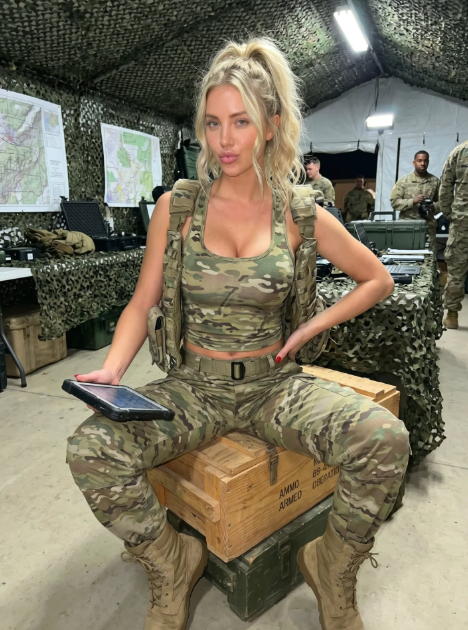
This dynamic plays out more intensely in the military. Soldiers often joke about “looking sharp for the brass” while enduring grueling field exercises where appearance means nothing and endurance means everything. A perfectly pressed dress uniform at a change-of-command ceremony projects discipline and pride. Yet the same service member might spend weeks in mud-caked combat gear where the only thing that matters is whether your platoon trusts you to watch their backs. The uniform becomes both armor and mask. It hides exhaustion, fear, and doubt while projecting an image of unyielding strength. Many veterans describe the transition to civilian life as jarring precisely because they lose this visual language. Without the uniform, they must relearn how to signal competence through words and presence alone.
Police officers face perhaps the most scrutinized version of this tension today. The badge and uniform are loaded symbols—symbols of protection to some, symbols of systemic power to others. Officers know that public perception often hinges on optics: how they stand, how they speak, how quickly they de-escalate or engage. Body cameras and cellphone videos have made every interaction a potential viral moment. Looking the part now requires not just physical presence but emotional intelligence under constant observation. A veteran sergeant once told me, “The uniform used to protect us. Now it sometimes paints a target on us. Either way, you better be solid underneath.”
Healthcare workers experienced a dramatic shift in public perception during the COVID-19 pandemic. Suddenly, the scrubs and N95 masks became emblems of heroism. People clapped for essential workers and posted supportive messages. Yet inside hospitals, the reality was grueling—twelve-hour shifts, impossible decisions, personal risk. The uniform (or PPE) projected calm authority while many nurses and doctors fought their own anxiety and grief. The applause eventually faded, but the deeper truth remained: the people wearing those scrubs were always more than the image. They were parents missing family dinners, students buried in debt, individuals battling burnout long before the crisis.
Beyond the high-stakes professions, even seemingly simpler uniforms carry weight. Flight attendants in tailored suits and scarves manage everything from mechanical delays to medical emergencies while maintaining poise at 35,000 feet. Retail workers in matching polos navigate irate customers and tight schedules. Security guards standing for hours in uncomfortable shoes become invisible fixtures until something goes wrong. In each case, the uniform levels the playing field while simultaneously raising the bar. It says, “You represent something larger than yourself.”
The psychological toll of maintaining appearances should not be underestimated. Imposter syndrome thrives in uniforms. You look the part, so others assume expertise, which makes admitting uncertainty or fatigue feel like failure. This pressure can lead to isolation. Many in uniform professions develop a “work persona”—stoic, decisive, unflappable—that becomes hard to shed at home. Spouses and children sometimes meet the uniform before they truly meet the person. Reintegration requires conscious effort: learning to be vulnerable, to ask for help, to let the creases wrinkle.
Yet there is also profound pride in the uniform. It connects the wearer to a lineage of others who wore similar cloth and faced similar tests. A firefighter’s turnout gear carries the smell of smoke from countless calls. A nurse’s stethoscope becomes an extension of care. These items tell stories that transcend fashion. They represent commitment, sacrifice, and a willingness to subordinate personal comfort for collective good. When someone says, “Thank you for your service,” the gratitude is directed not just at the individual but at the ideal the uniform embodies.
Modern challenges complicate this further. Social media amplifies both heroism and mistakes. Diversity initiatives push organizations to broaden who “looks the part” while maintaining standards. Technology—body cams, AI monitoring, virtual training—changes how performance is measured. Uniforms themselves evolve: more functional materials, better accommodation for different body types, subtle nods to cultural sensitivity. Still, the core tension persists. No uniform can fully convey the humanity beneath it.
For those who wear them, success often means balancing opposites. Project confidence without arrogance. Show empathy without weakness. Maintain standards without rigidity. The best practitioners develop a quiet self-assurance that doesn’t depend on external validation. They know when to lean on the uniform’s authority and when to set it aside to connect as one human to another.
Looking the part opens doors. Proving the rest keeps them open—and sometimes saves lives. The young EMT eventually becomes the seasoned paramedic who can deliver a baby in a car or calm a panicked parent with nothing but steady words. The fresh lieutenant matures into the commander who inspires loyalty not through rank but through character. The rookie officer grows into the detective who solves cases because communities trust her enough to share information.
In the end, uniforms are powerful precisely because they are incomplete. They invite projection. We see what we need to see: safety, order, care, courage. The individuals inside spend their careers trying to live up to those projections while remaining fully human. Some days they succeed brilliantly. Other days they fall short and learn. The uniform doesn’t change; the person wearing it does.
Life beyond appearances is where the real story unfolds—in the quiet moments after the shift ends, in the conversations with mentors, in the personal growth that no inspection can measure. The uniform may fade or be hung up one day, but the discipline, resilience, and perspective gained while wearing it endure. That is the part no tailor can sew on, no promotion can confer, and no camera can fully capture.