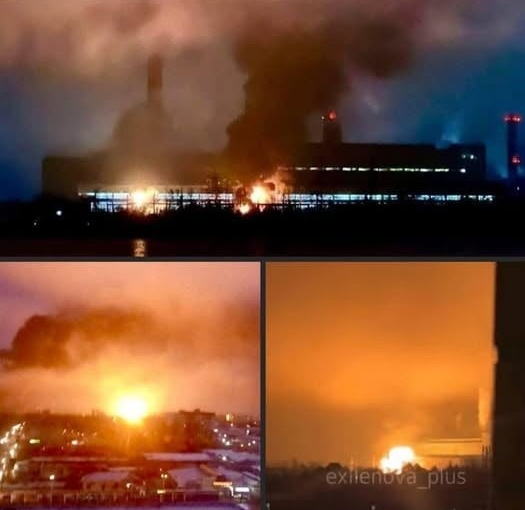
BREAKING NEWS. Maximum Worldwide Alert. The War Begins…
May 13, 2026 — In a dramatic escalation that has sent shockwaves across global capitals, financial markets, and military command centers, the fragile ceasefire between the United States, Israel, and Iran appears on the brink of total collapse. President Donald Trump declared the truce “on massive life support” after rejecting Iran’s latest peace proposal as “totally unacceptable.” Tehran has responded with defiance, warning it is “ready for any aggression.” What many feared is now unfolding: the war that began earlier this year is threatening to reignite with even greater ferocity.
This is not just another regional conflict. The stakes involve control of the Strait of Hormuz — through which roughly 20% of the world’s oil passes — nuclear proliferation fears, proxy battles spanning multiple countries, and the real possibility of direct superpower confrontation. Governments worldwide have issued maximum alerts. Stock markets are tumbling. Energy prices are spiking. Families with loved ones in the Middle East are scrambling for information. The phrase echoing in situation rooms from Washington to Beijing to Riyadh: “The war begins… again.”
How We Got Here: The Spark That Ignited 2026
Tensions between Iran and the US-Israel axis had simmered for decades, fueled by Iran’s nuclear program, ballistic missile development, support for proxies like Hezbollah, Hamas, and the Houthis, and repeated clashes in Syria and the Red Sea. The tipping point came in early 2026 with a series of decisive military actions. US and Israeli forces launched extensive airstrikes and operations targeting Iranian nuclear facilities, military infrastructure, and command nodes. Iran retaliated with missile barrages, drone swarms, and attacks on Gulf shipping and energy targets.
What started as targeted strikes quickly escalated into a broader conflict involving direct Iranian attacks on Israel and US assets, alongside Iranian-backed strikes on Arab states including the UAE, Saudi Arabia, and others. By March and April, the war had already exacted a heavy toll: thousands of casualties, billions in economic damage, destroyed aircraft and bases, and severe disruption to global energy flows. A ceasefire brokered in April offered a brief pause, but underlying issues — uranium enrichment, sanctions, regional influence, and security guarantees — remained unresolved.
The Current Flashpoint: Ceasefire on Life Support
As of May 12-13, 2026, President Trump publicly slammed Iran’s counter-proposal, which reportedly included demands for sanctions relief, guarantees against future attacks, Iranian management of the Strait of Hormuz, and broader regional de-escalation including Lebanon. Trump called elements of the deal “stupid” and a “piece of garbage.” Iran’s leadership, through state media and the IRGC, has vowed a robust response to any renewed aggression.
Military movements are accelerating. Reports indicate increased Iranian drone deployments, Israeli strikes continuing in Lebanon (with new evacuation orders and violations of prior ceasefires), and US naval assets positioning for potential operations to reopen the Strait of Hormuz by force if necessary. Retired Admiral James Stavridis and other analysts have openly discussed scenarios for kinetic action in the Gulf.
The human and economic cost is already staggering. US military losses include personnel killed and wounded, with dozens of aircraft reportedly destroyed in the earlier phases. Iran has suffered massive infrastructure damage, economic losses estimated in the hundreds of billions, and significant civilian impacts. Gulf states have faced retaliatory strikes, while Lebanon and Gaza continue to see spillover violence.
Global Ripple Effects: Maximum Worldwide Alert
The US State Department issued multiple “Worldwide Caution” alerts starting in late February and reinforced in March 2026, urging Americans everywhere — but especially in the Middle East — to exercise heightened vigilance. Iran-linked groups may target US interests globally. Airspace closures, shipping disruptions, and cyber threats are all active concerns.
Oil prices have surged amid fears of a closed or contested Strait of Hormuz. Markets are volatile. Airlines are rerouting. Nations from Europe to Asia are holding emergency meetings. China, Russia, and other powers are watching closely, with potential for proxy involvement or diplomatic maneuvering that could widen the conflict.
Experts warn this is not a contained affair. The 2026 Iran war has already reshaped alliances, with reports of UAE strikes on Iran and Israeli support to Arab partners. It risks drawing in more actors through miscalculation — a drone strike here, a shipping attack there, or escalation in Lebanon/Syria.
What Happens Next? Scenarios and Stakes
Pessimistic analysts see a return to full-scale airstrikes, naval confrontations, and intensified proxy wars. Optimists hope for last-minute diplomacy, perhaps involving third parties like Pakistan or Oman, to salvage talks. However, with Trump signaling openness to new military options and Iran digging in on core demands like uranium retention and sanctions relief, the window for peace is narrowing.
For the Iranian regime, survival is on the line. For the US and Israel, preventing a nuclear-armed Iran and restoring deterrence are paramount. For the world, stable energy supplies, freedom of navigation, and avoidance of broader war are critical.
Civilians on all sides bear the brunt. Displacement, economic hardship, loss of life, and long-term instability loom large. Humanitarian organizations are already stretched thin from overlapping global conflicts.
A World on Edge
This moment feels historic — a potential turning point in 21st-century geopolitics. The phrase “Maximum worldwide alert” is not hyperbole. Intelligence agencies, militaries, and citizens alike are monitoring developments hour by hour. Social media is flooded with unverified videos, official statements, and panic.
As leaders deliberate in secure bunkers and diplomats burn the midnight oil, one truth stands clear: modern interconnectedness means no war stays regional for long. Energy shocks, refugee flows, cyber attacks, and radicalization risks transcend borders.
The war that many hoped had paused is once again at the threshold. Whether it explodes into sustained high-intensity fighting or finds a tense off-ramp depends on decisions made in the coming days.
Stay tuned. Follow verified sources. Prepare accordingly. In an era of rapid escalation, information and calm heads are our best defenses.
This is a fluid situation. Reports are developing rapidly as of May 13, 2026. Global markets, travel, and security postures are shifting in real time